#fast4earth

RETHINK PACKAGING

“A good person leaves an inheritance for their children’s children.” — Proverbs 13:22 When we talk about inheritance, we often think of wealth, property, or legacy. But what kind of inheritance are we leaving if our packaging choices choke the earth with waste? Cardboard, polystyrene, and bubble wrap — everyday materials we barely notice — are shaping the future of our planet. Let’s unpack their impacts and what we can do about them. Cardboard: The Double-Edged Sword Cardboard is often hailed as the eco-friendly alternative to plastic. It’s renewable, biodegradable, and recyclable. Around 70% of corrugated cardboard boxes are successfully recycled, which is impressive. But cardboard isn’t without problems. Its production requires deforestation, water, and energy, especially when virgin materials are used. Transporting cardboard also adds to carbon emissions. While cardboard is better than plastic, overuse and improper disposal still strain ecosystems. The solution? Reuse boxes whenever possible, support recycling programs, and choose packaging made from recycled fibers. Cardboard is good — but only if we handle it responsibly.  Polystyrene: The Persistent Polluter Polystyrene, commonly seen in takeaway containers and protective packaging, is lightweight and versatile. But its environmental cost is staggering. Made from fossil fuels, it contributes to greenhouse gas emissions during production. Once discarded, it resists biodegradation for hundreds of years, polluting landfills, oceans, and habitats. Marine life often ingests polystyrene debris, leading to injury or death. Worse, chemical additives like styrene pose health risks to humans and wildlife alike. This is packaging that lingers for generations. The best response? Avoid polystyrene altogether. Opt for compostable or reusable alternatives, and pressure businesses to phase it out.  Bubble Wrap: Pop Culture with a Cost Bubble wrap is fun to pop and effective at protecting fragile items, but it’s made from polyethylene — a petroleum-based plastic. It can take hundreds of years to decompose, leaching harmful chemicals into soil and water. Recycling bubble wrap is technically possible, but most facilities don’t accept it because it’s bulky and lightweight. As a result, it often ends up in landfills or as litter. Its production also consumes significant energy and emits greenhouse gases. Alternatives like biodegradable air cushions, shredded paper, or reusable padding offer safer options. The joy of popping bubbles shouldn’t come at the expense of the planet.  What We Can Do The inheritance we leave depends on the choices we make today. Here are practical steps: Reduce: Say no to unnecessary packaging. Buy in bulk or choose products with minimal wrapping. Reuse: Repurpose cardboard boxes, bubble wrap, and even polystyrene when possible. Recycle: Support local recycling programs and ensure materials are clean and uncontaminated. Replace: Encourage businesses to adopt biodegradable or reusable alternatives. Proverbs reminds us that a good person leaves an inheritance for future generations. If our inheritance is polluted oceans and overflowing landfills, we’ve failed. But if we act now — rethinking packaging, reducing waste, and choosing sustainable alternatives — we can leave behind a cleaner, healthier world. Cardboard, polystyrene, and bubble wrap don’t have to define our legacy. Let’s make sure they don’t.
RETHINK PACKAGING Read More »

KIDS GIVE AWAY

“See that you do not despise one of these little ones. For I tell you that their angels in heaven always see the face of my Father in heaven.” — Matthew 18:10 When we think of waste, our minds often jump to plastic bags, bottles, or straws. But there’s another category of waste that quietly piles up: school supplies. Paper, crayons, and felt‑tip pens are staples of childhood learning, yet when they’re discarded carelessly, they contribute to environmental harm. More importantly, dumping them denies children — especially those in under‑resourced schools, Sunday schools, or crèches — the chance to learn, create, and thrive. Paper: More Than Just Sheets Paper waste is one of the largest contributors to deforestation and landfill overflow. Overuse of paper in schools and offices means trees are cut down faster than they can be replaced. Producing paper consumes water and energy, and discarded sheets often end up in landfills where they release methane as they decompose. But here’s the twist: paper that’s “old” to us may still be perfectly usable for children learning to write or draw. Donating leftover notebooks or scrap paper transforms waste into opportunity, giving kids the tools to practice literacy and creativity without adding to the environmental burden. Crayons: Colorful but Problematic Crayons seem harmless — they’re colorful, fun, and central to childhood art. Yet most crayons are made from paraffin wax, a petroleum byproduct. When tossed out, they don’t biodegrade; they sit in landfills for centuries. Millions of crayons are discarded every year, even though they could still bring joy to children. Organizations have shown that recycled crayons can be melted down and reshaped, extending their life. Instead of throwing away broken or unused crayons, donating them to schools or Sunday schools ensures that children can continue to express themselves through art while reducing waste. Markers: Small Plastics, Big Impact Markers are another overlooked source of waste. Made of plastic casings and chemical inks, they’re difficult to recycle. When dumped, they contribute to the growing plastic pollution crisis. Yet many pens still have ink left when they’re discarded, or can be repurposed for group activities in classrooms. Donating them to crèches or youth programs means children can enjoy creative play and learning without families or schools needing to buy new supplies. It’s a simple act that reduces waste and supports education. When Jesus spoke of not despising “the little ones,” He reminded us that children are precious in God’s sight. Caring for them means more than love and protection — it means ensuring they have the resources to flourish. By donating school supplies, you’re not just reducing waste; you’re investing in the future of children and honoring creation. Call to Action Next time you clean out your desk or backpack, pause before tossing those half‑used notebooks, broken crayons, or faded markers. Ask yourself: could these still serve a child? If the answer is yes, then donate them. Schools, Sunday schools, and crèches are waiting. Let’s stop turning our inheritance into waste and start turning it into hope.

KIDS GIVE AWAY Read More »

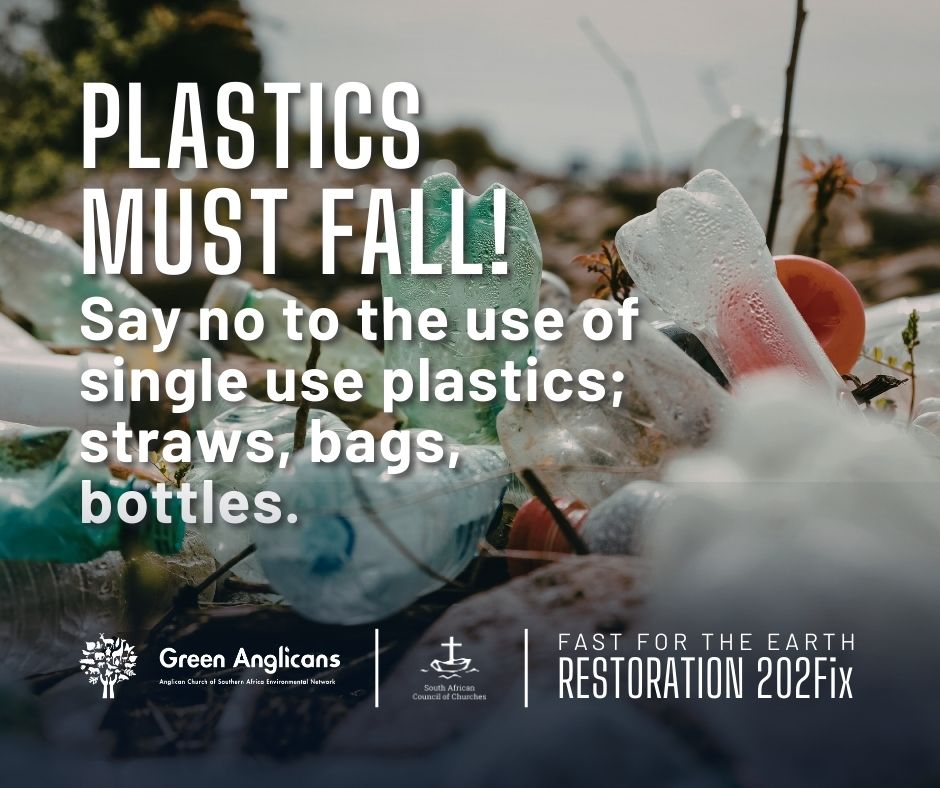
Plastics Must Fall

“You have made my inheritance an abomination.” — Jeremiah 16:18 Plastic has become the symbol of convenience in our modern world, but convenience comes at a cost. Bags, straws, and bottles — everyday items we barely think about — are quietly wreaking havoc on our planet. Let’s break down why these three plastics must fall. Plastic Bags: Silent Polluters Plastic bags are everywhere — grocery stores, corner shops, even tucked away in our kitchen drawers. But their impact is far from harmless. They clog waterways, suffocate marine life, and take hundreds of years to decompose. Animals mistake them for food, leading to starvation or poisoning. What feels like a “free” bag at checkout actually costs ecosystems dearly. Worse, when bags break down into microplastics, they infiltrate soil and water, entering the food chain and ultimately our bodies. That flimsy bag is a long-term environmental debt. Plastic Straws: Small but Deadly Straws might seem insignificant — they’re tiny, lightweight, and often overlooked. Yet their impact is disproportionately large. Because of their size, straws slip through recycling systems and end up in oceans. Marine animals, especially turtles, suffer when straws lodge in their noses or stomachs. For a product used for minutes, the damage lasts centuries. The straw debate isn’t about inconvenience; it’s about recognizing that even the smallest plastics can have devastating consequences. Choosing reusable alternatives is a simple but powerful act of resistance. Plastic Bottles: The Heavy Hitters Plastic bottles are the giants of single-use plastics. Billions are sold every year, and while some are recycled, most end up in landfills or floating in oceans. They fragment into microplastics, contaminating water supplies and harming wildlife. Producing bottles also burns through fossil fuels, adding to climate change. The  bottles we sip from today will still be polluting the planet when we’re old. Alternatives like refillable bottles aren’t just trendy — they’re necessary for survival. You’re inheriting a planet already burdened by decades of plastic waste. But you also hold the power to shift the narrative. Rejecting single-use plastics isn’t just about saving turtles or cleaning beaches — it’s about reclaiming our future. Every bag refused, every straw skipped, every bottle replaced with a refillable one is a step toward dismantling a toxic system. Jeremiah’s words remind us that when we pollute creation, we turn our inheritance — the earth itself — into an abomination. Stewardship means protecting creation, not exploiting it. As a generation known for activism and innovation, we can lead the charge. Plastics must fall — not tomorrow, not someday, but now.

Plastics Must Fall Read More »

Come and See Meat Free Monday

“Then Jesus said to them, ‘Come and see.’” – John 1:39 Lent invites us into a season of reflection, repentance, and renewal. One way we can participate in this spiritual journey is through conscious choices in our daily life, such as practicing Meat-Free Monday. This simple act of abstaining from meat once a week can be much more than a dietary decision—it can become a spiritual discipline. Come and see- this encourages us to try something new – perhaps you have always thought plant free food is boring – lets share ideas – get new recipes! By choosing plant-based meals, we engage in a small but powerful practice of self-denial, echoing the call to simplicity and mindfulness that Lent encourages. It is a reminder that our habits impact not only our bodies but also the world around us. Livestock farming contributes significantly to environmental degradation and climate change, and by eating less meat, we reduce our ecological footprint and act as stewards of God’s creation. Meat-Free Monday can also become a moment of gratitude. Preparing meals from grains, vegetables, and legumes invites creativity and reflection. It encourages us to consider the abundance of God’s provision beyond the typical protein-heavy diet. Sharing these meals with family, friends, or neighbors fosters community and generosity, embodying the love Christ calls us to live out daily. Lent is a season of inviting God into the ordinary rhythms of our lives. Choosing a meat-free day is a tangible way to slow down, reflect on our consumption, and align our actions with our faith. It’s a small step, but one that can ripple outward, influencing our health, our environment, and our spiritual growth. Reflection Prompt:This week, ask yourself: How can my food choices honor God, care for creation, and deepen my spiritual discipline? Consider what changes you can make, even beyond Mondays, to live more intentionally and compassionately.

Come and See Meat Free Monday Read More »

First Sunday in Lent 2026

“For where your treasure is, there your heart will be also.” – Matthew 6:21 Lent invites us to examine what we truly treasure. Jesus’ words challenge us to consider where our loyalty, energy, and attention are directed. If our treasure is comfort, convenience, and consumption, our hearts will follow. But if our treasure is God’s Kingdom — marked by justice, compassion, and care for creation — then our lives will begin to reflect those values. This Lent, we are invited into a “Fast for the Planet.” Traditionally, fasting means giving up food or luxuries in order to focus more deeply on God. A planetary fast expands that vision. It asks us to fast from habits that harm the earth: overconsumption, wastefulness, excessive energy use, and indifference to environmental destruction. The climate crisis reveals what we have collectively treasured. Our dependence on fossil fuels, disposable culture, and endless economic growth has come at great cost — rising temperatures, extreme weather, polluted oceans, and deepening inequality. The poorest communities, who have contributed least to the crisis, suffer most. To fast for the planet is to repent of this imbalance and to realign our hearts. A Lenten fast for the planet might mean eating less meat, reducing energy use, limiting unnecessary purchases, walking instead of driving, or supporting local and sustainable products. It could involve prayer for affected communities, learning about environmental justice, or advocating for change. Each small act becomes a sign that our treasure lies not in endless consumption, but in the flourishing of all creation. It also involves treasuring God’s Creation – saying prayers as the sun rises or sets, taking your family or church group out to a beautiful place in Creation. We will not protect what we do not love! Lent prepares us for Easter — the promise of new life. When we shift our treasure toward what truly matters, our hearts change. A Fast for the Planet is not about deprivation; it is about devotion. Where our treasure is, there our heart will be also.

First Sunday in Lent 2026 Read More »

Pledge to reduce energy consumption

Lent is a season of reflection and renewal. It calls us to examine how we live and how our daily choices reflect our love for God and neighbour. In Genesis, humanity is given a sacred vocation: to “till and keep” the garden. We are not owners of creation, but caretakers. A Lenten Transport and Energy Pledge can be one practical way of honouring this calling. Transport and energy use are among the largest contributors to climate change. The fuel we burn for cars, the electricity we consume, and the energy we waste all release greenhouse gases that warm the planet. The impacts are already visible: extreme weather, droughts, floods, and rising food insecurity — often affecting the poorest communities first. Loving our neighbour today includes reducing harm caused by our energy habits. A Lenten pledge might include walking or cycling short distances instead of driving, carpooling, or using public transport where possible. It could mean reducing unnecessary travel, combining errands into one trip, or committing to one “car-free” day each week. At home, it might involve switching off lights, unplugging unused devices, lowering geyser or heater settings, using energy-efficient bulbs, or being mindful of air conditioning and heating. Transport and energy use are among the largest contributors to climate change. The fuel we burn for cars, the electricity we consume, and the energy we waste all release greenhouse gases that warm the planet. The impacts are already visible: extreme weather, droughts, floods, and rising food insecurity — often affecting the poorest communities first. Loving our neighbour today includes reducing harm caused by our energy habits. A Lenten pledge might include walking or cycling short distances instead of driving, carpooling, or using public transport where possible. It could mean reducing unnecessary travel, combining errands into one trip, or committing to one “car-free” day each week. At home, it might involve switching off lights, unplugging unused devices, lowering geyser or heater settings, using energy-efficient bulbs, or being mindful of air conditioning and heating.

Pledge to reduce energy consumption Read More »