News

Hanging-up the SOC call inclassic DioFS fashion

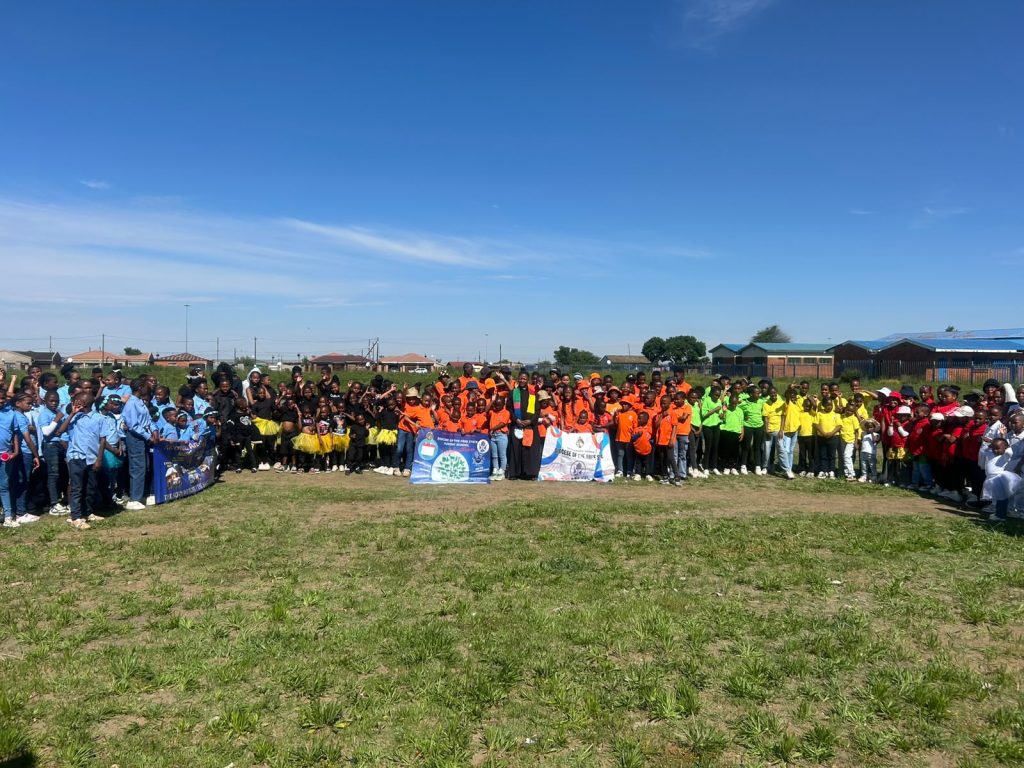
From the 2nd to the 4th of October 2026, the Diocese of Free State held its annual Diocesan Sunday School Celebration hosted by the Kroonstad Archdeaconry. The event was a blend of learning, fun, praise, competition, and care for creation. On Saturday 3 October, the Chaplain, Revd. S. Masisi, administered Martin’s Service to fertilise and water the hearts and souls of Sunday School children, teachers and parents. To break culture, the Diocesan Executive gifted the Chaplain with a Stole woven from plastic. As the Diocesan Chaplain, all Archdeaconry colours were blended in for full representation. Archdeaconry (Colour): Bloemfontein(Orange), Far East(Navy Blue), Goldfields(Yellow), Greater Bloemfontein(Pink), Kroonstad (Sky Blue), Maluti(Red), Mangaung(White), Sasolburg(Black) & South West(Green). Immediately after the service, the local Traffic Officers who’d been arranged prior were waiting outside to escort everyone along the route. It was now time for the annual culture of the Street Show! We walked around the block, with the children walking in neat lines under the guard and watchful eyes of teachers who ensured their safety and assisted the Traffic Officers with the flow of traffic. Most of the same teachers had refuse bags and gloves to pick up any litter along the route we travelled. The walk took approximately 10 minutes, and after arriving at the nearby Sports field, the Street Show began. The first item of the show was a Dance Challenge between Archdeaconries, and children expressed their talents, from TikTok challenges to Lekompo dance moves – they had so much fun! We then moved on to the Eco-Fashion Show, where children showcased outfits they’d prepared with the guidance of Teachers. Before the show, Eco-champ Morena Pule shared a brief message. He highlighted the stemming of Green Anglicans from the 5th Mark of Mission, the importance of picking up litter & Seasons of Creation 2026. The fun part of the show began shortly after as children showcased outfits made from recycled materials. The hosting Archdeaconry led the way with three extra outfits, which were made for showcasing and not part of the competitive show. Thereafter, there was a showcase. The Judges of the Fashion Show were given the criteria of awarding points for material & creativity. This is as per the previous engagement to encourage teachers and children to make outfits that can be reused. After the show, we all went back to the school to participate in other activities in the program, including the Talent show, where children were given themes to express through a Sketch (Drama), a Hymn, a song, and a prayer. The topics, amongst others, included Gender-based Violence & Femicide, Bullying, Teenage Pregnancy & of course, the Environmental crisis we are facing. On Sunday, there was a spirit-led Eucharist Service, with the Diocesan Chaplain as the Celebrant & the hosting Archdeacon, Father Kholisile Ngcola, as the Preacher. He encouraged the teachers and parents to self-introspect with the sermon rooted in Matthew 21:33-45. Father portrayed all the adults in the church as those Vineyard Workers and the Children as the field that needs to be harvested. Shortly after the Service, Eco-champs under the leadership of the Diocesan President Eco-champ Mamane Kebaabetswe Sepato, were summoned to the front. There was yet another brief message on St. Francis Day, which marks the last day of the Seasons of Creation. In Sesotho, there’s an idiom which says, ‘E kobjwa e sa le metsi’ which loosely translates to ‘you teach them while they’re young’. It continues to be a cultural practice and will soon be the norm of teaching Sunday School children about Green Anglican and an intentional eco-friendly lifestyle. By: Morena Pule

Hanging-up the SOC call inclassic DioFS fashion Read More »
Green Anglican Researcher Highlights Energy Poverty and Climate Justice at COMMRE 2026

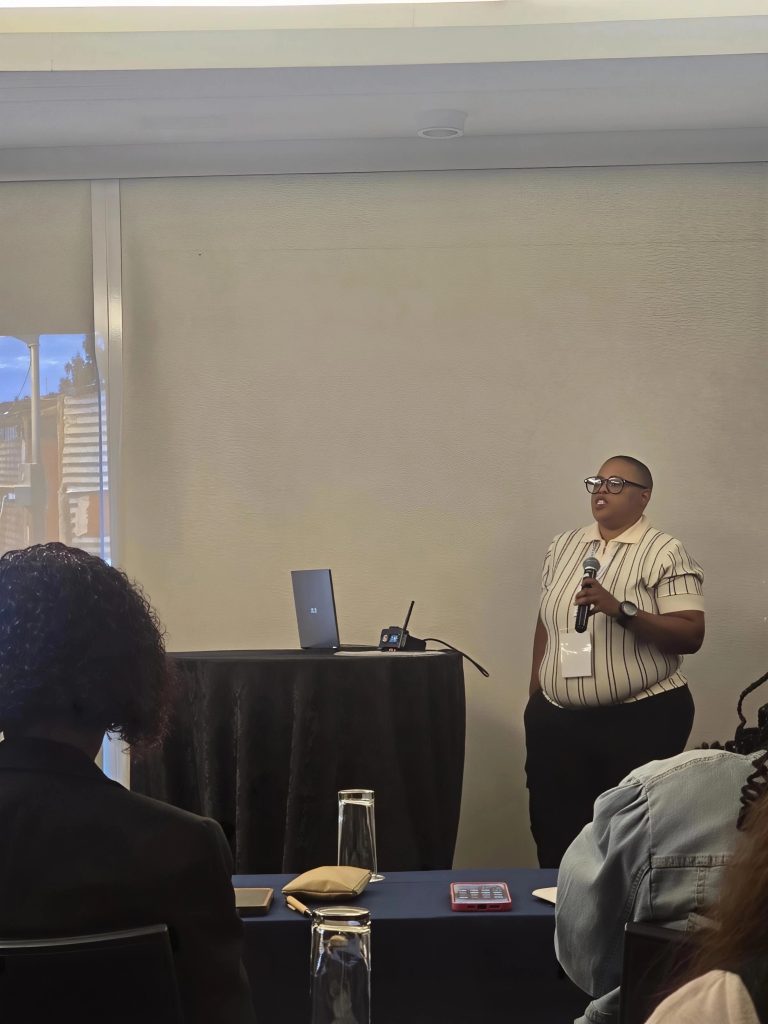
Tshegofatso Lekgetho, a Green Anglican and postgraduate researcher at the University of South Africa (UNISA), participated in the COMMRE 2026 Conference, held at the Durban International Convention Centre (ICC) from 27 to 30 October 2026. The conference brought together researchers and professionals to share knowledge and explore solutions to environmental, climate and sustainability challenges. Lekgetho delivered a lightning talk titled “Energy Poverty and Adaptive Capacity in South African Informal Settlements: A Conceptual Framework for Decentralized Renewable Energy as a Climate Adaptation Strategy.” Her presentation explored the relationship between energy poverty and climate change, particularly how limited access to safe, affordable and reliable energy affects the ability of vulnerable communities to prepare for, respond to and recover from climate-related disasters. Energy Access Is a Matter of Climate Justice For many households living in informal settlements, access to electricity remains a daily challenge. Families often depend on unsafe or unreliable energy sources for cooking, lighting, heating and other essential needs. These challenges become even more serious during extreme weather events, when access to energy can influence household safety, communication and emergency preparedness. Through her research, Lekgetho highlighted the potential of decentralized renewable energy solutions, including solar technologies, to strengthen community resilience and support climate adaptation. Her work emphasises that renewable energy should not only be viewed as a means of reducing carbon emissions but also as a practical tool for addressing inequality and improving the lives of vulnerable communities. Connecting Research, Faith and Environmental Justice As an active member of the Green Anglicans movement within the Anglican Church, Lekgetho’s participation reflects the important connection between faith, environmental stewardship and social justice. The Green Anglicans movement encourages Christians to care for God’s creation while responding to the environmental challenges affecting communities, particularly those who are most vulnerable. Her research contributes to this mission by drawing attention to energy poverty as an issue of human dignity, environmental justice and climate resilience. The presentation also demonstrated the importance of bringing community-centred perspectives into academic and policy discussions about climate change. Taking Climate Justice Beyond the Conference Lekgetho’s participation at COMMRE 2026 represents another step in her academic journey and her commitment to advancing practical solutions for vulnerable communities. Her ongoing postgraduate research focuses on investigating and modelling the feasibility of renewable energy solutions in informal settlements, using Turflaagte in Bloemfontein as a case study. Through this work, she hopes to contribute evidence that can inform more inclusive energy planning and strengthen the resilience of energy-poor communities. Her participation serves as a reminder that caring for creation also means caring for the people who depend on it. Climate justice must go beyond protecting the planet. It must also ensure that no community is left behind in the transition towards a sustainable and climate-resilient future. By : Tshegofatso Lekgetho  

Green Anglican Researcher Highlights Energy Poverty and Climate Justice at COMMRE 2026 Read More »

WOMEN FAITH LEADERS ENVIRONMENTAL ACTION TRAINING

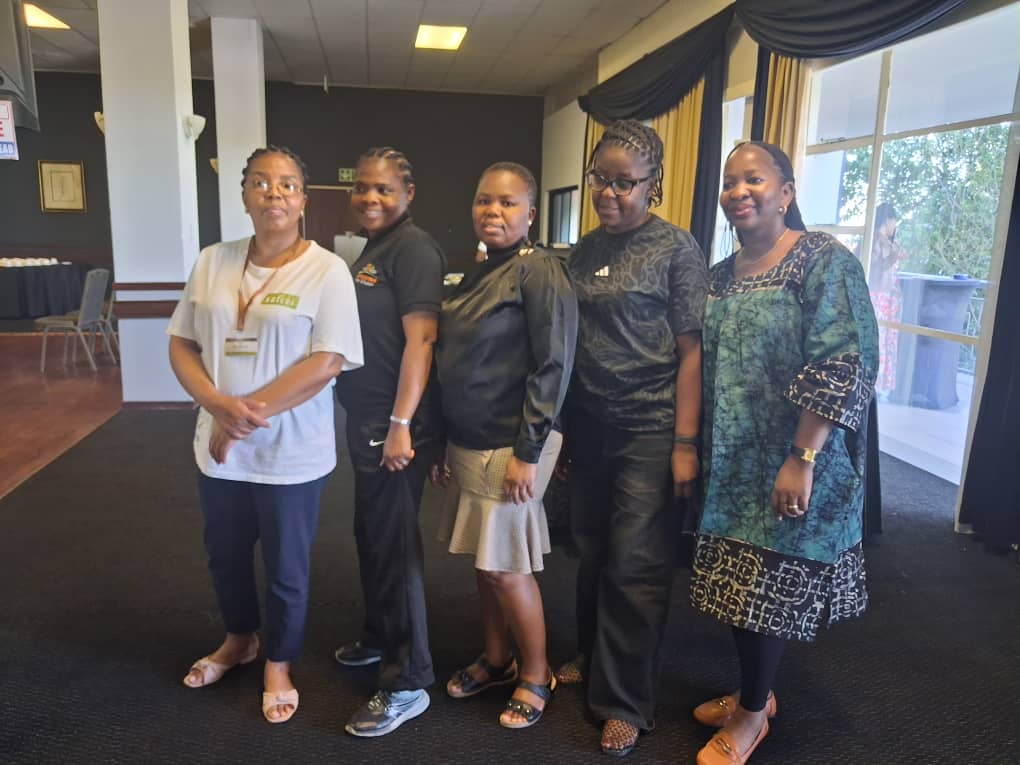
From 20–22 October 2026, 40 women faith leaders from 12 countries across Southern and East Africa gathered in Johannesburg for SAFCEI’s Regional Women’s FLEAT workshop to strengthen their leadership and advocacy on food, energy, climate and gender justice. Anglican reps included : Rev Vistorina Ndamanepo and Rev Rakkel Kafidi from Namibia and Nyendo from Tanzania Participants shared experiences and progress since their previous FLEAT training, exploring agroecology and indigenous foods, the importance of cage-free advocacy, and examining false solutions to the energy transition, including nuclear power. Sessions also focused on gender and faith, women’s leadership in the just energy transition, and community-owned renewable energy solutions. The workshop gave participants the opportunity to learn from one another, exchange seeds and develop practical action plans to advance environmental justice in their faith communities and across the region. Rev Rachel led the opening session on Eco-theology and the link between Gender and Climate action

WOMEN FAITH LEADERS ENVIRONMENTAL ACTION TRAINING Read More »

Food For Future Conference

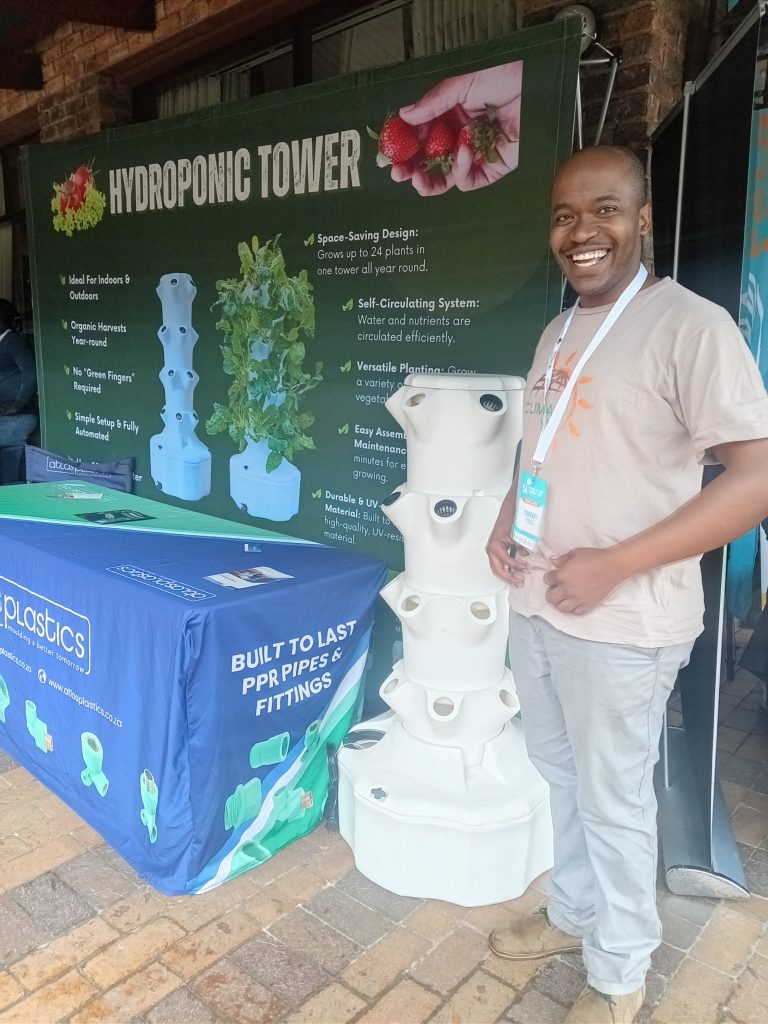
On 29 September 2026, the Future of Food Conference 2026 brought together leaders in finance, farming and retail to ask one big question: how can money help build a food system that cares for both people and planet? For young climate advocate Morena Pule, from the Green Anglicans the key lesson was about responsibility. Speaker Deon Scheepers challenged delegates to ask where tax money goes and whether it truly supports an environment where healthy food can grow. It was a reminder that sustainability starts with how we invest. The conference highlighted that caring for the environment is central to food security. Discussions on crop insurance, responsible pesticide management and sustainable production showed that resilient supply chains depend on healthy soil, clean water and fair inclusion. It was noted that transformation is still slow, with only three percent of wine brand owners nationally being black people. Speakers encouraged entrepreneurs to build strong ecosystems that are ready to receive funding, while also mastering market access and securing support before and after investment. The message from the Sustainability meets Demand panel was clear: environmental care and economic growth must go together. The conference was a reminder that financing the future of food is ultimately about sustaining creation. By: Morena Pule

Food For Future Conference Read More »

World Food Day March Calls for Climate Justice and Food Security

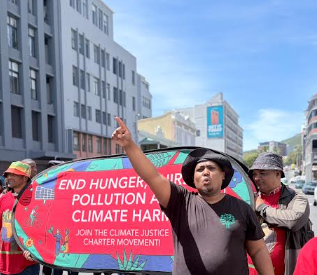
On Friday, 16 October 2026, marking World Food Day, hundreds of people from across Cape Town and surrounding communities took to the streets, marching from the Cape Peninsula University of Technology (CPUT) to the South African Parliament. The march called for urgent government action on the climate crisis and the developing El Niño weather phenomenon, which threatens food security and livelihoods across Southern Africa. Upon arriving at Parliament, representatives of the participating organisations handed over a memorandum addressed to the Speaker of the National Assembly, Thoko Didiza, and the Ministries of Agriculture, Environment, Employment and Labour, and Finance. The memorandum outlined several urgent demands, including invoking the Disaster Management Act to strengthen preparedness for El Niño, establishing and supporting food hubs in every ward, developing buffer stocks for a national food reserve, and accelerating land reform to support small-scale farmers. The organisations also called on the government to adopt the Climate Justice Charter, which has been endorsed by almost 300 organisations, including Green Anglicans SA. The Charter was first handed over to Parliament in 2020, yet its adoption remains unresolved. Climate change is not only an environmental concern but also a matter of justice, human dignity, livelihoods, and food security. Access to food is a fundamental human need, and protecting the environment is essential to ensuring a sustainable future for all. Climate action must therefore move beyond promises to meaningful policies and actions that protect people, support local farmers, all creation and secure food for future generations.

World Food Day March Calls for Climate Justice and Food Security Read More »

St Mary Magdalene Called to Listen, Reflect and Restore God’s Creation

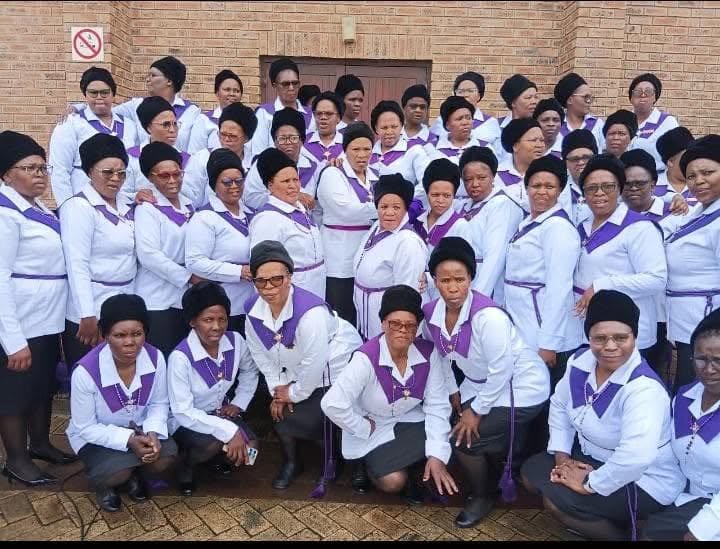
The Anglican Church of Southern Africa (ACSA) Provincial Guild of St Mary Magdalene held its Provincial Elective Conference from 15 to 18 October 2026 in Cape Town, under the theme “Listen, Reflect and Restore.” The during the opening Eucharist Bishop Deseko ( Dean of the Province ) and Bishop Charles ( Guild Liason Bishop) The Provincial Green Anglicans team was invited to deliver a presentation on Saturday, 17 October, focusing on the Church’s role in caring for God’s creation. During his presentation, Bino Makhalanyane from Green Anglicans encouraged members of the Guild not only to pray for the healing of creation but also to take practical action to restore and protect the environment. He reminded participants that caring for creation is part of our Christian responsibility, especially given that God declared creation good. As we begin to listen, Romans 8:22 reminds us that “the whole creation has been groaning.” Today, this groaning can be heard through devastating floods, prolonged droughts, environmental degradation and extreme heatwaves, which often lead to wildfires, displacement, loss of life, disruption of education and long-term trauma for affected communities. St Mary Magdalene was encouraged to reflect on the growing climate crisis across Southern Africa. Our region continues to experience climate-related disasters, including floods, droughts, wildfires and heatwaves. In May 2026, several provinces across South Africa, as well as Lesotho, experienced heavy rainfall, strong winds and snow, resulting in loss of life and the displacement of thousands of people. This followed the January 2026 floods that affected Limpopo, Mpumalanga, KwaZulu-Natal, the Eastern Cape and North West. The crisis continues, with warnings of potentially severe El Niño-related conditions during the 2026/27 season and drought emergencies affecting parts of the region. The Anglican Communion Fifth Mark of Mission calls all Anglicans to “strive to safeguard the integrity of creation and sustain and renew the life of the earth.” Caring for creation is not an additional activity outside the Church’s mission, it is central to who we are and what we are called to do. As women of faith, members of St Mary Magdalene are encouraged to become agents of hope and restoration, following the example of faithful women who proclaimed and lived out the Good News. Ms Zikhona Mzalisi, a member of the Guild and Green Anglicans Coordinator in the Diocese of Khahlamba, also encouraged members to begin with small, practical actions that can make a meaningful difference. At home, these include fixing leaking taps, taking shorter showers, avoiding single-use plastics by carrying reusable shopping bags and reducing food waste. She added that churches can also play an important role by establishing recycling stations, growing trees, creating indigenous gardens, organising community clean-up campaigns and building partnerships with local stakeholders, including municipalities and the Department of Forestry, Fisheries and the Environment. Members were further encouraged to use their voices to hold local leadership accountable by engaging ward councillors on issues such as regular waste collection, clearing blocked drains and strengthening local emergency preparedness. These actions are essential for building resilient and sustainable communities better prepared to respond to climate-related disasters. The message was clear: we are called only to listen to the groaning of creation, reflect on our responsibility, and restore what has been damaged. Through prayer, faith and practical action, the women of St Mary Magdalene can become powerful agents of change in caring for God’s creation.

St Mary Magdalene Called to Listen, Reflect and Restore God’s Creation Read More »