John-Paul Roberts

From Worship to Beach Clean-up

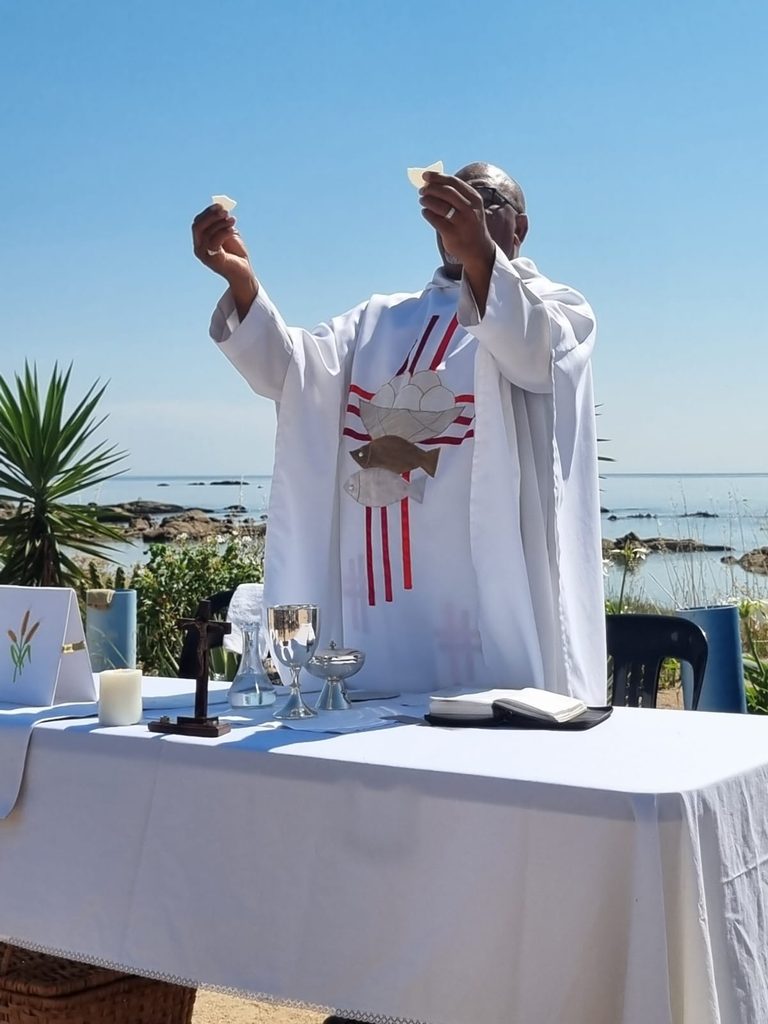
The St Mary Magdalene Parish experienced God’s creation as both sanctuary and responsibility during two special gatherings at Steenberg’s Cove. On Wednesday, 30 September, the parish held a Beach Eucharist at the Cove. Behind the congregation, the ocean stretched out in picturesque beauty calm, vast and sparkling in the sunlight, a living reminder of God’s magnificent creation. The gentle sound of the waves and the wide-open sky created a perfect place for worship. That challenge was put into action on Sunday, 04 October, when the Sunday School, joined by parents and members of the congregation, returned to the same beach for a Beach Clean-Up. Their theme was taken from Ephesians 2:10 “For we are God’s handiwork, created in Christ Jesus to do good works, which God prepared in advance for us to do.” Members of the Parish joined hands and picked up endless pieces of glass, some even in the water, including many exposed broken bottlenecks left behind by people with drug habits. While there were fortunately not many plastic bags on the beach itself, they found that most of the rubbish lies on the grass just before the edge of the beach, which has sadly become a regular dumping site. When the wind blows, most of that dirt blows onto the beach and into the sea. The clean-up served as a practical reminder of the parish’s calling. As God’s handiwork, Christians are called to care for His creation. A clean beach is not just about beauty. Broken glass can injure children and animals, plastic and rubbish in the sea harms fish, birds and marine life, and dirty beaches become unsafe for everyone. By keeping the beach clean, they protect God’s creatures, keep the community safe, and show respect for the gift of creation He has entrusted to them. The parish came to the beach to worship God in His creation, and returned to care for it, moving from hearing the Word to doing good works.By : Lucy Burgess

From Worship to Beach Clean-up Read More »

Eco-Champs at the Mothers Union Worldwide Gathering

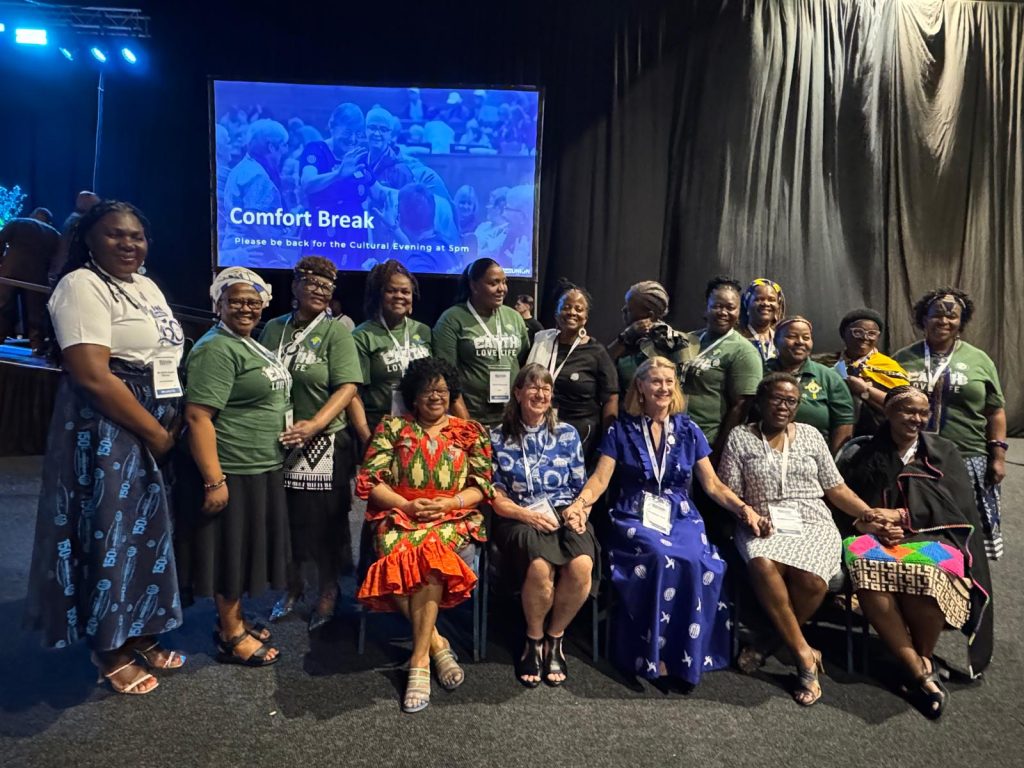
The Mothers Union held a World Wide gathering to celebrate 150 years of ministry in Durban, South Africa The MU of the Anglican Church of Southern Africa passed a resolution three years ago that each Diocese should have an “Eco-champ” and they have been working with the Green Anglicans to develop the programme. At the Global Council meeting, Mme Matito, the PCDC (Provincial Community Development Coordinator) shared about the project. Eco-champs are involved in climate smart food gardening, disaster response and preparedness, community clean ups, tree planting, water saving, plastic recycling and many other activities. The project has gone from strength to strength! At the gathering in Durban a resource of bible studies on disaster preparedness (flooding, drought, fire, heatwaves and displacement) was launched and each delegate received a copy of the booklet . The resource can be downloaded here : Disaster Management Online MU Eco-champs were also selling products made from recycled plastic such as mats and other items. Rev Rachel Mash, Green Anglicans Coordinator was a panelist on the topic of “Climate change and Migration” and invited the MU Eco-champs to end the panel by singing  “Join us, join in, Mothers Union in changing lives!” Here is the text of her talk: In 2022 the City of Durban experienced devastating floods – over 500 people died and 40,000 displaced.  One family lost 9 people . some people never found the bodies stil in emergency accommodation. Recurring floods have damaged the infrastructure that had been mended.  Floods since then have again damaged infrastructure that was being mended. Last year Mthatha had terrible flooding, a kombi of school kids was washed away.  Mothers Union made a good decision to support some families with entire uniforms, shoes, school stationary – the mother was crying tears .. But it is not enough to just support when the disasters come, how can we prepare for disasters? The Mothers Union of ACSA have launched a program called Eco-champs in partnership with Green Anglicans.  We are launching the Bible studies on disaster relief that you can find in your goodie bag. What is an eco champ? What is the first commandment? It was not the commandments given to Moses, they came generations later – it was the commandment given to  Adam and Eve Gen 2: 15 “Work the Earth and look after it” Look at your logo – the earth! We must look after Mother Earth or Mother Earth cannot look after us The Mothers union Eco – champs are learning and sharing a training called “Farming God’s way “ which is climate smart kitchen gardens, what do you do when there is hardly any rain – for instance : remembering that God is the first gardener!  Adam and Eve were put into a garden to work the land and look after it!  For example: Mulch is Gods blanket. Mothers are now growing food and able to sell it to assist with electricity, school fees. Others are drying fruit to sell, and keeping bees to sell the honey.  Other are making small items out of recycled plastic. What a lovely picture of an old MU member, bed bound – with a huge loom on the bed, family and neighbours cut up plastic shopping bags for her into strips and she is making the most beautiful mats! This not only helps the family in the rural area Many young women leave the rural areas for studies and their first job and send money home to the family in the rural area. Families in the rural areas are battling with climate change as the rains are failing,  it is becoming harder to grow vegetables to they start asking for more money. This puts her at risk of looking for a sugar daddy – or what is strangely called a blesser! Climate change is one of the things that pushes people off their land –  2023-2024 worst in 40 year in Zimbabwe and Malawi. Mozambique cyclones increasing in frequency and strength – leads to increased migration. South Africa in the lead up to the elections has seen a violent wave of violence, were many people  have been chased away from homes, either because of violence or threat of violence. For example a 7 year old Zimbabwean told they would burn her family if she came back to school. The family left that same night. Widow, orphan and foreigner are mentioned 19 times in the Bible – these are the  vulnerable trio without a support system. How can MU reach out to our communities? A clinic in Nomzamo found that they had a lot of mums from Malawi where tiny babies were dying of choking. The reason? They were trying them to early on solids – they had no mothers to help them, they had not  integrated into the community. How can the MU reach out to such young mums? 150 years later, we face different challenges than Mary Sumner – we face climate change and migration. My question to you today is this: As Mothers Union – will we care for Mother Earth? Find climate smart ways to grow our food, prepare for disasters, clean our communities?  and care not only for the widow and the orphan but also  the foreigner?

Eco-Champs at the Mothers Union Worldwide Gathering Read More »

Faith in Action: Holy Cross Collegiate Celebrates the Feast for Creation

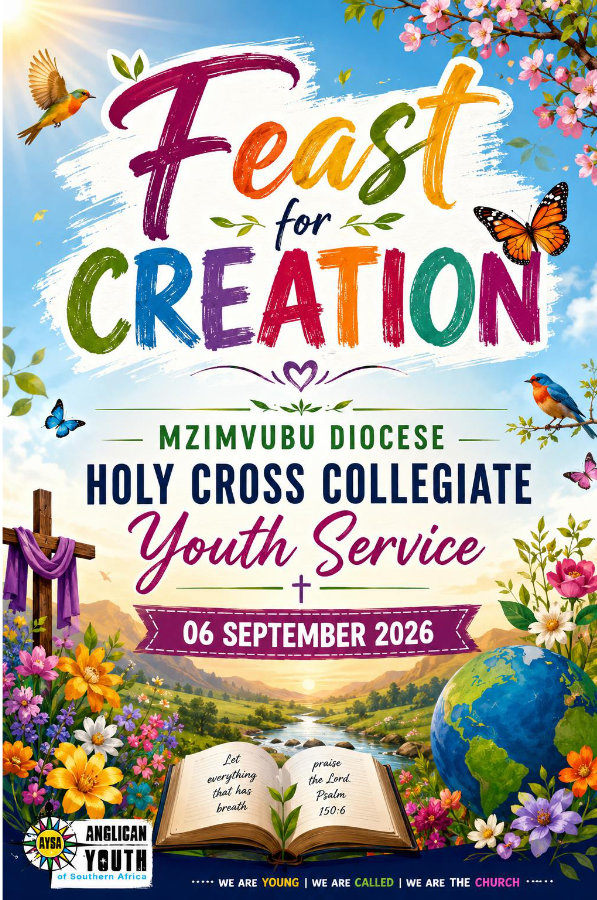
At Holy Cross Collegiate, the Feast for Creation became more than a Sunday service. It brought worship, youth participation, prayer, environmental awareness and practical action together, showing how care for God’s creation can become part of the life of a church community. A celebration rooted in faith and action On 6 September 2026, approximately 82 people gathered at Holy Cross Collegiate in the Mzimvubu Diocese to celebrate the Feast for Creation. The youth led the programme, while the wider congregation joined in the Anglican order of service, bringing together worship, Scripture, music, prayer, reflection and environmental awareness. The celebration formed part of a wider environmental journey at Holy Cross Collegiate. Earlier in the year, the young people had already taken practical steps to care for their surroundings. On 16 June, approximately 68 people—mostly young people from GBFS, Servers and other youth participants, together with members of the Mothers’ Union, Bernard Mizeki and the Provost—took part in a community clean-up from the Hlwahlwazi stop to the church premises. The activity combined service to the community with awareness about keeping shared spaces clean. Environmental awareness in action: young people and community members engage with collected litter and discuss the importance of keeping their surroundings clean. Bringing creation into worship The Feast for Creation continued this work by placing creation care within the worship life of the church. The service followed the Anglican way from beginning to end, with the youth at the centre of the programme. Scripture, hymnody and prayer created space for the congregation to consider its relationship with the natural world. Psalm 150:6—“Let everything that has breath praise the Lord”—provided a fitting theme for the celebration. The congregation also sang Creation Song 06 from the Anglican hymn book, linking the praise of God with an appreciation of the life and beauty found in creation. The church community gathers outdoors in the rain as part of the creation-focused celebration. Stepping outside to listen, reflect and pray After the prayers, the congregation went outdoors to spend time with creation. They listened, observed, talked and reflected together before praying for creation and for the challenges affecting young people and their communities. The weather became part of the experience. Rain fell as the congregation gathered outside, but the activity continued. The moment offered a simple reminder that creation is not only something discussed inside the church; it is all around the community, and its well-being is connected to everyday life The church community gathers outdoors in the rain as part of the creation-focused celebration. Young voices speaking for creation The participation of children and young people was one of the most visible parts of the celebration. Their handwritten messages—“Do not litter”, “Keep rivers clean” and “Care for creation”—turned environmental awareness into simple, practical calls that could be understood by the whole community. For Holy Cross Collegiate, this kind of participation is important because it gives young people an opportunity to remain active in matters that affect both their church and their communities. Cleaning, speaking about environmental responsibility, praying and taking part in practical activities all create opportunities for young people to become active stewards of their surroundings. Young people and children share practical messages of creation care, including “Do not litter”, “Keep rivers clean” and “Care for creation.” Prayers for creation and for young people The day also recognised that environmental concerns exist alongside the social challenges experienced by young people. The congregation prayed about pressing concerns including unemployment, substance abuse and mental health challenges, placing the wellbeing of young people within the wider responsibility of caring for communities and creation. Rev. Swana was among the clergy present during the outdoor part of the celebration. The participation of clergy, youth and the wider congregation helped reinforce the message that creation care is not the responsibility of one group alone. When the rain changed the plan, the commitment continued The medicinal plants prepared for the Feast for Creation were blessed during the celebration. The intention had been to plant them that day, but the rain made planting difficult. Rather than ending the initiative there, the plants were later placed in tins during the Confirmation service on 12 September. This continuation became a small but meaningful reminder that environmental action does not have to end when circumstances change. The planting could happen later, but the commitment to care for creation remained. A plant cared for as part of the church community’s continuing commitment to creation care. A commitment that must continue For Holy Cross Collegiate, the Feast for Creation was therefore not simply a once-off environmental event. It formed part of an ongoing effort to mobilise the church and surrounding community to recognize the abuse and neglect of creation, speak about it and take practical action. Provost Rev. Somgungqu emphasized that these activities should be encouraged by the congregation and must not stop. His message captured the spirit of the day: creation care should become part of the continuing life and witness of the church. The journey at Holy Cross Collegiate is still unfolding. From cleaning the route between Hlwahlwazi and the church, to praying outdoors in the rain, to encouraging children to keep rivers clean and avoid littering, the community is finding practical ways to connect faith with environmental responsibility. The Feast for Creation left the congregation with a simple but important call: to see what is happening around them, to speak about it, to pray for creation and for their communities, and to turn that awareness into action. In this way, caring for God’s creation becomes not only a celebration, but a continuing way of serving God, the church and the community. “Let everything that has breath praise the Lord.” Psalm 150:6

Faith in Action: Holy Cross Collegiate Celebrates the Feast for Creation Read More »

SOC Youth Launch in Cape Town

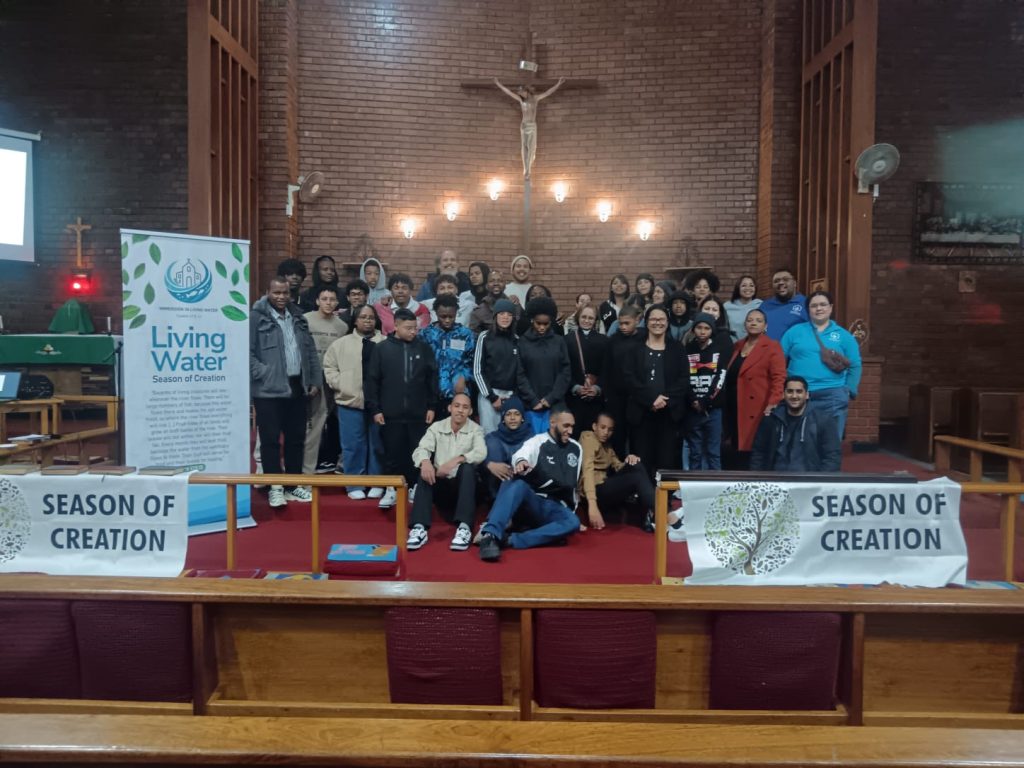
On Friday 4 September the Together4Creation Team held a Season of Creation Youth Launch based off the theme Living Water which was hosted at St Timothy’s Anglican Church in Factreton which is part of the Saldanha Bay Diocese. The event was attended by youth from the Anglican, Catholic and Moravian churches. During the evening the young people participated in games led by St Timothy’s youth leaders, before the keynote address by Rev Sikawu Makubalo from the Methodist Church, Table Bay Circuit who is also part of the SACC Season of Creation Committee. He challenged the young people to be open to feeling the damage of the world, so that we might become people filled with Living Waters that bring healing and restoration to our communities. We were also blessed to be ministered by one of the St Timothy’s young people through dance. The young people also broke into groups and had time for discussion about how we can bring change to areas in our community needing environmental healing and restoration. The evening ended with a closing prayer and blessing from Rev Charmaine McBride the rector of St Timothy’s.

SOC Youth Launch in Cape Town Read More »

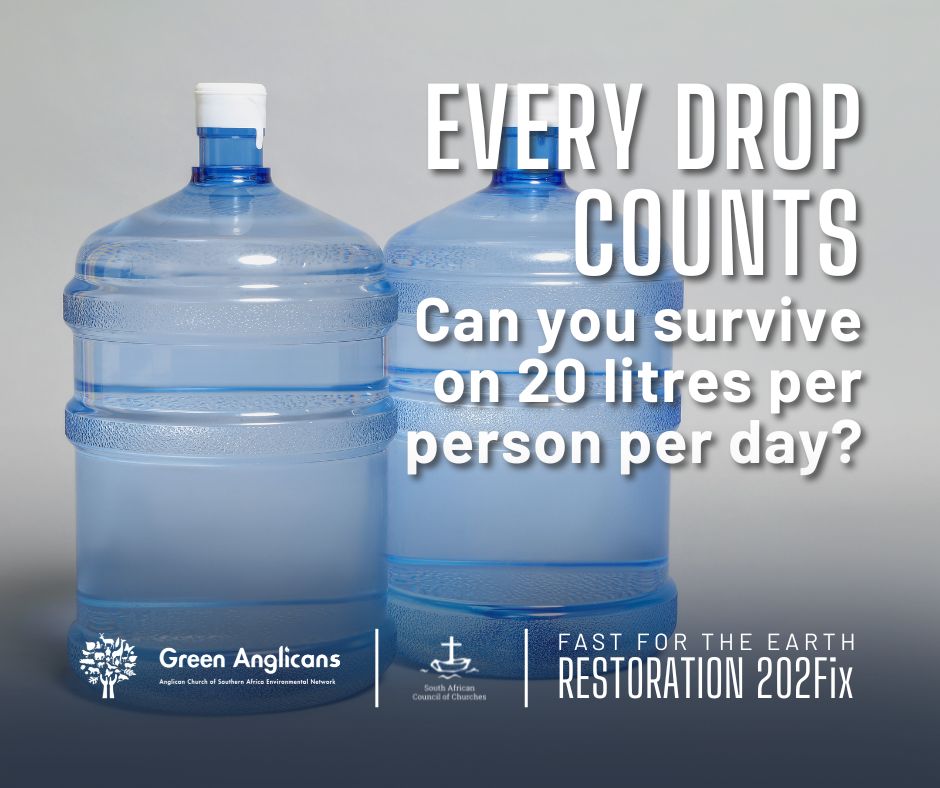
Every Drop Counts

 “The poor and needy search for water, but there is none; their tongues are parched with thirst.But I the Lord will answer them; I, the God of Israel, will not forsake them.” – Isaiah 41:17 Lent is a season when Christians pause to reflect on how we live and how our choices affect others and God’s creation. One way to deepen this reflection is to think about something many of us take for granted every day: water. Globally, water scarcity is becoming one of the most serious environmental challenges of our time. According to the World Health Organization, about 20 litres of water per person per day is the minimum amount needed to meet basic human needs such as drinking, cooking, and hygiene. Yet for millions of people around the world, this is all the water they have for an entire day. Twenty litres is roughly one bucket or jerrycan. Imagine using just that one container of water for everything: drinking, cooking food, washing hands, cleaning dishes, and bathing. In many communities, especially in low-income regions, people must also walk long distances to collect this water from communal taps, wells, or rivers. Meanwhile, people in wealthier countries often use hundreds of litres of water each day through long showers, washing machines, garden irrigation, and other conveniences. This inequality reminds us that water is not only an environmental issue but also a matter of justice. During Lent we are invited to practice restraint and gratitude. Reflecting on the preciousness of water can help us change our habits—using water wisely, avoiding waste, and protecting the sources that sustain life. Even small actions, like reducing unnecessary consumption or avoiding products that pollute rivers and oceans, become acts of care for our neighbours and for creation. Water is a gift from God, essential for life itself. When we treat it with respect and gratitude, we honour both the Creator and the communities who depend on this fragile and precious resource every day. 💧

Every Drop Counts Read More »

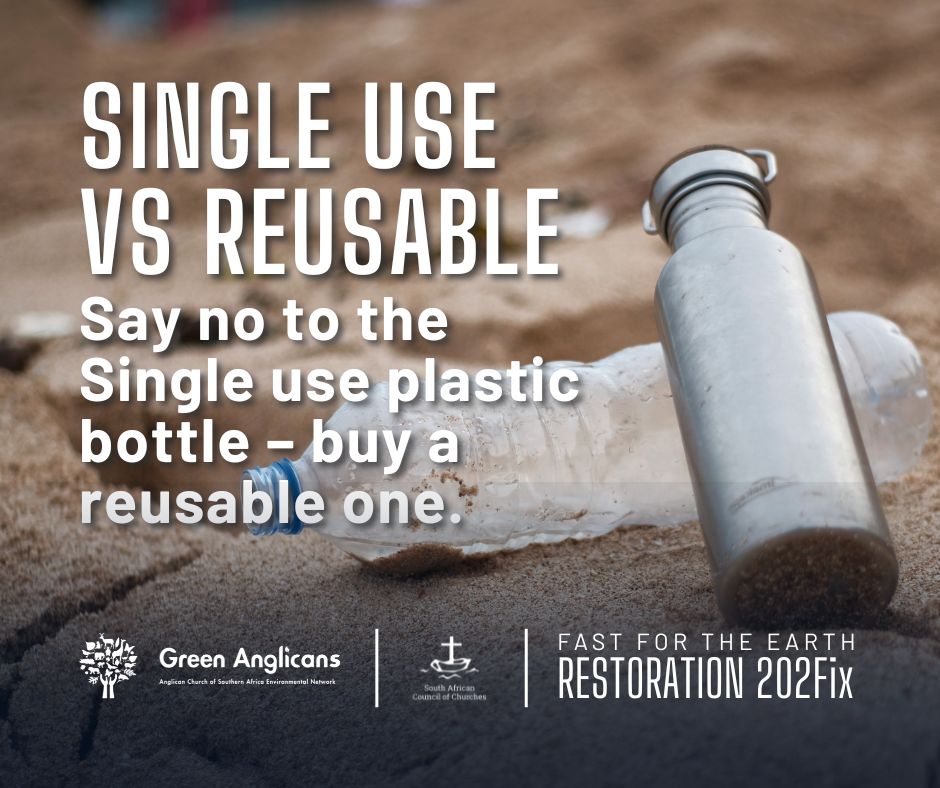
SINGLE USE vs REUSABLE

“We know that the whole creation has been groaning in labor pains until now.” – Romans 8:22 Lent is traditionally a season of reflection, repentance, and simple living. Christians often give up small comforts to draw closer to God and to remember our responsibility toward others. In our time, one meaningful Lenten practice could be giving up single-use plastic bottles—not only for forty days, but as a permanent commitment to care for creation. Recent research highlights how serious the problem of plastic bottles has become. One article explains that hundreds of billions of plastic bottles are used globally each year, yet only a small portion are recycled. Many end up in landfills, rivers, and oceans where they may take hundreds or even thousands of years to break down. As they degrade, they release microplastics, tiny particles that contaminate soil, water, and even the food we eat. Another report notes that the problem is particularly severe in low-income countries. Waste management systems are often under-resourced, meaning plastic bottles are frequently burned, dumped in open spaces, or washed into waterways. This pollution harms ecosystems, contaminates drinking water, and can affect human health through toxins released from plastic waste. A third study also highlights the health and environmental impacts of growing plastic waste. Plastic pollution contributes to air pollution when burned, and chemicals from plastics can seep into water sources. Communities that already face poverty and limited services often bear the greatest burden of this pollution. For Christians, these realities challenge us spiritually. Scripture teaches that the Earth is God’s creation and that humans are called to tend and care for it (Genesis 2:15). When our daily habits create waste that harms people and ecosystems, we must ask how we can live more faithfully. Giving up plastic bottles during Lent can therefore become a spiritual discipline. It reminds us to consume less, to think about the impact of our choices, and to stand in solidarity with communities affected by pollution. Fortunately, alternatives are simple and accessible. Many people now use reusable stainless-steel or glass water bottles that can be refilled throughout the day. Carrying a refillable bottle reduces waste dramatically. In places where tap water is unsafe, water filters, refill stations, or large reusable water containers can reduce dependence on single-use plastics. Even small habits—refilling a bottle before leaving home or supporting businesses that provide water refill points—can make a difference. Lent invites us to begin practices that lead to lasting transformation. Giving up single-use plastic bottles is not just a temporary sacrifice but a step toward a more just and sustainable way of living. By choosing reuse over waste, we honour God’s creation and protect the wellbeing of communities and ecosystems for generations to come. 🌍💧

SINGLE USE vs REUSABLE Read More »