News

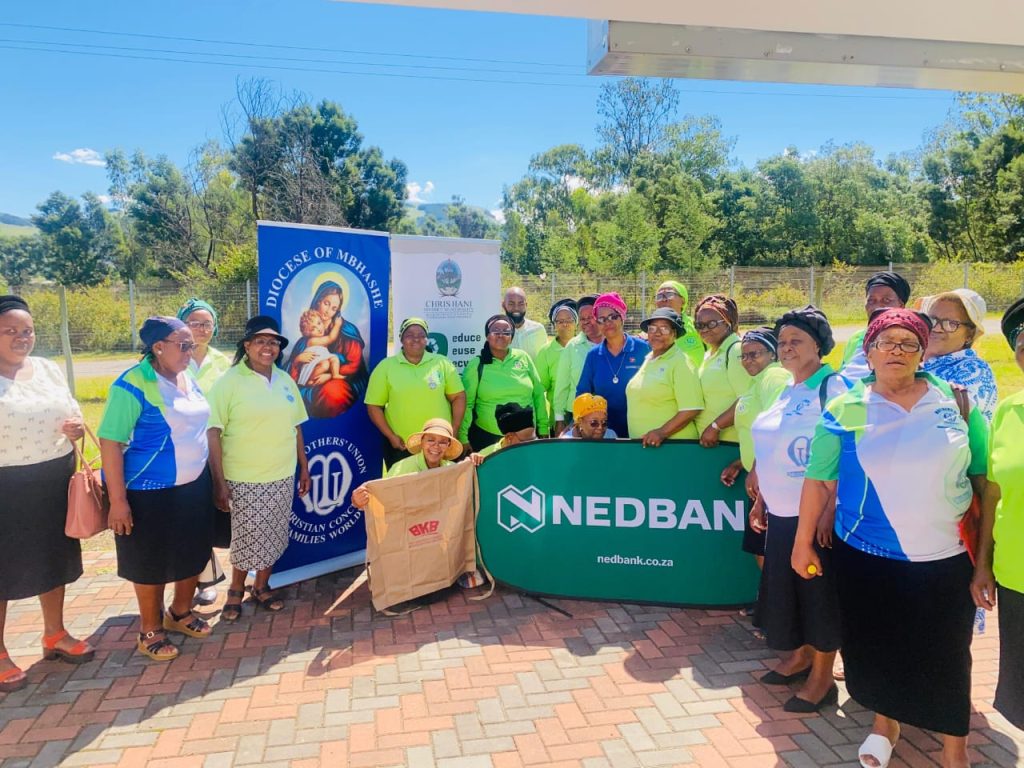
Anglican Women Gather for Sustainable Development Information Sharing

On 19 March, the Diocese of Mbashe hosted an important information-sharing session under the theme “Anglican Women on Sustainable Development,” bringing together women and key stakeholders to explore opportunities for empowerment, environmental stewardship, and sustainable livelihoods. The session was attended by representatives from the Department of Agriculture, Land Reform and Rural Development, Department of Forestry, Fisheries and the Environment, Nedbank, BKB, Chris Hani District Municipality and Dr A.B. Xuma Local Municipality. The gathering created a valuable platform for members of the Mothers Union to receive practical information, build partnerships, and engage with programmes that support sustainable development. The Department of Agriculture shared opportunities available through Ilima/Letsema and other support programmes, including livestock improvement, branding certificates, and infrastructure development. Mothers were encouraged to apply for assistance and benefit from government support initiatives. The department also raised awareness of the Foot-and-mouth disease outbreak and shared guidance on protecting livestock health. Representatives from Nedbank introduced work in the green economy, focusing on food gardening initiatives for women and schools, and highlighted how sustainable agriculture can strengthen household food security and community resilience. BKB presented on responsible livestock care, especially relating to sheep farming, wool quality, meat production, mating seasons, and lamb care. Participants also heard about ongoing plans for wool sorting training, which may create additional skills and economic opportunities. The Department of Forestry, Fisheries and the Environment focused on forest development and fire protection, emphasising the importance of preventing veld fires between April and September, establishing fire breaks, improving fire safety awareness, and accessing funding support through Fire Protection Associations. These sessions demonstrated how faith communities can play a meaningful role in promoting sustainable development by connecting women with knowledge, resources, and partnerships that strengthen both livelihoods and care for creation. Through initiatives such as these, the Mothers Union continue to show leadership in building resilient communities and advancing environmental stewardship.

Anglican Women Gather for Sustainable Development Information Sharing Read More »

“Serve the Earth, Serve the Lord” – Cleaning Campaign Phase 2

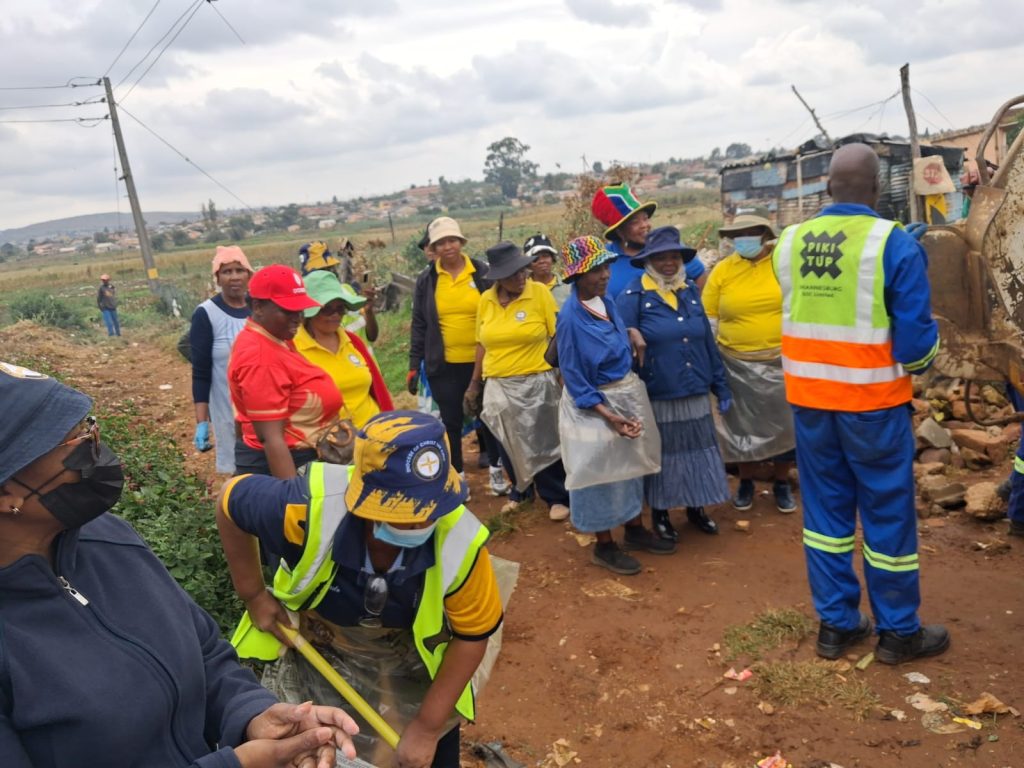
On Wednesday, 15 April, members of the Anglican Women’s Fellowship and the Mothers’ Union from the Diocese of Christ the King carried out the second phase of their “Serve the Earth, Serve the Lord” cleanup campaign in Finetown, Johannesburg. Working alongside local community members, the team focused on clearing an illegal dumping site situated near residential homes, helping to restore dignity to the area and reduce environmental and health risks. Their collective efforts led to the removal of significant waste, with PikitUP later collecting a total of 80 rubbish bags from the site. The campaign reflected a shared commitment to caring for creation through practical action, demonstrating how faith communities can respond to environmental challenges while serving their communities. It was also a witness to the power of partnership between the church and residents in building cleaner, healthier neighbourhoods. The event concluded with prayer and worship, grounding the day’s work in faith and thanksgiving, followed by a vote of thanks delivered by President Veronica and Revd Agnes Makume, who affirmed the importance of continuing this ministry of environmental stewardship.

“Serve the Earth, Serve the Lord” – Cleaning Campaign Phase 2 Read More »

Diocese of Christ the King Equip Parish Coordinators

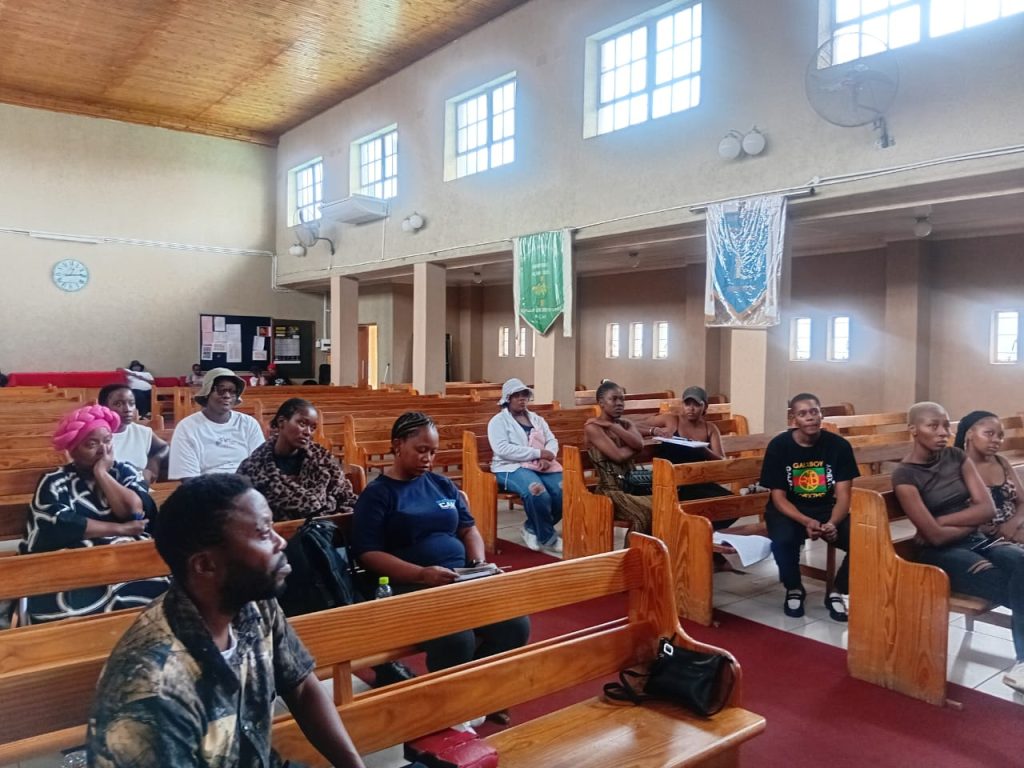
On Saturday, 28 March 2026, the Archdeaconry of the Vaal in the Diocese of Christ the King gathered for a meaningful Green Anglicans workshop to equip Parish Coordinators for effective environmental ministry. The workshop created a dynamic space for learning, collaboration, and the sharing of practical ideas to strengthen climate action at the parish level.The meeting was both fruitful and inspiring, as participants engaged deeply with the realities of environmental justice in their communities while exploring faith-based responses. Partnerships began to take shape as representatives from key organisations contributed valuable insights. A representative from the Vaal Environmental Justice Alliance (VEJA) highlighted ongoing efforts to address environmental injustices in the Vaal, particularly those linked to large industrial activities such as ArcelorMittal. Their input shed light on the lived experiences of communities affected by pollution and the importance of advocacy.In addition, a representative from WaterCAN spoke on the pressing water challenges facing the Vaal region and the broader Gauteng province. The discussion emphasised the urgency of water stewardship and collective responsibility in safeguarding this vital resource.The workshop was further enriched by the presence of Ven. Mpho, who presented on the vision and mission of the Green Anglicans movement. Participants were guided through practical steps to develop parish-based action plans, ensuring that environmental care becomes an integral part of church life. By : Ven Mpho Mohale 

Diocese of Christ the King Equip Parish Coordinators Read More »

RENEWAL OF PRIESTLY VOWS

As the clergy of the Diocese of Cape Town renewed their priestly vows they were given a tree as a symbol of spiritual growth that needs to be constantly watered. Bishop Joshua blessed the trees with these words Blessing of the Trees O God of all Creation bless these trees to live among us as a message of hope for the future and a reminder of your call to care for all Creation. As their roots grow deep and strong, may our faith grow ever deeper and more compassionate. As its branches open wide to the sky, may our arms open wide to embrace the greatest and smallest of your creatures. As its leaves provide food and oxygen, may we provide food for the hungry and hope for the lost. Bless this tree as a living reminder of your love and grace always among us. Amen. #The Communion Forest We are very grateful for the generous donation from the Dep of Forestry, fisheries and Environment.

RENEWAL OF PRIESTLY VOWS Read More »

Restoring Dignity Through Recycling

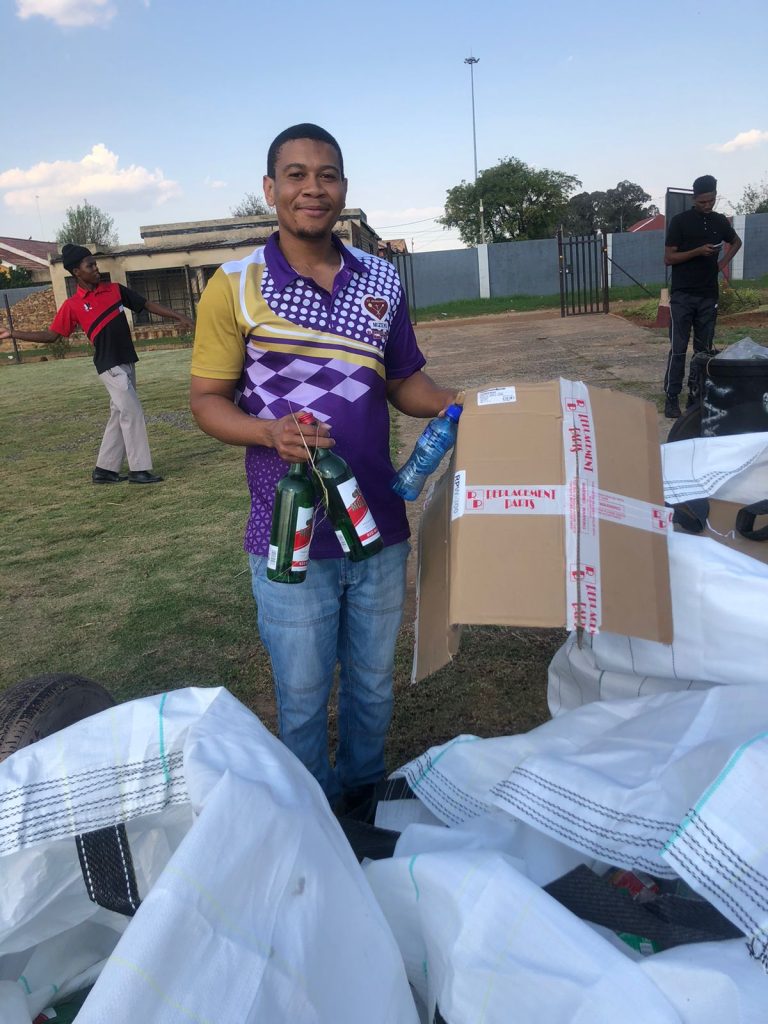
Having attended the 2025 Climate YES Bootcamp in Johannesburg, Gontse Ramagaga, a member of the St Bernard Mizeki Men’s Guild at St Lawrence Anglican Church Small Farm in the Diocese of Christ the King, launched a recycling project on 8 February 2026. After sharing his vision and raising awareness about environmental wellbeing at his home parish, he received a donation of recycling bags from a parish member. Since then, the initiative has gained strong support from fellow church members. Funds generated from recyclable materials are being used to provide food for Sunday school children. This responds to a real need, as some children arrive at church without anything to eat. Through this initiative, the parish is addressing hunger in the community, ensuring that every child leaves church nourished and that both their physical and spiritual needs are cared for. When asked to reflect on his journey, Gontse shared:“It’s been an honour and a privilege to be part of this great movement of eco-champs and to take part in making a difference in this world. For us to see change, it needs to start with ourselves. God has given us a lovely, beautiful home we call Earth, and no one wants to live in an untidy home. Earth is our house; Earth is our home.”

Restoring Dignity Through Recycling Read More »

The Feast of Creation: a new Ecumenical Liturgical Feast

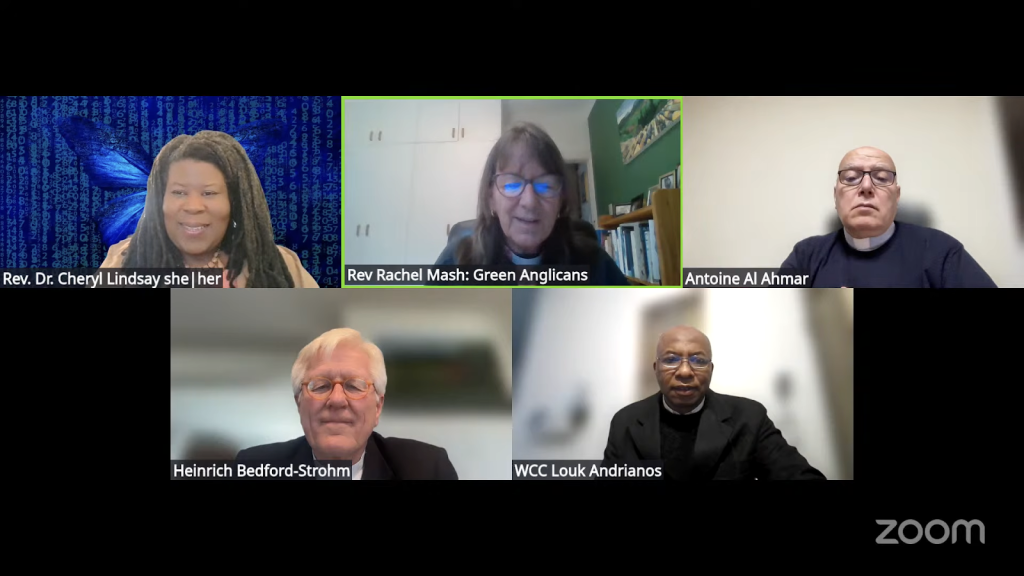
    The “Feast of Creation”, also known as “Creation Day” or “World Day of Prayer for Creation”, is officially entering the liturgical calendars of many churches. Celebrated on September 1st or – most frequently – on the following Sunday, the feast is inspired by an ancient liturgical tradition of the Eastern Orthodox church.  Many non-Byzantine churches will begin their celebrations this September, with the Feast formally enshrined in their lectionaries and liturgical books. Given the Christological nature of the liturgical year in many traditions, a title that is sometimes used is “Feast of Creation in Christ”. Among other highlights, the Feast is being added to the Revised Common Lectionary used by many Protestant and Anglican churches, in time for this year’s celebrations.  The words of Prophet Isaiah capture well what is happening: “See, I am doing a new thing! Now it springs up; do you not perceive it?” (43:19). To explore this promising ecumenical process, a major online event was held on March 18-19, entitled “The Feast of Creation: A New Liturgical Feast, a Gift for the Third Millennium”. Convened by the World Council of Churches, Middle East Council of Churches, and various Christian world communions and regional ecumenical bodies, the event drew registrations from over 600 church leaders worldwide. Bishop Heinrich Bedford-Strohm, moderator of WCC and chair of the Feast of Creation committee, offered inspirational welcome remarks, grounded in the recent celebrations of the 1,700th anniversary of the Council of Nicaea. “The ecumenical process towards a common liturgical Feast of Creation started with a powerful conference in Assisi in March 2024,” he said. “If the Assisi Process continues to develop and reach its goal, it might become a landmark in the history of Christianity. The strong backing by so many church families can be seen as an encouraging sign that the ecumenical miracle of joint ecumenical action for establishing this feast in the church calendar globally could become a reality.” In turn, Dr. Louk Andrianos from WCC made a presentation from the Eastern Orthodox perspective, reminding the audience of the rich theological symbolism of the Feast in that tradition. Citing the 10th-century Menologion of Basil II, which is the oldest Byzantine liturgical calendar, he explained that “September 1st represents ‘the day of Creation’, God’s act of the creation of the universe. It symbolizes the expression ‘In the beginning’, when God said ‘Let there be light’.” Moreover, in 1989, its Creation symbolism was expanded, when Ecumenical Patriarch Demetrios invited “the entire Christian world to offer every year on this day prayers and supplications to the Maker of all.” In recent decades, Creation Day has gained steady momentum alongside the extended “Season of Creation”, both at the grassroots and leadership levels in many churches. The next presentation was by Rev. Dr. Antoine Al Ahmar, a theologian of the Maronite Catholic Church and the Director of the Theological Department of the Middle East Council of Churches. As he is based in Beirut, a humbling moment of silence was offered for the victims of war there in Lebanon and the wider Middle East. Fr. Al Ahmar presented a new report titled “Theological Overview of the Feast of Creation” (www.bit.ly/feast-of-creation-theology), which synthesizes the main themes emerging from a series of three academic conferences in Assisi in recent years. He explained: “Creation is a multi-faceted mystery. Therefore, the Feast of Creation is a multi-faceted feast.” suggested image #2 Four interrelated themes are celebrated on this holy day: “(1) God’s act of creation, (2) Creation as a Christological mystery, (3) Creation as a Trinitarian mystery, and (4) Creation as a sacramental and covenanted gift. Together, these themes help us appreciate the richness and depth of the mystery being celebrated.” Lastly, Rev. Dr. Cheryl Lindsay (Consultation on Common Texts) and Rev. Tony Franklin-Ross (World Methodist Council) introduced various resources available to support non-Byzantine churches in implementing the new feast in their liturgical books and calendars. A highlight is the addition of the Feast to the Revised Common Lectionary in April 2026, with a new set of biblical readings to assist the liturgical celebrations starting this year. Other resources shared included:  1. Proposal for National Churches: www.bit.ly/new-feast   2. Invitation letter to National Churches: www.bit.ly/letter-feast   3. Upcoming workshops for Liturgists: www.bit.ly/feast-workshops   4. Theological Overview of the Feast: www.bit.ly/feast-of-creation-theology   5. Pastoral resources for the Feast: www.FeastOfCreation.com   6. Pastoral resources for extended Season: www.SeasonOfCreation.com    Participants then had denomination-specific dialogues in breakout sessions, to plan their celebrations in September 2026. Great enthusiasm was reported across the groups. Grounding all this reflection and preparation, the event counted with beautiful prayers offered by Frances Namoumou (Pacific Conference of Churches) and Karen Westerfield Tucker (World Methodist Council), helping contextualize the importance of this Feast in light of the tragic destruction of God’s gift of creation in this day and age.  Bottom line, the main takeaway is that the Holy Spirit has been clearly at work in recent decades, nourishing the soil so that this gift of the Eastern Orthodox church might flourish in the worldwide Christian family. The Feast of Creation is a precious gift for the third millennium. The full recording of this historic event is available here:

The Feast of Creation: a new Ecumenical Liturgical Feast Read More »