
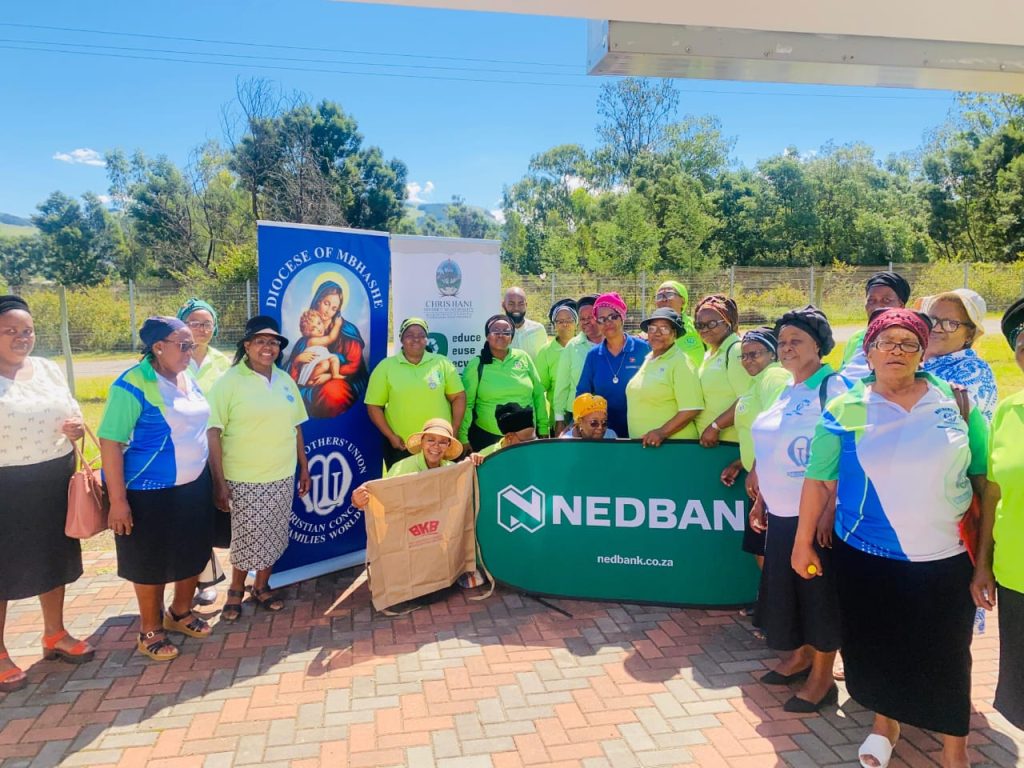
On 19 March, the Diocese of Mbashe hosted an important information-sharing session under the theme “Anglican Women on Sustainable Development,” bringing together women and key stakeholders to explore opportunities for empowerment, environmental stewardship, and sustainable livelihoods.
The session was attended by representatives from the Department of Agriculture, Land Reform and Rural Development, Department of Forestry, Fisheries and the Environment, Nedbank, BKB, Chris Hani District Municipality and Dr A.B. Xuma Local Municipality.
The gathering created a valuable platform for members of the Mothers Union to receive practical information, build partnerships, and engage with programmes that support sustainable development.
The Department of Agriculture shared opportunities available through Ilima/Letsema and other support programmes, including livestock improvement, branding certificates, and infrastructure development. Mothers were encouraged to apply for assistance and benefit from government support initiatives. The department also raised awareness of the Foot-and-mouth disease outbreak and shared guidance on protecting livestock health.
Representatives from Nedbank introduced work in the green economy, focusing on food gardening initiatives for women and schools, and highlighted how sustainable agriculture can strengthen household food security and community resilience.
BKB presented on responsible livestock care, especially relating to sheep farming, wool quality, meat production, mating seasons, and lamb care. Participants also heard about ongoing plans for wool sorting training, which may create additional skills and economic opportunities.
The Department of Forestry, Fisheries and the Environment focused on forest development and fire protection, emphasising the importance of preventing veld fires between April and September, establishing fire breaks, improving fire safety awareness, and accessing funding support through Fire Protection Associations.
These sessions demonstrated how faith communities can play a meaningful role in promoting sustainable development by connecting women with knowledge, resources, and partnerships that strengthen both livelihoods and care for creation. Through initiatives such as these, the Mothers Union continue to show leadership in building resilient communities and advancing environmental stewardship.
 |
 |
 |
 |
 |
 |