Bino Teboho Makhalanyane

Towards the One Million Trees

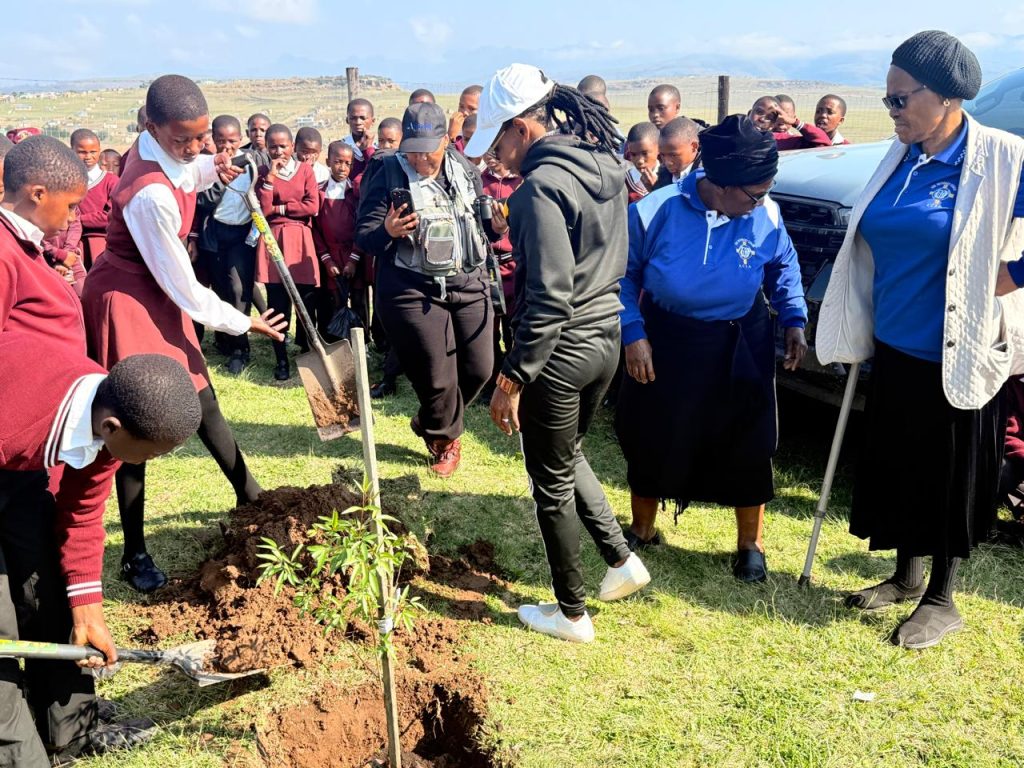
As part of South Africa’s One Billion Trees Programme initiative by the state President, members of the Mothers’ Union in the Diocese of Mzimvubu, Maluti Archdeaconry, joined hands with the Department of Environmental Affairs on 22 September 2026 for a tree-planting initiative at Phamotse and Manguzela Junior Secondary Schools (JSS). A total of 20 trees were planted across the two schools, contributing to efforts to restore and protect the environment and encouraging communities to take practical action to care for God’s creation. The initiative brought together the church, government and local schools in a shared commitment to environmental stewardship. The tree-planting programme also provided an opportunity to inspire young people to become environmental stewards and understand the importance of trees in creating healthier, more sustainable communities. by : Eco-champ Selloane Mongoato 

Towards the One Million Trees Read More »

Climate YES and Green Anglicans Takes Action for a Cleaner Nation

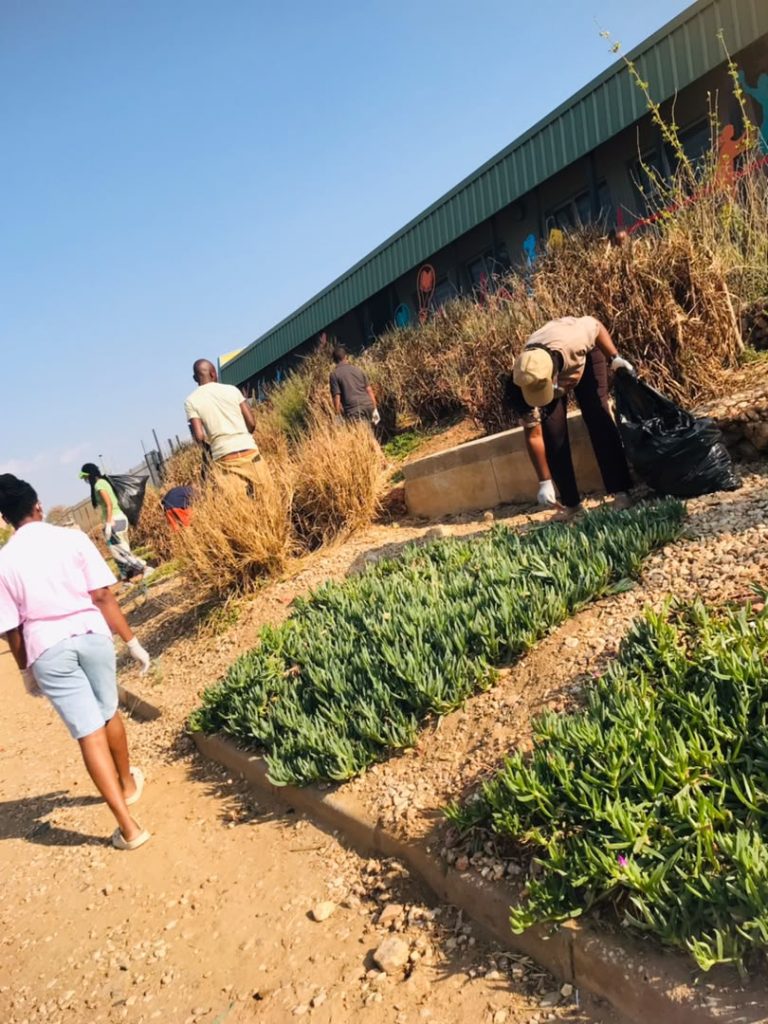
On 26 September 2026, Climate YES Namibia and Green Anglicans joined hands with local youth and environmental organisations for a community clean-up around the BeFree Youth Campus in Katutura. The clean-up was organised in partnership with EcoGreen Club, BeFree Youth Campus, Wakapinya Environmental Education, and the National Youth Chamber of Environment. The initiative brought young people together to take practical action toward a cleaner, healthier community. The campaign highlighted the connection between environmental care and community wellbeing. A clean environment contributes to healthier communities, and young people play an important role in creating sustainable and resilient ones. Through initiatives such as this, Climate YES Namibia continues to encourage youth to move from awareness to action and to take responsibility for the environment in their communities. The message from the organisations to all Namibians is that: “Let us keep our communities clean. The change starts with us”. #BeFree #ClimateYES #CleanUp #YouthInAction #Sustainability by: Keulukuwa Hanghome

Climate YES and Green Anglicans Takes Action for a Cleaner Nation Read More »

In the Living Room of God

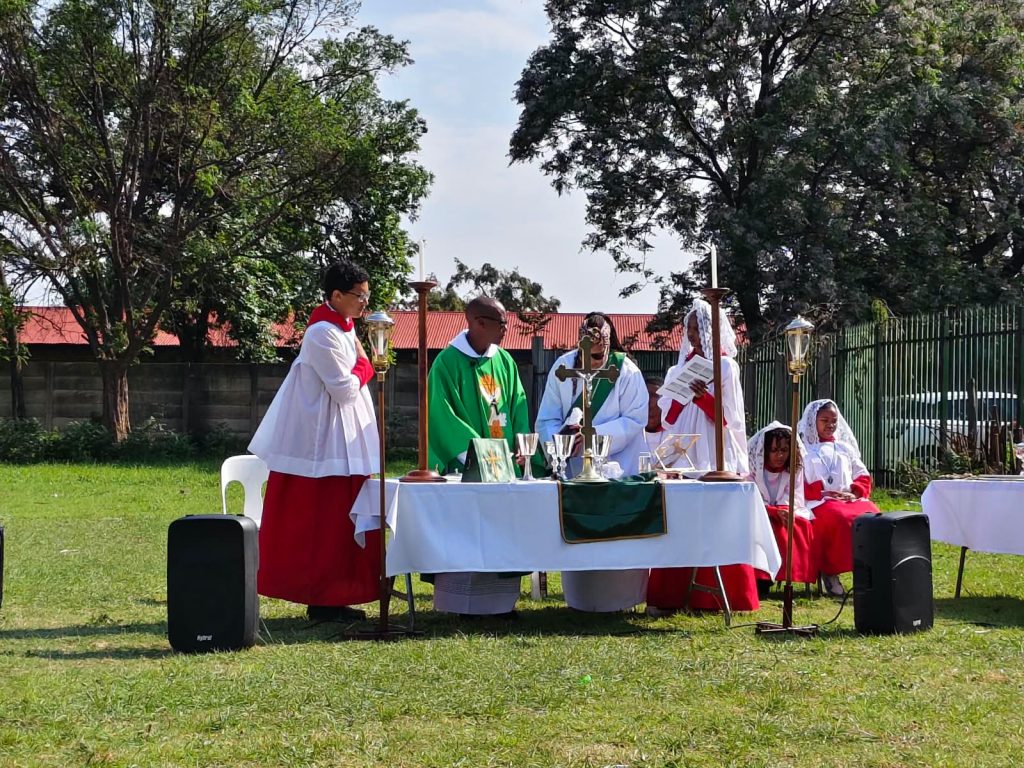
On Sunday, 27 September 2026, the Church of the Transfiguration in Eldorado Park, south of Johannesburg, celebrated the Season of Creation by taking its Sunday Eucharist outdoors under the theme “In the Living Room of God.” Gathering outside offered the congregation an opportunity to worship God surrounded by creation and to reflect on our calling to care for the earth, our common home. Although the morning brought wind and wet grass, these conditions could not dampen the congregation’s spirits. Parishioners embraced the opportunity to worship outdoors, with many expressing hope that it could become a more regular part of the church’s life. The celebration was also enriched by a variety of activities. The Sunday School made a special presentation, sharing their contribution to the Season of Creation, while a liturgical dance brought movement, joy and creativity into the worship. The Eucharist became more than a Sunday service; it was a reminder that creation itself is a gift from God and a place where we encounter the presence of the Creator. Worshipping together outdoors helped the congregation reconnect with the beauty of creation and renewed our commitment to becoming faithful stewards of God’s earth.

In the Living Room of God Read More »

Diocese of Christ the King Attends the FGW Training

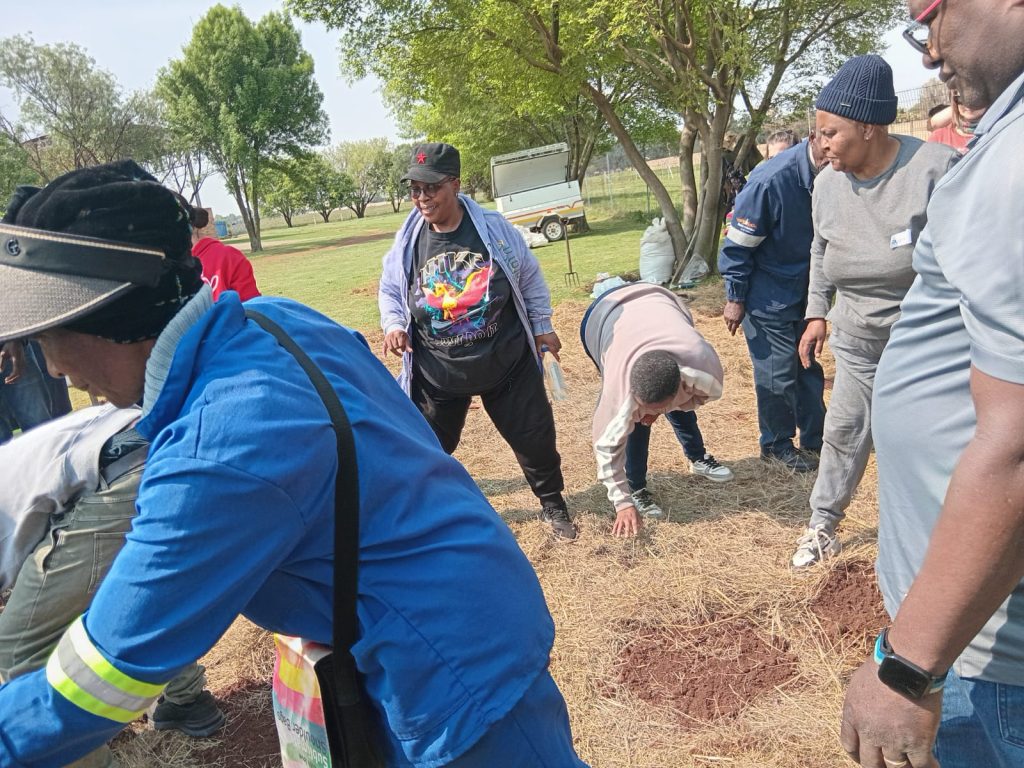
From the 17th to the 19th of September 2026, members of the Mother’s Union from the diocese of Christ the King, participated in a three-day Farming God’s Way (FGW) Training, which took place at Meyerton Christian Centre. Farming God’s way is a farming resource designed to help individuals, churches, NGOs, missions and communities address challenges such as poverty and food insecurity. It brings together Biblical principles, good management and appropriate agricultural technology to encourage sustainable farming and the responsible use of the land. The approach is based on the understanding that God is the Creator and that people have been entrusted with the responsibility of caring for His creation. Genesis 2:8-9 is used to illustrate that God Himself established the garden and provided food from the land. Therefore, Farming God’s way seeks to learn from God’s design and apply principles to agriculture. The purpose of the training was to introduce participants to an approach to farming that combines faith, good management and practical agricultural methods. The training emphasised the importance of: Improving food security, Reducing poverty and dependency, Caring responsibly for the land, Producing food sustainably, Improving soil health and conserving moisture, Using resources wisely, Developing people’s God-given potential, Applying Biblical principles to everyday life and farming, and Encouraging self-reliance and responsible stewardship. Farming God’s way consists of three interconnected spheres of influence: Biblical Principles: teaches that farming and our everyday lives should be guided by God’s principles. Participants were encouraged to recognise God as the provider and to be faithful stewards of what has been entrusted to them. The training highlights Six Biblical keys: Acknowledge God and God alone, Consider your ways, for you are the temple of the Living God, Understand God’s all-sufficiency, What you sow, you will reap, Bring the tithes and offerings back to God, and Stake your claim.  These principles encourage participants to understand that their actions, decisions and attitude have consequences. Management Principles: Good farming requires good management. The training identifies four management keys: doing things on time, to high standards, with minimal wastage, and with the fruit of the Spirit. Good management is therefore not only about financial profit. It also involves discipline, responsibility, quality, planning and good character. Agricultural Technology and Practices: The technological component focuses on practical farming methods that support sustainable agriculture These include: Zero or minimum tillage, Permanent planting stations, Organic mulching, Soil and moisture conservation, Proper spacing and measurement, Reducing unnecessary waste, maintaining healthy soil, and Using available resources effectively. These practices are intended to improve productivity while protecting and restoring the land. A major principle discussed in the training was ‘what you sow, you will reap’. Participants were encouraged to understand that success requires faithful and consistent effort. This applies not only to farming but also to personal life, relationships and communities. The training encourages people to start small and be faithful with what they have. Farmers do not necessarily need to begin with large resources. Instead, they can use what is available to them and progressively develop their farming activities. Faithful stewardship of the land can help people develop in a manageable and sustainable way. The training highlighted that making a profit is not the only purpose of farming. There needs to be a healthy balance between increase and godliness. Sustainable profitability should be achieved through: Working on time, maintaining high standards, Minimising wastage, applying good agricultural practices, being responsible with resources, and demonstrating the fruits of the Spirit. The training has also addressed poverty and dependency. Farming God’s way seeks to encourage people to develop their own potential rather than remain dependent on handouts. The approach emphasises sowing the seeds of knowledge and understanding, enabling people to learn skills and progressively apply them. The goal is to empower people to become responsible stewards who can use the resources available to them and develop sustainable livelihoods. The wider vision is to see the “yoke of oppression” lifted from poor communities and for people to realise their God-given potential. Farming God’s way encourages people to sow faithfully, use what they have wisely, care for the land and develop their God-given potential. It presents farming as an opportunity not only to improve food security and livelihoods, but also to bring positive transformations to individuals, families and communities. We also extend our appreciation to the Provincial Green Anglicans’ office.   By: Tlotliso Mangoenyane

Diocese of Christ the King Attends the FGW Training Read More »

St John the Evangelist Confirmation Camp Inspires Young People to Care for Creation

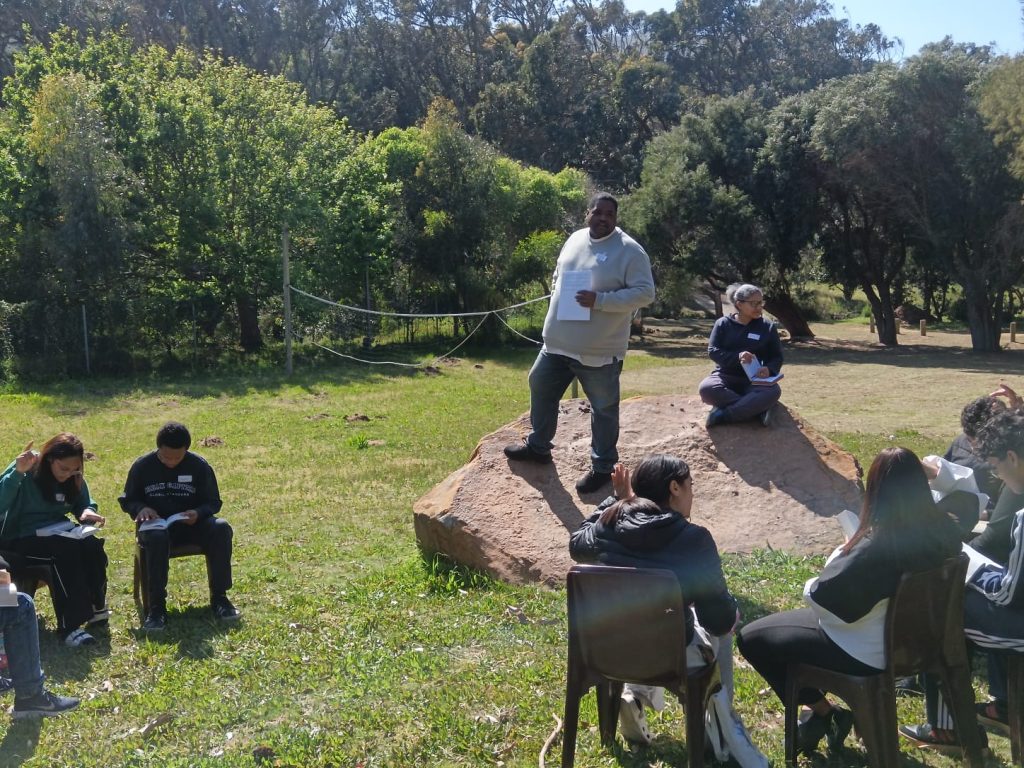
The Parish of St John the Evangelist, Athlone hosted its 2026 Confirmation Group Camp from 18–20 September at Glencairn Youth Centre in Cape Town, bringing young people together for a weekend of faith formation, fellowship and learning. This year’s camp focused on creation and creation stewardship, with the Green Anglicans team invited to facilitate sessions on caring for God’s creation. The day began with fun ice-breakers led by Bino Makhalanyane, followed by a “Know Your Bible” session facilitated by Revd Canon Shaun Cozett. Working in groups, the young people explored biblical passages on creation and were introduced to the 2026 Season of Creation theme, “Living Waters.” Revd Canon Shaun also introduced the Anglican Five Marks of Mission, highlighting that caring for creation is not separate from Christian faith but forms an important part of the Anglican Church’s mission. As confirmation preparation includes learning from the Anglican Prayer Book Catechism, John-Paul Roberts connected it to creation care, helping young people reflect on how their faith calls them to live responsibly within God’s creation. The connection between creation care and human wellbeing was further explored by Dr Samantha Cozett, who spoke about the relationship between a healthy environment and healthy communities. She reminded the young people that protecting the environment can help reduce risks to human health and contribute to the well-being of friends, families and neighbours. Putting their learning into practice, the participants worked in groups to design posters that explore how people are harming the environment in the City of Cape Town, what the Bible teaches about creation, and what practical actions can be taken. The young people then committed themselves to three actions before the end of the year: a beach clean-up, an eco-restoration activity and a river clean-up in their community. Green Anglicans extend its sincere appreciation to the Parish of St John the Evangelist for the invitation to facilitate during the weekend. We also thank Revd Canon Shaun Cozett, Diocesan Canon Mission for the Diocese of Cape Town, and Dr Samantha Cozett for sharing their wisdom and helping to make the camp a meaningful experience for the young people.                                         

St John the Evangelist Confirmation Camp Inspires Young People to Care for Creation Read More »

Be There And Be The Change.”

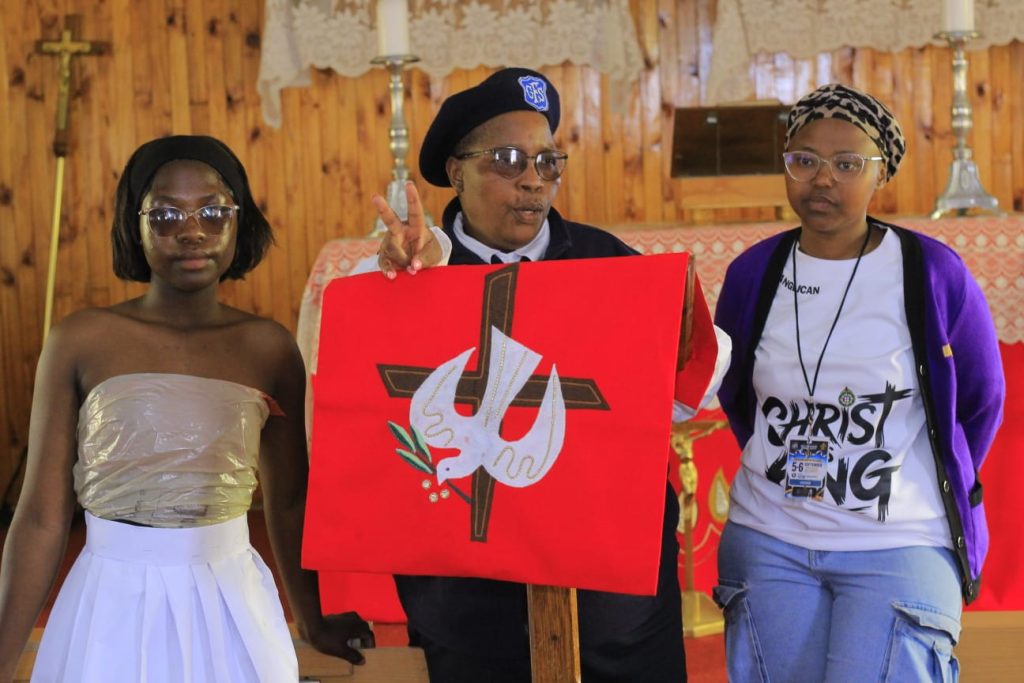
On Saturday, 5th of September, members of the Diocese of Christ the King Green Anglicans team, Mrs. Elsa Maphalla , Itumeleng Nkhi and Tlotliso Mangoenyane, gave a talk at the Girls and Boys Friendly Society (GBFS) diocesan conference, which was held at St Lawrence Anglican Church in Small Farm, Evaton, South of Johannesburg. The main aim of the visit was to introduce the GBFS Eco Champions initiative to the Diocesan GBFS.   The main purpose of the GBFS Eco Champion Initiative is to empower young people from the diocese to take responsibility for caring for God’s creation. The initiative encourages youth to move beyond awareness and become active environmental agents in their homes, churches, schools, and wider communities. GBFS members were encouraged to start with simple actions at home, such as saving water and electricity, reducing waste, recycling, and avoiding food waste. They are also encouraged to take part in community activities such as clean-up campaigns, tree planting, protecting green spaces, and raising environmental awareness. The initiative is supported by the GBFS Eco Pledge: STOP, START, TEACH and JOIN. GBFS members were also encouraged to Stop one harmful habit, Start a positive environmental action, Teach others what they have learned, and Join environmental preservation projects in their communities. Through these simple but meaningful actions, young people can become agents of change and help build cleaner, healthier, and more sustainable communities. By: Tlotliso Mangoenyane

Be There And Be The Change.” Read More »