
“Unless a grain of wheat falls into the earth and dies, it remains just a single grain; but if it dies, it bears much fruit.” – John 12:24
The Bible often reminds us that life follows cycles of growth, decay, and renewal. Composting beautifully reflects this pattern in nature. What we might think of as waste—vegetable peels, fruit skins, coffee grounds, and garden leaves—can actually become rich soil that nourishes new life.

Instead of sending organic waste to landfill, composting allows it to return to the earth. In landfills, food waste breaks down without oxygen and produces methane, a powerful greenhouse gas that contributes to climate change. But in a compost heap or bin, these same scraps decompose naturally and turn into nutrient-rich compost that improves the soil.
Compost feeds the garden. It helps the soil retain water, supports healthy microbes, and gives plants the nutrients they need to grow strong. Whether you have a large garden, a small yard, or even a few pots on a balcony, compost can help vegetables, herbs, and flowers flourish.
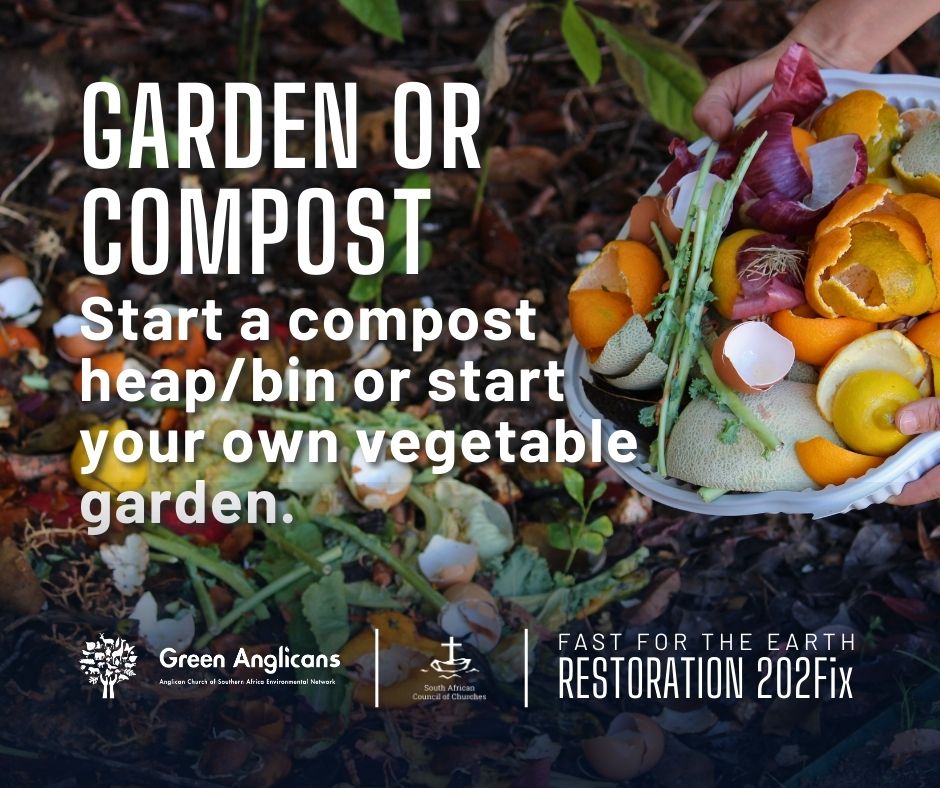
Starting a compost system is simple. A small bin or heap can hold fruit and vegetable scraps, tea bags, eggshells, coffee grounds, dry leaves, and grass cuttings. Avoid meat, dairy, and oily foods. Over time, nature does its quiet work, transforming what was once waste into dark, fertile soil.
Composting is also a spiritual reminder. Just as a seed must fall into the earth to bear fruit, the things we discard can become the source of new life. God’s creation wastes nothing.
By composting, we participate in this sacred cycle. We turn leftovers into life, nourish the soil, and care for the earth that God has entrusted to us. 🌱