News

Mother’s Union Across ACSA Celebrates World Environment Day with Faith and Action

World Environment Day 2026 became a vibrant celebration of faith in action across the Anglican Church of Southern Africa (ACSA), as members of the Mother’s Union (MU) responded to the call to care for God’s creation through environmental awareness, clean-up campaigns, tree planting, prayer, and education. From towns and cities to churches and communities, Mother’s Union members demonstrated their commitment to environmental stewardship, embodying the Anglican understanding that caring for creation is an essential part of Christian discipleship. In the Diocese of Free State, a Mother’s Union member from St Paul’s Church in the South East Archdeaconry took to the streets of Rouxville for a community clean-up campaign. Meanwhile, in the Kroonstad Archdeaconry, Mother’s Union members joined Sunday School children to clean the streets of Maokeng in Kroonstad and plant a tree as a symbol of hope and restoration. The Diocese of Mbashe marked the occasion through a partnership with three local municipalities within the diocese. The day was filled with environmental learning activities and community clean-ups, demonstrating the power of collaboration in caring for the environment. In the Diocese of George, members of the Mother’s Union from St Paul’s Church in Conville, George, celebrated World Environment Day by offering an environmental awareness talk during Sunday worship and planting an indigenous tree after the service. At St James Church in Knysna, an environmental service was held, followed by the planting of two indigenous plant species. Further east, in the Diocese of Mzimvubu, the diocesan MU Eco-Champ, together with fellow Mother’s Union members, took to the streets of Matatiele for a community clean-up initiative, encouraging residents to take pride in and care for their local environment. The Diocese of Natal observed World Environment Day through a moving environmental prayer gathering at the park adjacent to St Paul’s Church in Durban. The prayer service was joined by homeless women who regularly use the park, creating a powerful moment of shared reflection and hope. On the following Sunday, a university student contributed to the celebrations by pre-recording a sermon on creation care, which was played during the church service. In the Diocese of Grahamstown, Mother’s Union members from All Saints, Kidds Beach, launched the “Every Drop of Rainwater Counts” campaign, promoting responsible water stewardship and raising awareness about the importance of conserving one of God’s most precious resources. Meanwhile, in the Diocese of Pretoria, Mother’s Union members dedicated time to educating Sunday School children about environmental conservation. As part of the church’s awareness campaign, the children designed World Environment Day posters, while one of the Mothers’ Union members delivered a talk on environmental stewardship during the notices, drawing inspiration from Psalm 24:1: “The earth is the Lord’s, and everything in it.” These inspiring activities reveal a growing movement of faith communities responding to environmental challenges with practical action, education, prayer, and advocacy. Across the Province, Mother’s Union members are showing that caring for creation is not only an environmental responsibility but also a spiritual calling.             .

Mother’s Union Across ACSA Celebrates World Environment Day with Faith and Action Read More »
Safe Light for HER: Lighting Homes, Empowering Women, and Connecting Generations in Koppies

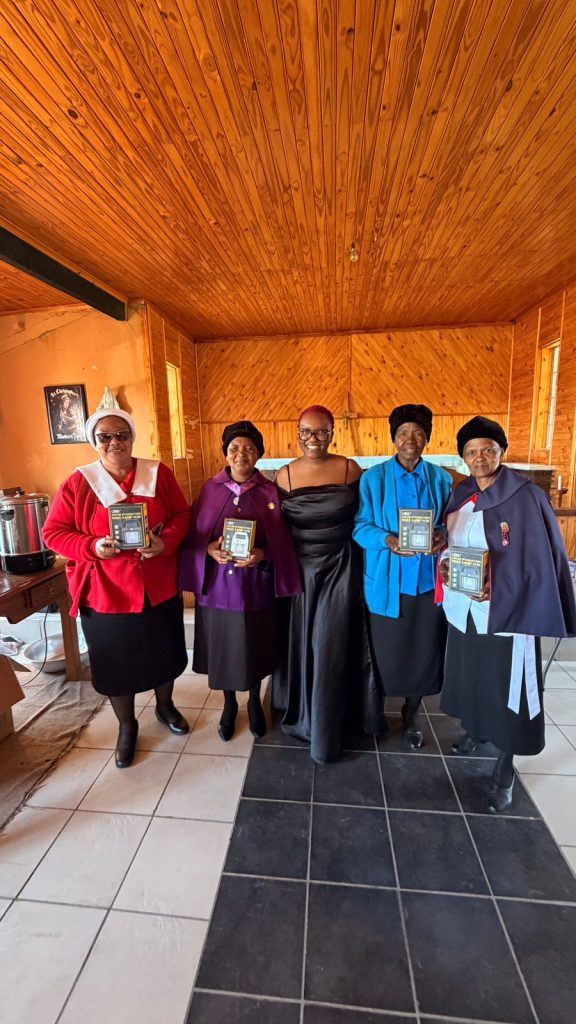
On 28 May 2026, the community of Koppies in the Free State witnessed a powerful example of what Youth-led climate action can look like when it is rooted in compassion, dignity, and community care. Through the African Climate Alliance Youth Network Energy Project, Safe Light for HER was implemented as a community-centred initiative focused on renewable energy access, women’s empowerment, education, and intergenerational connection. Led by youth climate advocate and Diocese of Free State Green Anglicans members Ikaelelo Kgomotso Madikgetla, the project aimed to address the realities faced by many women and vulnerable households who continue to experience energy insecurity, unsafe lighting conditions, and the daily effects of electricity outages. Under the theme “Lighting Homes, Empowering Women, Building Resilient Communities,” the initiative unfolded in three impactful parts: a women’s empowerment gathering, Grade 12 learner outreach and motivation, and visits to elderly grandmothers within the community. The main community event took place at St Christopher’s Anglican Church, where women gathered to discuss renewable energy, women’s safety, climate resilience, and the importance of sustainable living. In many households in Koppies, women often carry the burden of managing homes during load shedding and power outages. For many families, access to safe and reliable lighting remains a challenge that affects safety, comfort, education, and dignity. Through the distribution of solar lighting units, the project sought to provide not only practical support but also hope and reassurance. Women engaged in open conversations about the challenges they face and how renewable energy solutions can improve daily life. The atmosphere throughout the event was deeply emotional and uplifting, as many participants shared stories of resilience despite difficult circumstances. What made the event especially meaningful was that it became more than an energy project. It became a space where women felt heard, valued, and supported. Community members spoke openly about how important it was to see young people taking initiative to address local challenges in a way that directly impacts ordinary families. The second part of the project focused on Grade 12 learners, particularly learners studying Mathematics and Science. The outreach aimed to motivate and encourage young people as they navigate one of the most important academic years of their lives. Learners received words of encouragement about perseverance, education, leadership, and the role young people can play in shaping a sustainable future. Discussions also connected renewable energy and climate action to subjects such as Mathematics, Science, and innovation, helping learners understand that climate solutions are not distant ideas but opportunities they can become part of. Solar lights were distributed to learners to support them during evening study sessions, especially during power outages. Many learners expressed gratitude, explaining how difficult it can be to prepare for examinations without reliable lighting. For the students, the support represented more than assistance; it represented belief in their future and their potential. One of the most touching and unforgettable parts of the project was the visit to elderly grandmothers within the community. The outreach focused on spending time with elderly women, listening to their stories, and reminding them that they remain valued members of society. During these visits, the project team had the honour of meeting a remarkable 102-year-old grandmother. Meeting someone who has witnessed over a century of life was both humbling and deeply emotional. Her wisdom, strength, and presence became defining moments for the entire project. The experience highlighted the importance of preserving intergenerational relationships and ensuring that climate justice and community care include the elderly. In a world that often moves too quickly, the visit served as a reminder that dignity, human connection, and compassion are just as important as development and innovation. The impact of Safe Light for HER extended far beyond the distribution of solar lights. The project sparked conversations about energy justice, strengthened community relationships, and inspired hope among women, young people, and elderly residents alike. For Ikaelelo Madikgetla, the project was deeply personal as someone born and raised in Koppies. She added, “This project reminded me that real change begins at home. Sometimes light is not only about electricity. Sometimes light is about hope, dignity, care, and reminding people that they matter.” The success of the initiative has opened the door to future community-based renewable energy projects, climate education programmes, and youth-led outreach initiatives within the Free State and beyond. Through one project, Koppies was reminded that even the smallest light can brighten an entire community. By: Eco-champ Ikaelelo

Safe Light for HER: Lighting Homes, Empowering Women, and Connecting Generations in Koppies Read More »

Faith, Fun and Sustainability: Transformative Training for Sunday School Teachers

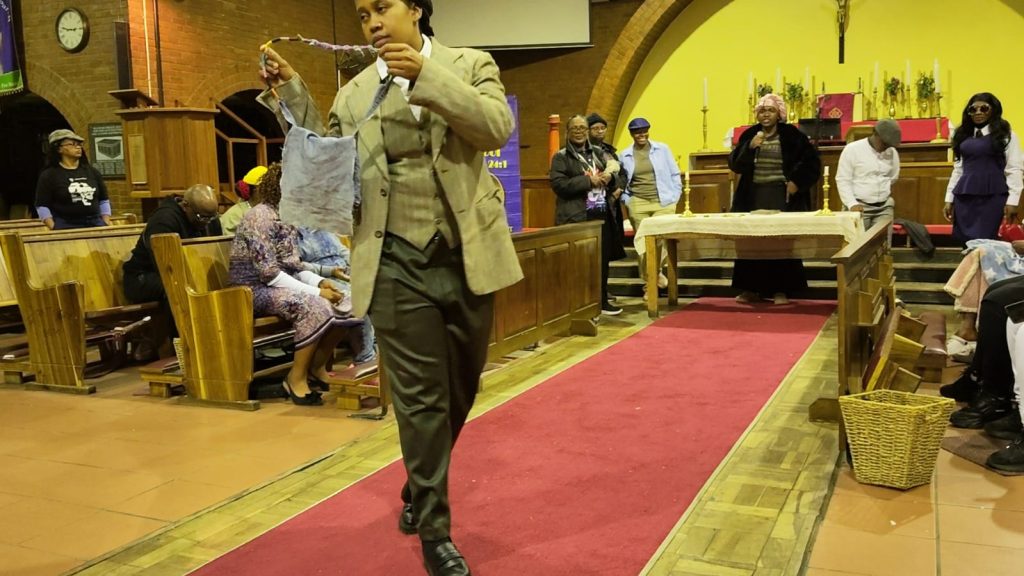
The Diocese of Free State, diocesan Sunday School teachers gathered for the annual training from Friday, 22nd, until Sunday, 24th May 2026, at St Patrick’s Anglican Church in Mangaung, Bloemfontein. It was a successful event which encompassed spirituality, capacity building and lots of fun. On Saturday morning, the Diocesan Green Anglicans Coordinator, Eco-champ Mogorosi Molisapoli, led a session titled Eco-preneurship. He proceeded to train teachers on how to start businesses that are environmentally sustainable and healthy for God’s creation. This session highlighted the need to investigate ways of saving the environment while making a living and combating the current high rate of unemployment in the country. In the evening, Sunday School Teachers from across the diocese had slotted a cross-dressing competition in which male teachers dressed as ladies and vice versa. It had been communicated prior to the event that each Archdeaconry would be expected to present an art item inspired by an environmental commodity. Goldfields and Mangaung Archdeaconries, respectively, presented posters that showcased their drawings and research on environmental advocacy. Kroonstad Archdeaconry prepared an art item: a beautiful bouquet made from leaves and a basket made from dead branches. Sasolburg Archdeaconry presented an art item in a form of a bag made from old jeans and highlighted the need to combat the low rate of textile recycling. The cherry on top was Sunday after the service. The Anglican Youth Ministries (AYM) Bloemfontein Archdeaconry Executive Green Anglican Eco-champion (Eco-champ Odireleng Sepato) facilitated a presentation on mitigation and the gifting of trees. He wasn’t just alone, but with his team of Eco-champs, namely; Eco-champ Tlhonolofatso Mosikare and Eco-champ Botshelo Molema. They gave out Peace Lilies and succulent plants to the Diocesan Sunday School Chaplain and Executive Committee alongside one of the speakers of the previous day, Eco-champ Manale Molisaotsile, who presented on the importance of good financial management. Year by year, the Diocesan Sunday School strives to incorporate Green Anglicans into every event. Similarly, the teachers are now confident and capacitated with many other aspects beyond the Green Anglicans space; this is just a story of the important and necessary influence of Green Anglicans during this beautiful event. Article by Eco-champ Morena Pule

Faith, Fun and Sustainability: Transformative Training for Sunday School Teachers Read More »

GBFS Youth Connect with Nature at Zandvlei

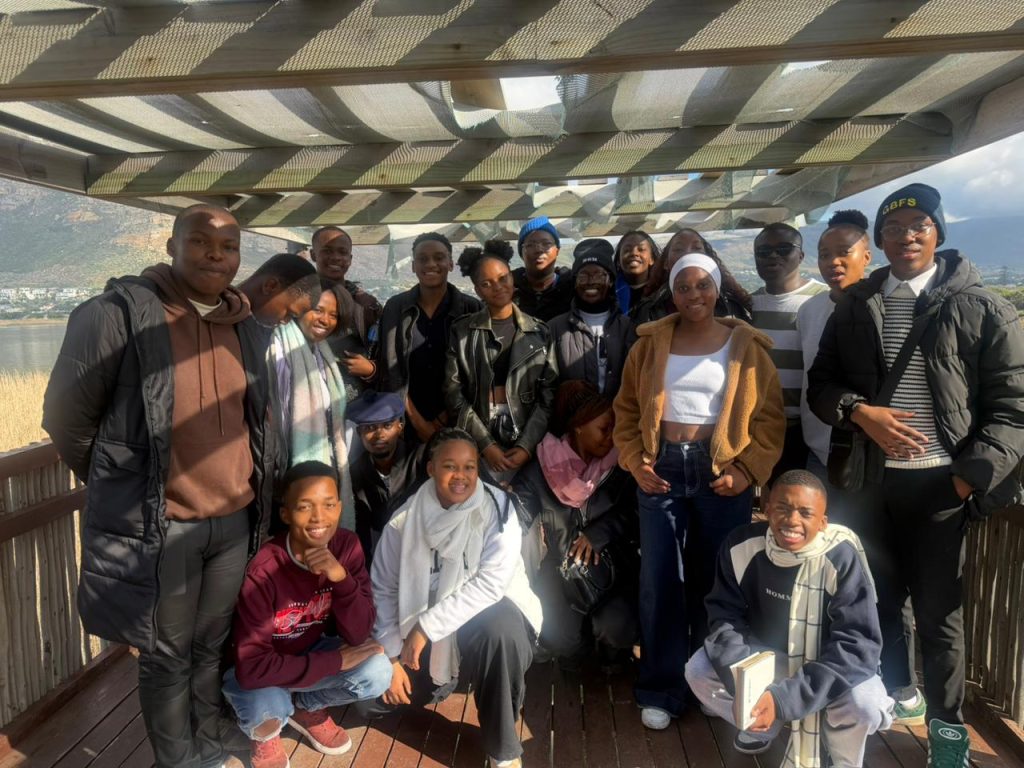
On Saturday, 23 May 2026, members of the Girls’ and Boys’ Friendly Society (GBFS) from the dioceses of Cape Town, False Bay, and Saldanha Bay gathered for the GBFS Eco-Champs Programme at Zandvlei Estuary Nature Reserve in Steenberg Cape Town. The excursion brought together youth from different communities for a day of learning and environmental awareness. During the day, participants were guided around the reserve by three ladies from the City of Cape Town Conservation team, who shared valuable insights into the ecosystem, biodiversity, and the various species found there. Although some animals, such as snakes, were not visible due to the cold weather, participants learned how weather affects wildlife and their habitats. The group also learned about the many birds, frogs, porcupines, and other animals living within the reserve. One of the most interesting parts of the excursion was learning how the estuary is connected to the beach through a canal that allows water to flow between the lake and the ocean. Participants also discovered that certain plants naturally help clean water and maintain the health of the ecosystem. The experience highlighted the importance of protecting nature and how even littering can negatively affect the environment and wildlife. After the walk, the group participated in conservation and biodiversity activities and discussions. One discussion focused on sharks and African penguins, during which participants learned that penguin populations are declining and could one day become extinct if greater care is not taken to protect them. The activities encouraged young people to consider ways they could help preserve the environment for future generations. The excursion was both educational and inspiring, leaving many participants with a greater appreciation for nature and a greater sense of responsibility for caring for creation. A sincere thank you goes to the members of the CCT Conservation team, Green Anglicans and The Claremont Rotary Club who made the day possible and shared their knowledge with us. Opportunities like these are important because they teach us young people lessons that will stay with us for life. By : Kimantha Mguli-Makalima

GBFS Youth Connect with Nature at Zandvlei Read More »

‘Feast of Creation in Christ’ Adopted by Common Lectionary of Anglican and Protestant Churches

Unprecedented since 1983, the adoption of a new feast for trial use in the ‘Revised Common Lectionary’ marks a historic milestone in Christian ecumenism and liturgical attention to the doctrine of Creation. The ‘Feast of Creation in Christ’ is a fruit of nearly four decades of ecumenical celebrations inspired by an ancient Eastern Orthodox tradition, developed further through a multi-year theological process of various Christian global bodies. Creation of the world in 13th-century Bible Moralisée (Codex Vindobonensis 2554). Credit: Wikimedia, Österreichische Nationalbibliothek. The Consultation on Common Texts (CCT) has officially adopted the festival of ‘Creation in Christ’, also known as ‘Feast of Creation’, by adding it to the Revised Common Lectionary (RCL) for a three-year period of trial use. As the lectionary shaping the calendar of many Anglican and Protestant churches, this is a historic breakthrough in Christian ecumenism given its inspiration in the Eastern tradition. The enhanced version of this feast, which will begin to be celebrated in September 2026, is the fruit of a theological process with the participation of various Christian global bodies in recent years. By expanding the feast’s theological symbolism with a rich set of biblical readings, this proposal elevates the doctrine of creation to a more prominent position within Christian worship, filling a gap in the liturgical calendar of churches who previously did not celebrate Christ’s role in the creation of the world. The announcement marks the first addition of a new feast to the common lectionary since its release in 1983, when two new observances were adopted — the festivals of the Baptism of the Lord and Christ the King, also known as Reign of Christ — inspired by Roman Catholic practice. This new festival of ‘Creation in Christ’ is inspired by another tradition: that of the Eastern Orthodox church, for whom September 1 is a liturgical feast since the 8th century. Given its ancient symbolism as the day marking God’s creation of the world, the Eastern Orthodox invited “the entire Christian world” in 1989 to celebrate this observance together in view of the ecological crisis. Since then, Ecumenical Patriarch Bartholomew has been a vocal advocate of the annual celebration of the Feast of Creation, or ‘Creation Day’ as it is also known, with WCC and many churches adopting the day of prayer throughout the decades.  Now, following scriptural recommendations from an ecumenical working group, the Consultation on Common Texts has taken it one step further by expanding its theological symbolism and adding the feast to the common lectionary that shapes the liturgical calendar of many Anglican and Protestant churches.  Bishop Heinrich Bedford-Strohm, who chairs the Feast of Creation ecumenical process, said: “The official adoption of the ‘Feast of Creation in Christ’ in the Revised Common Lectionary is a huge milestone, a truly historic step in the journey towards Christian unity. We rejoice in seeing how an ancient tradition of the Eastern Orthodox church has inspired a major group of Western churches to adopt this festival in their liturgical calendars. It is theologically profound, liturgically sound, pastorally urgent, and ecumenically unprecedented.” Materials released by the Consultation on Common Texts include biblical texts that will be used in liturgical celebrations of the festival, as well as theological reports by the ecumenical committee that outline the feast’s theological themes. These themes span a theological spectrum beginning with the act of creation of the universe as a Christological and Trinitarian mystery, extending to the sacredness of the natural world, which is regarded as revelatory of God and is nowadays desecrated by human abuse. Biblical readings and details are available at www.bit.ly/readings-feast-creation.  The festival’s title, grounded in the expression “Creation in Christ”, signals that Christ’s role in the act of creation is the starting point for this celebration in line with the Christological nature of liturgical calendars of Christian traditions. This central Christian doctrine is iconically expressed by the opening lines of the Gospel of John: “In the beginning was the Word… All things came into being through him.” The new festival translates the foundational place of this tenet into adequate expression in the liturgical year, reverting its prior absence and enriching the calendar’s Christological span.  This announcement is the fruit of several years of ecumenical collaboration and academic conferences in Assisi with liturgical scholars, theologians from other disciplines, and church leaders exploring the potential of this ancient feast and seeking to restore the centrality of creation theology in the Christian tradition. The process was anchored in and inspired by the recent commemorations of the 1700th anniversary of the Council of Nicaea. Observed annually on the first Sunday of September, the inaugural celebrations of the festival of Creation in Christ will be aided by the RCL lectionary readings and various materials published at the website www.FeastOfCreation.com.  Resources:

‘Feast of Creation in Christ’ Adopted by Common Lectionary of Anglican and Protestant Churches Read More »