
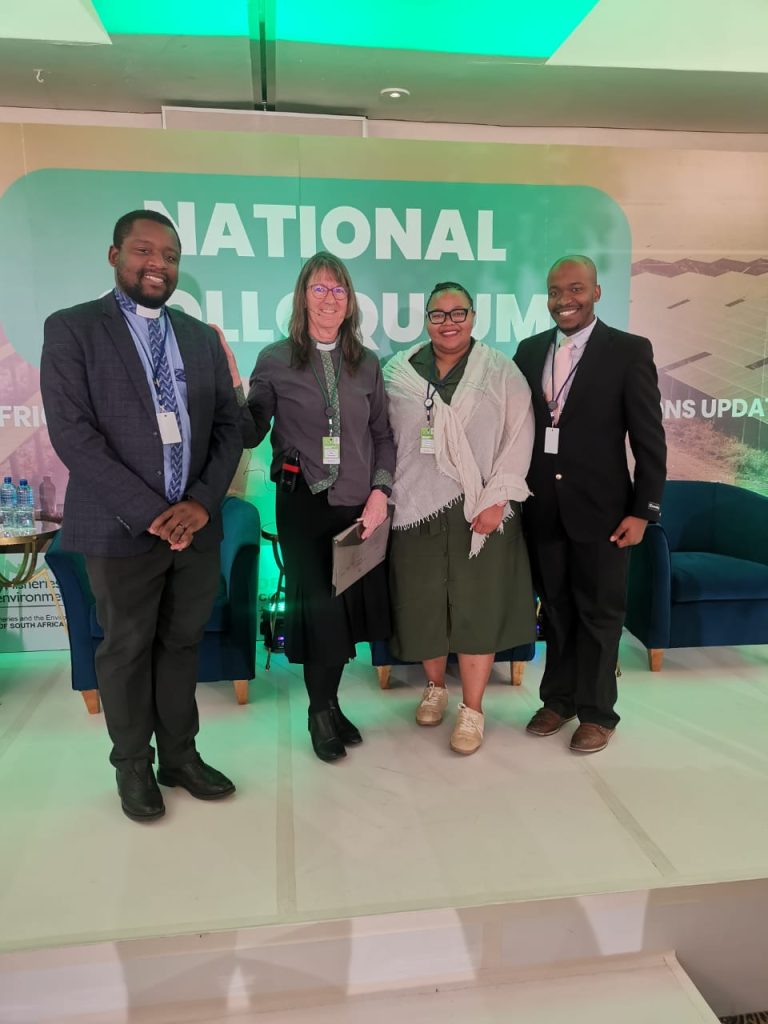
On the 26th of August 2025, two young people ( Mr. Morena Pule and Ms. Ofentse Kwapeng) together with two priests (Revd. Mudau and Revd. Mash) from the Anglican Church of Southern Africa participated in the National Colloquium organised by the Presidential Climate Commission (PCC), which took place in Santon, Johannesburg. This event followed a series of contribution sittings that commenced in November 2024.
Rev Rachel presented on behalf of the faith sector you can find her talk here: https://drive.google.com/file/d/1QTIo2HPHAe3syUEcfVyAeXsq3gsauvJJ/view?usp=sharing
The targets presented during the colloquium were the result of input from various stakeholders, including youth organisations, the business sector, faith-based groups, civil society, and labour unions. These targets were compiled and introduced by the Executive Director of the PCC. Additionally, representatives from multiple unions, taxi associations, and the South African Local Government Association (SALGA) were present, and they formed part of the panel, which was given the opportunity to voice their concerns and feedback regarding the proposed targets. The Department of Forestry, Fisheries, and the Environment also offer its input, particularly in relation to preparations for COP30 and the upcoming submission to the United Nations Framework Convention on Climate Change (UNFCCC).
This highlights a broader issue: South Africa is not yet prepared to effectively address climate change. Many citizens remain unaware of the significance of international agreements such as the Paris Agreement, particularly the target of limiting global warming to 1.5°C. Furthermore, the unseasonably warm weather experienced in 2024 has raised questions, but there remains a lack of understanding about the underlying causes. The government must prioritise comprehensive climate education to raise public awareness. An informed population would be better equipped to contribute meaningfully to the implementation of the targets related to climate mitigation, adaptation, and sustainability.
There is also a pressing need to incorporate climate education into local communities, particularly through churches and youth engagement initiatives. Encouraging young people to participate in climate action can foster long-term behavioural changes that will contribute significantly to addressing the climate crisis. To achieve this, we must cultivate a generation of climate advocates and ensure that climate discussions are embedded in all aspects of society.
Upon reflecting on the discussions throughout the day, it became apparent that the South African government is still not adequately prepared to take the necessary steps to address climate change. While the colloquium covered critical topics such as climate finance, mitigation, and adaptation, these discussions often fail to progress into actionable plans for implementation. A significant point of concern was raised by the South African Local Government Association, which shared the progress being made within local governments and metropolitan areas on climate education. However, they also suggested that climate change is a key factor behind service delivery challenges. This perspective, however, was troubling, as it implied that the government might be using climate change as a convenient explanation for inadequate services in local townships. In reality, climate change awareness is virtually non-existent in these communities, with only a small number of individuals being informed, mainly due to the efforts of faith-based organisations and some churches.
By : Ofentse Kwapeng