News

Eco-Champs at the Mothers Union Worldwide Gathering

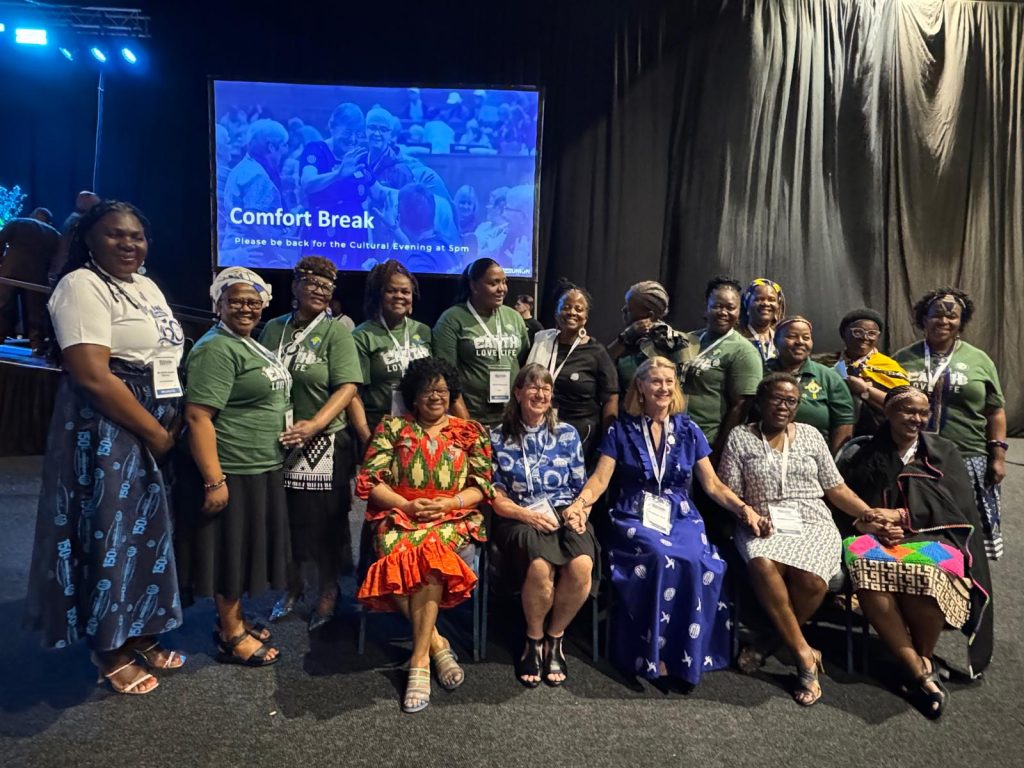
The Mothers Union held a World Wide gathering to celebrate 150 years of ministry in Durban, South Africa The MU of the Anglican Church of Southern Africa passed a resolution three years ago that each Diocese should have an “Eco-champ” and they have been working with the Green Anglicans to develop the programme. At the Global Council meeting, Mme Matito, the PCDC (Provincial Community Development Coordinator) shared about the project. Eco-champs are involved in climate smart food gardening, disaster response and preparedness, community clean ups, tree planting, water saving, plastic recycling and many other activities. The project has gone from strength to strength! At the gathering in Durban a resource of bible studies on disaster preparedness (flooding, drought, fire, heatwaves and displacement) was launched and each delegate received a copy of the booklet . The resource can be downloaded here : Disaster Management Online MU Eco-champs were also selling products made from recycled plastic such as mats and other items. Rev Rachel Mash, Green Anglicans Coordinator was a panelist on the topic of “Climate change and Migration” and invited the MU Eco-champs to end the panel by singing  “Join us, join in, Mothers Union in changing lives!” Here is the text of her talk: In 2022 the City of Durban experienced devastating floods – over 500 people died and 40,000 displaced.  One family lost 9 people . some people never found the bodies stil in emergency accommodation. Recurring floods have damaged the infrastructure that had been mended.  Floods since then have again damaged infrastructure that was being mended. Last year Mthatha had terrible flooding, a kombi of school kids was washed away.  Mothers Union made a good decision to support some families with entire uniforms, shoes, school stationary – the mother was crying tears .. But it is not enough to just support when the disasters come, how can we prepare for disasters? The Mothers Union of ACSA have launched a program called Eco-champs in partnership with Green Anglicans.  We are launching the Bible studies on disaster relief that you can find in your goodie bag. What is an eco champ? What is the first commandment? It was not the commandments given to Moses, they came generations later – it was the commandment given to  Adam and Eve Gen 2: 15 “Work the Earth and look after it” Look at your logo – the earth! We must look after Mother Earth or Mother Earth cannot look after us The Mothers union Eco – champs are learning and sharing a training called “Farming God’s way “ which is climate smart kitchen gardens, what do you do when there is hardly any rain – for instance : remembering that God is the first gardener!  Adam and Eve were put into a garden to work the land and look after it!  For example: Mulch is Gods blanket. Mothers are now growing food and able to sell it to assist with electricity, school fees. Others are drying fruit to sell, and keeping bees to sell the honey.  Other are making small items out of recycled plastic. What a lovely picture of an old MU member, bed bound – with a huge loom on the bed, family and neighbours cut up plastic shopping bags for her into strips and she is making the most beautiful mats! This not only helps the family in the rural area Many young women leave the rural areas for studies and their first job and send money home to the family in the rural area. Families in the rural areas are battling with climate change as the rains are failing,  it is becoming harder to grow vegetables to they start asking for more money. This puts her at risk of looking for a sugar daddy – or what is strangely called a blesser! Climate change is one of the things that pushes people off their land –  2023-2024 worst in 40 year in Zimbabwe and Malawi. Mozambique cyclones increasing in frequency and strength – leads to increased migration. South Africa in the lead up to the elections has seen a violent wave of violence, were many people  have been chased away from homes, either because of violence or threat of violence. For example a 7 year old Zimbabwean told they would burn her family if she came back to school. The family left that same night. Widow, orphan and foreigner are mentioned 19 times in the Bible – these are the  vulnerable trio without a support system. How can MU reach out to our communities? A clinic in Nomzamo found that they had a lot of mums from Malawi where tiny babies were dying of choking. The reason? They were trying them to early on solids – they had no mothers to help them, they had not  integrated into the community. How can the MU reach out to such young mums? 150 years later, we face different challenges than Mary Sumner – we face climate change and migration. My question to you today is this: As Mothers Union – will we care for Mother Earth? Find climate smart ways to grow our food, prepare for disasters, clean our communities?  and care not only for the widow and the orphan but also  the foreigner?

Eco-Champs at the Mothers Union Worldwide Gathering Read More »
Faith in Action: Holy Cross Collegiate Celebrates the Feast for Creation

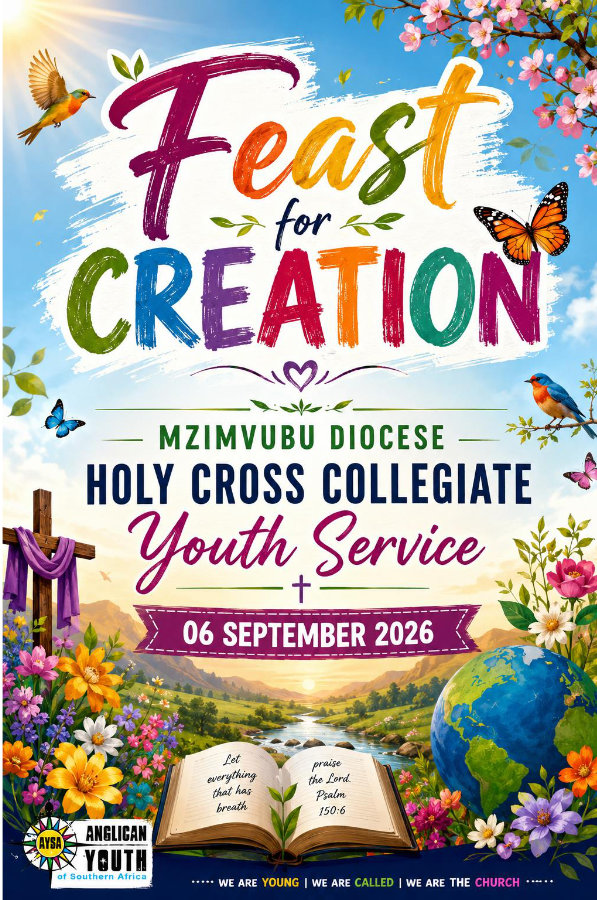
At Holy Cross Collegiate, the Feast for Creation became more than a Sunday service. It brought worship, youth participation, prayer, environmental awareness and practical action together, showing how care for God’s creation can become part of the life of a church community. A celebration rooted in faith and action On 6 September 2026, approximately 82 people gathered at Holy Cross Collegiate in the Mzimvubu Diocese to celebrate the Feast for Creation. The youth led the programme, while the wider congregation joined in the Anglican order of service, bringing together worship, Scripture, music, prayer, reflection and environmental awareness. The celebration formed part of a wider environmental journey at Holy Cross Collegiate. Earlier in the year, the young people had already taken practical steps to care for their surroundings. On 16 June, approximately 68 people—mostly young people from GBFS, Servers and other youth participants, together with members of the Mothers’ Union, Bernard Mizeki and the Provost—took part in a community clean-up from the Hlwahlwazi stop to the church premises. The activity combined service to the community with awareness about keeping shared spaces clean. Environmental awareness in action: young people and community members engage with collected litter and discuss the importance of keeping their surroundings clean. Bringing creation into worship The Feast for Creation continued this work by placing creation care within the worship life of the church. The service followed the Anglican way from beginning to end, with the youth at the centre of the programme. Scripture, hymnody and prayer created space for the congregation to consider its relationship with the natural world. Psalm 150:6—“Let everything that has breath praise the Lord”—provided a fitting theme for the celebration. The congregation also sang Creation Song 06 from the Anglican hymn book, linking the praise of God with an appreciation of the life and beauty found in creation. The church community gathers outdoors in the rain as part of the creation-focused celebration. Stepping outside to listen, reflect and pray After the prayers, the congregation went outdoors to spend time with creation. They listened, observed, talked and reflected together before praying for creation and for the challenges affecting young people and their communities. The weather became part of the experience. Rain fell as the congregation gathered outside, but the activity continued. The moment offered a simple reminder that creation is not only something discussed inside the church; it is all around the community, and its well-being is connected to everyday life The church community gathers outdoors in the rain as part of the creation-focused celebration. Young voices speaking for creation The participation of children and young people was one of the most visible parts of the celebration. Their handwritten messages—“Do not litter”, “Keep rivers clean” and “Care for creation”—turned environmental awareness into simple, practical calls that could be understood by the whole community. For Holy Cross Collegiate, this kind of participation is important because it gives young people an opportunity to remain active in matters that affect both their church and their communities. Cleaning, speaking about environmental responsibility, praying and taking part in practical activities all create opportunities for young people to become active stewards of their surroundings. Young people and children share practical messages of creation care, including “Do not litter”, “Keep rivers clean” and “Care for creation.” Prayers for creation and for young people The day also recognised that environmental concerns exist alongside the social challenges experienced by young people. The congregation prayed about pressing concerns including unemployment, substance abuse and mental health challenges, placing the wellbeing of young people within the wider responsibility of caring for communities and creation. Rev. Swana was among the clergy present during the outdoor part of the celebration. The participation of clergy, youth and the wider congregation helped reinforce the message that creation care is not the responsibility of one group alone. When the rain changed the plan, the commitment continued The medicinal plants prepared for the Feast for Creation were blessed during the celebration. The intention had been to plant them that day, but the rain made planting difficult. Rather than ending the initiative there, the plants were later placed in tins during the Confirmation service on 12 September. This continuation became a small but meaningful reminder that environmental action does not have to end when circumstances change. The planting could happen later, but the commitment to care for creation remained. A plant cared for as part of the church community’s continuing commitment to creation care. A commitment that must continue For Holy Cross Collegiate, the Feast for Creation was therefore not simply a once-off environmental event. It formed part of an ongoing effort to mobilise the church and surrounding community to recognize the abuse and neglect of creation, speak about it and take practical action. Provost Rev. Somgungqu emphasized that these activities should be encouraged by the congregation and must not stop. His message captured the spirit of the day: creation care should become part of the continuing life and witness of the church. The journey at Holy Cross Collegiate is still unfolding. From cleaning the route between Hlwahlwazi and the church, to praying outdoors in the rain, to encouraging children to keep rivers clean and avoid littering, the community is finding practical ways to connect faith with environmental responsibility. The Feast for Creation left the congregation with a simple but important call: to see what is happening around them, to speak about it, to pray for creation and for their communities, and to turn that awareness into action. In this way, caring for God’s creation becomes not only a celebration, but a continuing way of serving God, the church and the community. “Let everything that has breath praise the Lord.” Psalm 150:6

Faith in Action: Holy Cross Collegiate Celebrates the Feast for Creation Read More »

Towards the One Million Trees

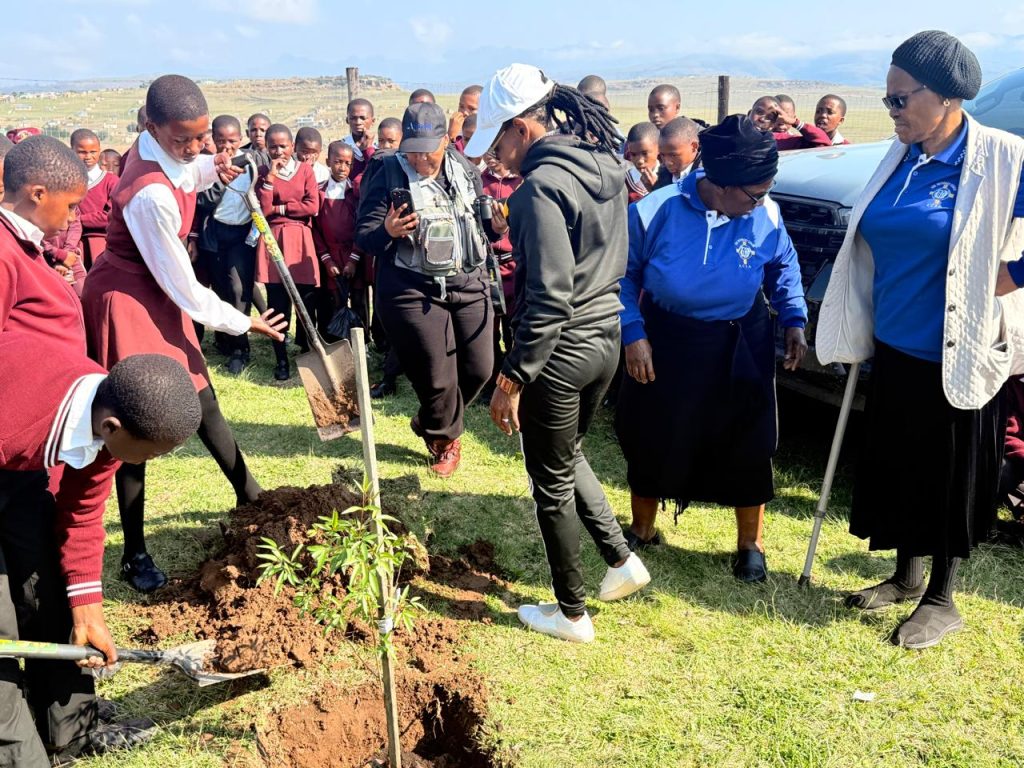
As part of South Africa’s One Billion Trees Programme initiative by the state President, members of the Mothers’ Union in the Diocese of Mzimvubu, Maluti Archdeaconry, joined hands with the Department of Environmental Affairs on 22 September 2026 for a tree-planting initiative at Phamotse and Manguzela Junior Secondary Schools (JSS). A total of 20 trees were planted across the two schools, contributing to efforts to restore and protect the environment and encouraging communities to take practical action to care for God’s creation. The initiative brought together the church, government and local schools in a shared commitment to environmental stewardship. The tree-planting programme also provided an opportunity to inspire young people to become environmental stewards and understand the importance of trees in creating healthier, more sustainable communities. by : Eco-champ Selloane Mongoato 

Towards the One Million Trees Read More »

Climate YES and Green Anglicans Takes Action for a Cleaner Nation

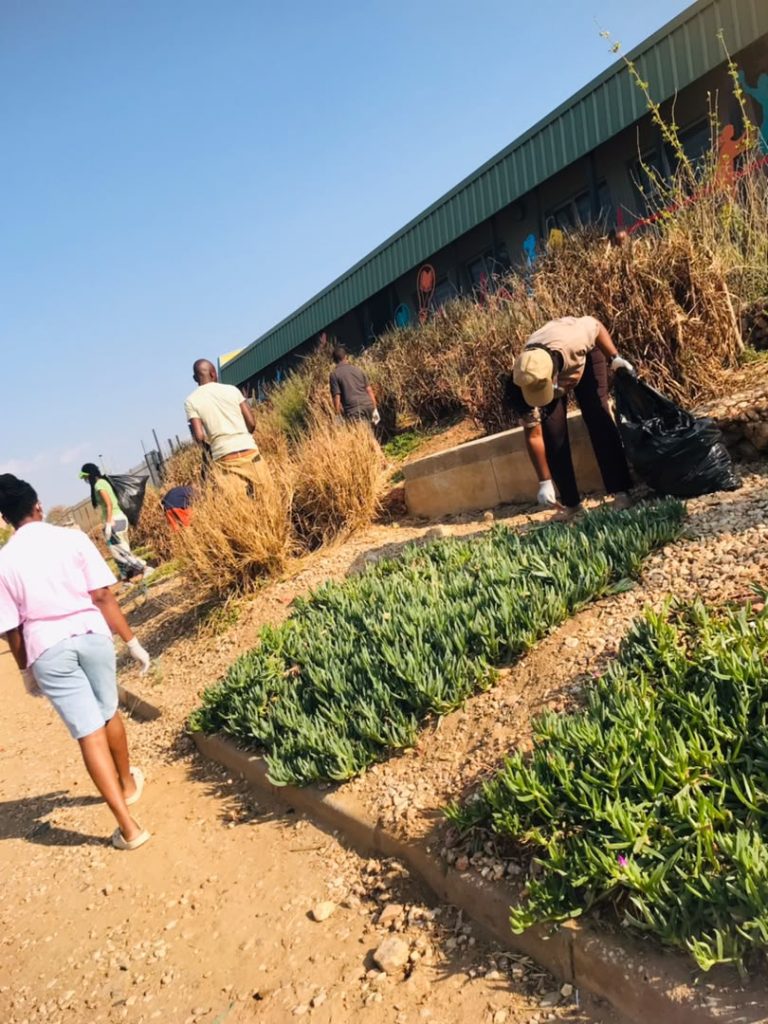
On 26 September 2026, Climate YES Namibia and Green Anglicans joined hands with local youth and environmental organisations for a community clean-up around the BeFree Youth Campus in Katutura. The clean-up was organised in partnership with EcoGreen Club, BeFree Youth Campus, Wakapinya Environmental Education, and the National Youth Chamber of Environment. The initiative brought young people together to take practical action toward a cleaner, healthier community. The campaign highlighted the connection between environmental care and community wellbeing. A clean environment contributes to healthier communities, and young people play an important role in creating sustainable and resilient ones. Through initiatives such as this, Climate YES Namibia continues to encourage youth to move from awareness to action and to take responsibility for the environment in their communities. The message from the organisations to all Namibians is that: “Let us keep our communities clean. The change starts with us”. #BeFree #ClimateYES #CleanUp #YouthInAction #Sustainability by: Keulukuwa Hanghome

Climate YES and Green Anglicans Takes Action for a Cleaner Nation Read More »

In the Living Room of God

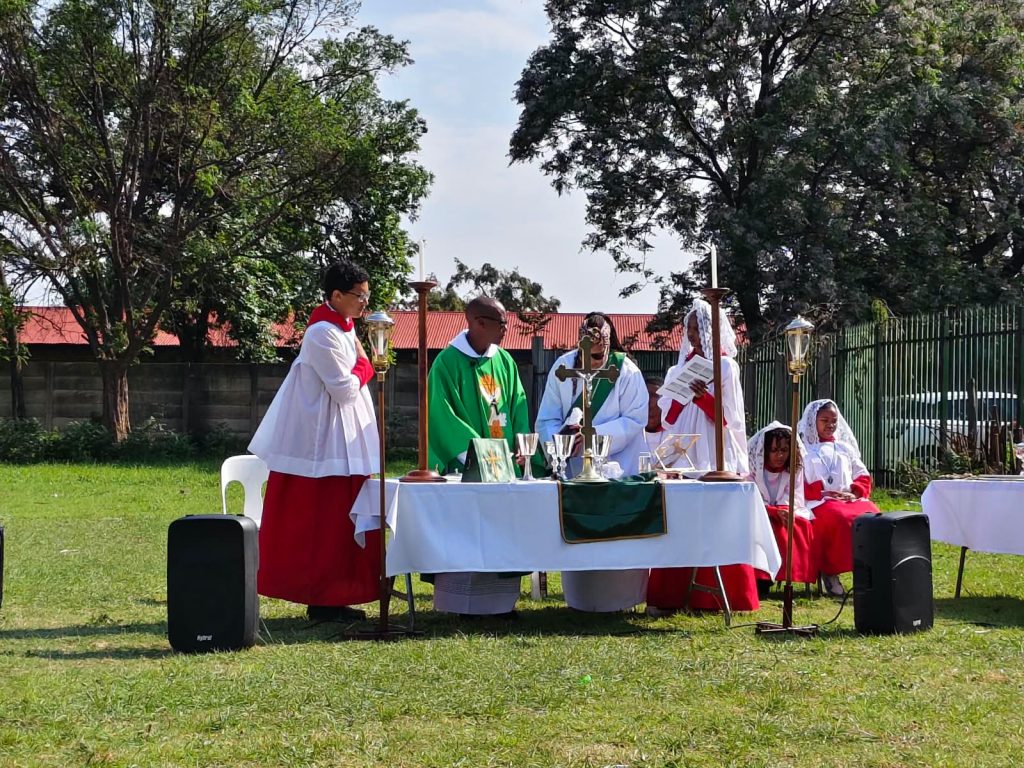
On Sunday, 27 September 2026, the Church of the Transfiguration in Eldorado Park, south of Johannesburg, celebrated the Season of Creation by taking its Sunday Eucharist outdoors under the theme “In the Living Room of God.” Gathering outside offered the congregation an opportunity to worship God surrounded by creation and to reflect on our calling to care for the earth, our common home. Although the morning brought wind and wet grass, these conditions could not dampen the congregation’s spirits. Parishioners embraced the opportunity to worship outdoors, with many expressing hope that it could become a more regular part of the church’s life. The celebration was also enriched by a variety of activities. The Sunday School made a special presentation, sharing their contribution to the Season of Creation, while a liturgical dance brought movement, joy and creativity into the worship. The Eucharist became more than a Sunday service; it was a reminder that creation itself is a gift from God and a place where we encounter the presence of the Creator. Worshipping together outdoors helped the congregation reconnect with the beauty of creation and renewed our commitment to becoming faithful stewards of God’s earth.

In the Living Room of God Read More »

Diocese of Christ the King Attends the FGW Training

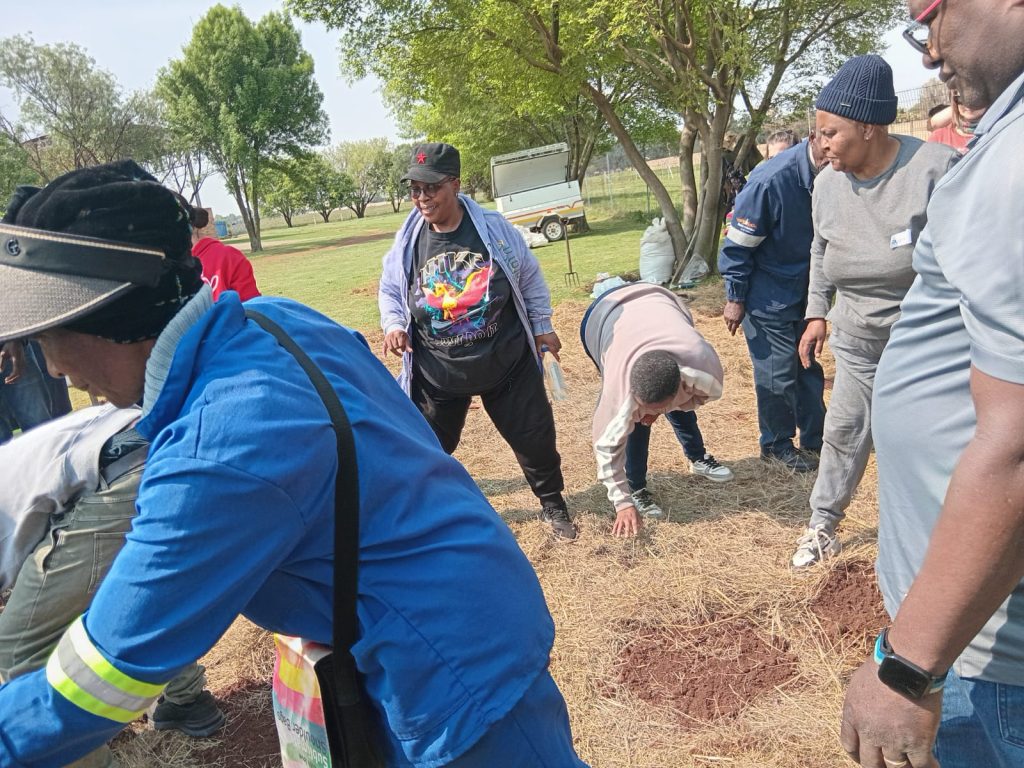
From the 17th to the 19th of September 2026, members of the Mother’s Union from the diocese of Christ the King, participated in a three-day Farming God’s Way (FGW) Training, which took place at Meyerton Christian Centre. Farming God’s way is a farming resource designed to help individuals, churches, NGOs, missions and communities address challenges such as poverty and food insecurity. It brings together Biblical principles, good management and appropriate agricultural technology to encourage sustainable farming and the responsible use of the land. The approach is based on the understanding that God is the Creator and that people have been entrusted with the responsibility of caring for His creation. Genesis 2:8-9 is used to illustrate that God Himself established the garden and provided food from the land. Therefore, Farming God’s way seeks to learn from God’s design and apply principles to agriculture. The purpose of the training was to introduce participants to an approach to farming that combines faith, good management and practical agricultural methods. The training emphasised the importance of: Improving food security, Reducing poverty and dependency, Caring responsibly for the land, Producing food sustainably, Improving soil health and conserving moisture, Using resources wisely, Developing people’s God-given potential, Applying Biblical principles to everyday life and farming, and Encouraging self-reliance and responsible stewardship. Farming God’s way consists of three interconnected spheres of influence: Biblical Principles: teaches that farming and our everyday lives should be guided by God’s principles. Participants were encouraged to recognise God as the provider and to be faithful stewards of what has been entrusted to them. The training highlights Six Biblical keys: Acknowledge God and God alone, Consider your ways, for you are the temple of the Living God, Understand God’s all-sufficiency, What you sow, you will reap, Bring the tithes and offerings back to God, and Stake your claim.  These principles encourage participants to understand that their actions, decisions and attitude have consequences. Management Principles: Good farming requires good management. The training identifies four management keys: doing things on time, to high standards, with minimal wastage, and with the fruit of the Spirit. Good management is therefore not only about financial profit. It also involves discipline, responsibility, quality, planning and good character. Agricultural Technology and Practices: The technological component focuses on practical farming methods that support sustainable agriculture These include: Zero or minimum tillage, Permanent planting stations, Organic mulching, Soil and moisture conservation, Proper spacing and measurement, Reducing unnecessary waste, maintaining healthy soil, and Using available resources effectively. These practices are intended to improve productivity while protecting and restoring the land. A major principle discussed in the training was ‘what you sow, you will reap’. Participants were encouraged to understand that success requires faithful and consistent effort. This applies not only to farming but also to personal life, relationships and communities. The training encourages people to start small and be faithful with what they have. Farmers do not necessarily need to begin with large resources. Instead, they can use what is available to them and progressively develop their farming activities. Faithful stewardship of the land can help people develop in a manageable and sustainable way. The training highlighted that making a profit is not the only purpose of farming. There needs to be a healthy balance between increase and godliness. Sustainable profitability should be achieved through: Working on time, maintaining high standards, Minimising wastage, applying good agricultural practices, being responsible with resources, and demonstrating the fruits of the Spirit. The training has also addressed poverty and dependency. Farming God’s way seeks to encourage people to develop their own potential rather than remain dependent on handouts. The approach emphasises sowing the seeds of knowledge and understanding, enabling people to learn skills and progressively apply them. The goal is to empower people to become responsible stewards who can use the resources available to them and develop sustainable livelihoods. The wider vision is to see the “yoke of oppression” lifted from poor communities and for people to realise their God-given potential. Farming God’s way encourages people to sow faithfully, use what they have wisely, care for the land and develop their God-given potential. It presents farming as an opportunity not only to improve food security and livelihoods, but also to bring positive transformations to individuals, families and communities. We also extend our appreciation to the Provincial Green Anglicans’ office.   By: Tlotliso Mangoenyane

Diocese of Christ the King Attends the FGW Training Read More »