News

Turning Waste Into Useful and Creative Products

From 20 to 23 August 2026, the Mothers’ Union of the Diocese of Mthatha brought its Plastic Free July campaign to a conclusion during the Mothers’ Union 17th Biennial Conference. The conference provided an opportunity for members to showcase their recycling, creativity and practical environmental action. A total of 20 stalls, representing the different Archdeaconries, were set up at the conference. The stalls displayed a wide range of recycled and creative products, highlighting the talents, skills and resourcefulness of Mothers’ Union members. Through these activities, the women demonstrated that materials often regarded as waste can be transformed into useful and creative products. As part of the conference’s environmental activities, 11 fruit trees were donated by the Mzimvubu Archdeaconry to the Zimbane Archdeaconry. The trees included banana, mango, avocado, guava and peach varieties. The conference also created an opportunity for participants to deepen their understanding of environmental stewardship. Dr Buso, an Environmental Planner from OR Tambo Municipality, was invited to provide education and guidance on environmental matters. Dr Buso spoke about the relationship between the internal and external environment, explaining that the two work together and influence one another. He encouraged participants to develop a deeper understanding of God’s creation, emphasising that greater knowledge of the environment should lead to greater respect, protection and conservation of nature. The 17th Biennial Conference was more than a gathering of the Mothers’ Union. It was a celebration of creativity, environmental responsibility and the commitment of women across the Diocese of Mthatha to care for creation and sustain the life of the earth.

Turning Waste Into Useful and Creative Products Read More »

We choose to: Speak, Care & Participate. (Faith, Climate and Solidarity)

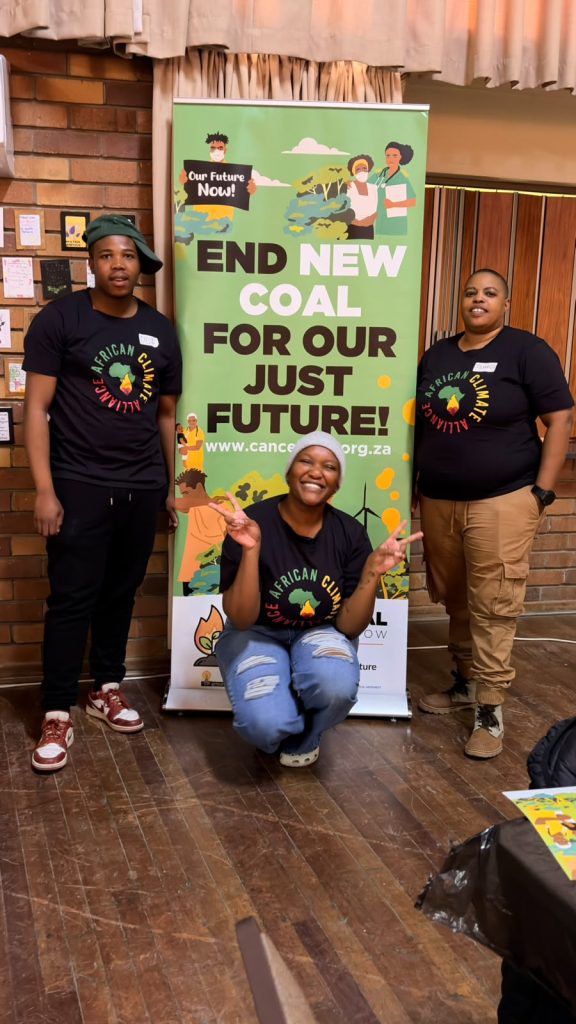
On 18 August 2026, we gathered in Bloemfontein, Free State, in solidarity with the Africa Climate Alliance (ACA) at a particularly significant moment for South Africa’s climate justice movement. The gathering came as the government pursued its appeal against the landmark #CancelCoal judgment, which challenged plans for additional coal-fired electricity generation. For us, the timing of the solidarity event was a reminder that climate change is not simply an environmental issue. It is a question of justice, human dignity, health and the future we leave for generations to come. Why Does This Matter to Young People? For young people, the climate crisis is not a distant possibility. We are already living with its consequences, and we will carry them for the longest. Decisions made today about energy, development and the environment will shape the South Africa we inherit tomorrow. The #CancelCoal case has therefore become more than a legal battle over electricity generation. It represents a wider question: Do young people have a meaningful voice in decisions that determine the future we will live in? Our presence at the solidarity event reflected our refusal to remain passive. We believe young people must be part of conversations about climate policy, energy, development and environmental justice. We are not simply “leaders of tomorrow”. We are citizens of today, and our voices deserve to be heard today. What Does It Mean for a Church Environmental Network? For Green Anglican, the environmental network of the Anglican Church of Southern Africa, being present at a climate justice gathering is an important expression of our ministry. Our faith teaches us that creation is not merely a resource for human consumption. It is something entrusted to us. Therefore, caring for creation must extend beyond what happens within our church buildings. Green Anglican’s presence represents a Church willing to engage with the realities facing communities beyond the sanctuary. It reminds us that environmental ministry includes advocacy, education, action and solidarity, alongside practical initiatives such as reducing waste, planting trees and encouraging sustainable living. Being present alongside the Africa Climate Alliance also creates an opportunity for the Church to listen and learn from movements that are already doing important work in the climate justice space. For us, this is what Green Anglican should represent: a faith community that does not only pray for creation, but actively works to protect it. Faith Must Become Action There is something powerful about a church environmental network standing alongside young climate activists. It demonstrates that faith and environmental justice are not competing ideas. Caring for creation is an expression of caring for people. The communities most vulnerable to environmental degradation are often those with the fewest resources to protect themselves from its consequences. Climate justice therefore requires us to ask not only what is happening to the environment? but also who is affected, who benefits and who carries the cost? This is where the Church has an important role to play. Our theology calls us towards stewardship, but stewardship must be accompanied by responsibility. We cannot speak about loving our neighbours while ignoring the environmental conditions that affect their health, livelihoods and futures. What Does This Reflect About Us? Our presence in Bloemfontein reflected a generation that is becoming increasingly conscious of its responsibility. It reflected our willingness to listen, to learn and to stand with others whose struggles are connected to our own. It also reflected a Church that recognises that faith must be lived beyond the walls of the sanctuary. Climate justice asks us to move from prayer to action, from awareness to advocacy and from concern to solidarity. We may not have the power to make every decision, but we have the power to ask questions, to organise, to educate, to participate and to demand accountability. The solidarity event reminded us that the climate movement is ultimately about people and the kind of future we are willing to build. For Green Anglicans, this is a call to continue strengthening the relationship between faith, young people and environmental justice. We have been entrusted with creation, but we have also been entrusted with one another. To care for one without caring for the other is to misunderstand both our faith and our responsibility. As young people, as people of faith and as members of Green Anglican, we therefore choose solidarity. We choose to speak. We choose to participate. We choose to care. And we choose to believe that a just, sustainable and God-honouring future is still worth fighting for. By I. Madikgetla, T. Lekgetho and O. Sepato ( Green Anglicans eco-champs)

We choose to: Speak, Care & Participate. (Faith, Climate and Solidarity) Read More »

CUT ANSOC INDUCTION SESSION

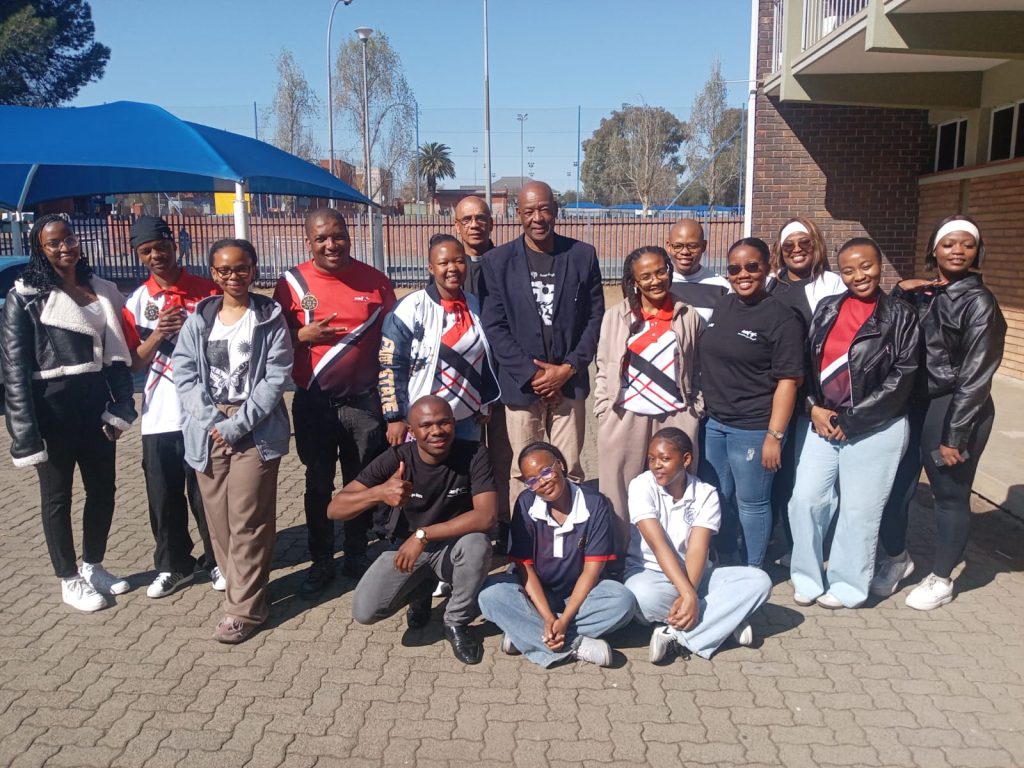
On Saturday, 15 August 2026, the newly inducted Executive Committee of the Central University of Technology (CUT) Anglican Student Society  (ANSOC) welcomed the Green Anglican Movement during their induction session held at the Central University of Technology (CUT) in Bloemfontein.  The engagement, facilitated by Mr. Mogorosi Molisapoli, Green Anglicans Coordinator for the Diocese of Free State, was held under the theme, “Understanding Green Anglicans.” The session introduced student leaders to the Green Anglican Movement and explored the biblical call to care for creation, particularly the mandate to “till and keep” God’s creation. Participants reflected on environmental stewardship as an expression of Christian faith and the responsibility of the Church and young people to respond to the environmental crisis. The discussion highlighted Green Anglicans’ commitment to sustainable living, waste reduction, recycling, responsible consumption, prayer, education and environmental awareness. Attention was given to reducing plastic pollution and phasing out Styrofoam at church events, conferences and student gatherings. In a significant demonstration of commitment, the newly elected ANSOC EXCO immediately appointed an ANSOC eco-champ to serve as a link with the Diocesan Green Anglican team. This marks an important step towards integrating creation care into student ministry at CUT. The day was well-received, with enthusiasm and a strong spirit of partnership. As ANSOC prepares for the Season of Creation, the new partnership provides an opportunity for young people to put their faith into action and together “Strive to Safeguard the Earth.” by : Mr. Mogorosi Molisapoli, (Green Anglicans Coordinator)  

CUT ANSOC INDUCTION SESSION Read More »

Let Nothing Go to Waste: MU Turns Used Soap into New Opportunities

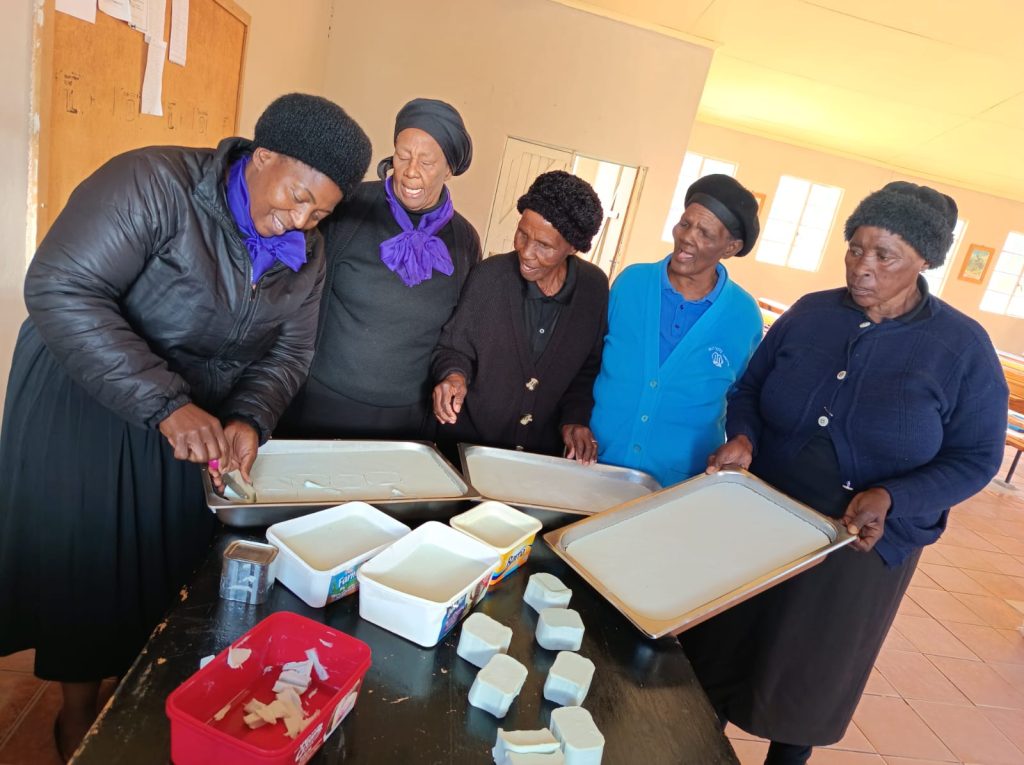
The Mothers’ Union of St. Michael’s Anglican Church in Hoopstad is putting faith into action through a creative recycling initiative that helps reduce waste while supporting the local community. Through these members of the Mothers’ Union, together with congregation members, collect used soap bars that would otherwise be thrown away. Using soap preservation and recycling techniques, the collected soap is processed into new bars. The newly made soap is then sold at an affordable price, making the project both environmentally friendly and beneficial to the wider community. The Mothers’ Union of St. Michael’s is showing that when communities work together, waste can become a resource, small ideas can create impact, and caring for creation can become part of everyday ministry.

Let Nothing Go to Waste: MU Turns Used Soap into New Opportunities Read More »

FS Celebrating Mary Sumner Day with Eco-Friendly Inspiration

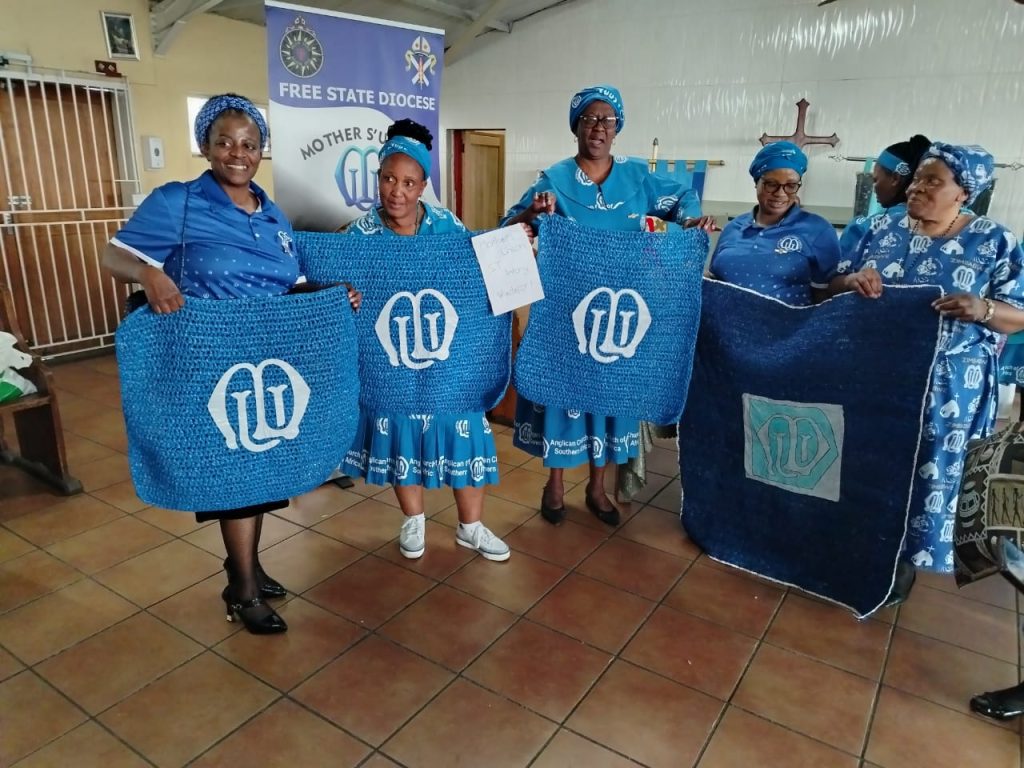
On Saturday, the 8th of August 2026, Mothers’ Union(MU) in the Archdeaconry of Sasolburg, was gathered at St. Peter Parish in Zamdela. The purpose was to commemorate Mary Sumner Day in collaboration with MU members who were doing the same in other Archdeaconries across the Diocese The event was graced by the presence of Revd Sefatsa, who celebrated Eucharist and led the spiritual aspects of the event. It is with utmost humility and gratitude that we reflect on his servanthood throughout the event. The event was a beautiful combination of faith, community and environmental stewardship. The third aspect of the 5th Mark of Mission (renew the life of the earth) was at play throughout the day. Mothers showcased their talent with beautiful crafts made from recyclable materials, including innovative floor mats crafted from recycled plastic bags. The GBFS Archdeaconry Chairperson, who also serves as the Anglican Youth Ministries (AYM) Archdeaconry Eco-champion, namely Eco-champ Sister Retshepile Kutoane, gave an inspiring talk. She expanded her knowledge of the Jade plant (also known as the money plant) by sharing practical steps for planting and nurturing it. Eco-champ Retshepile further expanded on the plant’s environmental benefits. To spread the green initiative even further, the MU Archdeaconry Deputy Presiding, Ecochamp Mme Manibijara Pule, distributed air-purifying devices. She gifted mothers with a variety of succulents, including Spekboom and Jade plants. Eco-champ Mme Manibijara educated mothers on the importance of sharing succulents as they’re easy to replant and require minimal water.   Lastly, the MU Archdeaconry Recording Treasurer, Mme Mamokete Kutoane blessed our elderly mothers with lovely hats. Most of these were lovingly hand-knitted with fcare and generosity by dedicated MU members. Thank you to everyone who made this day a purposeful and blessed celebration! By: Eco-champ Mme Manibijara 

FS Celebrating Mary Sumner Day with Eco-Friendly Inspiration Read More »

SA FLEAT Workshop 2026: Climate Justice and Just Energy Transition

The FLEAT South Africa III workshop was held from 28 to 30 July 2026, in Cape Town, to strengthen participants’ understanding of Climate Justice and the Just Energy Transition (JET), with a focus on promoting equitable and sustainable responses to climate change. Tshegofatso Lekgetho, a member of the Green Anglicans team from the Diocese of Free State, participated in the workshop as part of ongoing capacity building in environmental sustainability and community development. The workshop explored the principles of climate justice, highlighting how climate change disproportionately affects vulnerable and marginalised communities. Discussions also focused on the concept of a Just Energy Transition, emphasising the need to move towards cleaner energy systems while ensuring that workers, communities, and vulnerable groups are not left behind. Key themes included community participation in climate action, renewable energy opportunities, policy and governance, social equity, and strategies for building climate-resilient communities. Participants also examined the links between environmental sustainability, economic development, and social justice. The knowledge and skills gained from the workshop will strengthen Tshegofatso’s contribution to environmental management, community engagement, and sustainability initiatives. The workshop outcomes are expected to support future work in climate change awareness, renewable energy advocacy, and the promotion of inclusive, community-led environmental solutions. Overall, the workshop provided valuable practical and theoretical insights into climate justice and the Just Energy Transition, reinforcing the importance of collaborative approaches to achieving sustainable and equitable development. By: Tshegofatso Grace Lekgetho Photo Credit: SAFCEI

SA FLEAT Workshop 2026: Climate Justice and Just Energy Transition Read More »