News

Diocese of Botswana Youth Conference Empowers Young People to Be “Rooted and Rising”

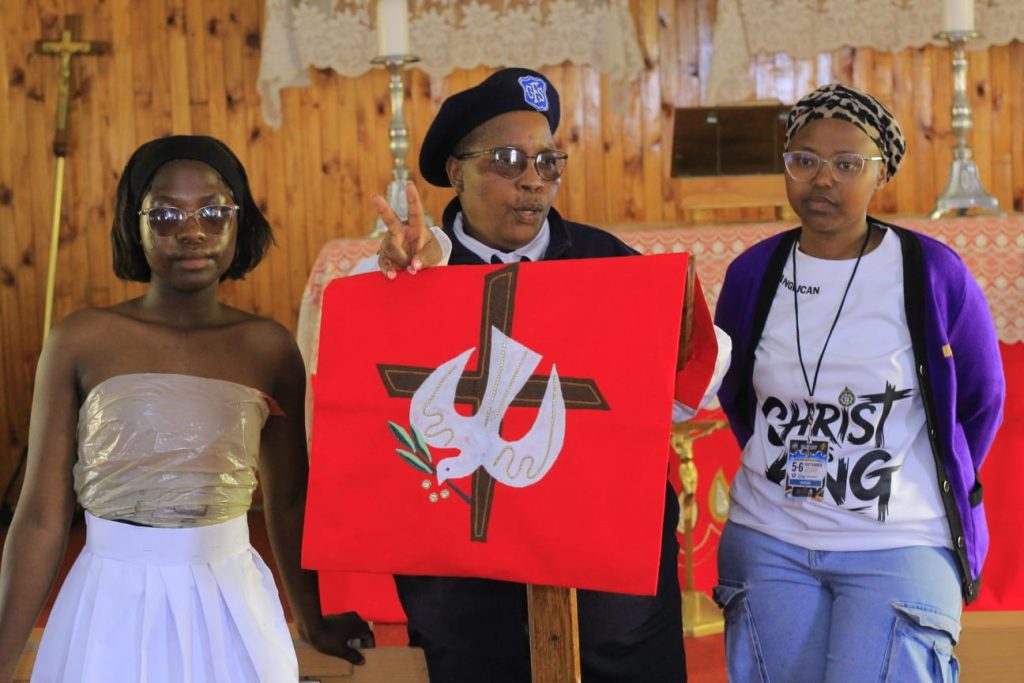
The Anglican Diocese of Botswana Youth held its annual diocesan youth conference from December 11 to 14, 2025, at Tsabong Unified Secondary School. The four-day gathering brought together over 350 young people from across the country under the theme “Rooted and Rising.” One of the key highlights of the conference was a session led by Bino Makhalanyane from Green Anglicans Southern Africa, who introduced the Green Anglicans network and its mission. Drawing on Psalm 8:6 to 8, the session explored the Church’s calling to care for creation through the Fifth Mark of Mission. Young people were challenged to recognise that they are the first generation to fully experience the impacts of climate change, but also the first with the opportunity and responsibility to actively respond and work towards a renewed and sustainable Earth. The incoming diocesan youth executive, led by President-Elect Kgosietsile John Penku and Chaplain Rev. Fr Motshereganyi Sefanyetso, was encouraged to intentionally integrate environmental stewardship into their leadership. This included a call to appoint a Green Anglicans representative on the executive committee and to ensure that each parish youth structure identifies an Eco-Champion to lead creation care initiatives. Throughout the conference, participants were uplifted by vibrant praise and worship and engaged in a variety of activities, including a music competition, beauty pageant, and drama competition. The conference concluded with renewed energy, faith, and commitment among the youth to live out their Christian calling, rooted in faith and rising as leaders of hope, justice, and care for God’s creation. We would like to thank the outgoing President, Ms. Boipelo Gaoetswe, and her executive for hosting a great conference.   

Diocese of Botswana Youth Conference Empowers Young People to Be “Rooted and Rising” Read More »

“Advancing sustainable solutions for a resilient planet”

UN Environment Assembly – Major Groups and Stakeholders Forum The United Nations Environment Assembly (UNEA) is the world’s highest-level decision-making body on environmental matters, bringing together all 193 UN Member States. Held every two years, UNEA sets priorities for global environmental policy and advances the development of international environmental law. It provides leadership, fosters political commitment, and catalyzes intergovernmental action on pressing environmental challenges. UNEA also serves as the governing body of the United Nations Environment Programme (UNEP). Each session of UNEA brings negotiators, ministers, experts, and observers to Nairobi to review progress on existing resolutions and negotiate new ones. A key part of UNEA’s structure includes the Major Groups and Stakeholders, which represent civil society. These include women’s groups, youth and children, NGOs, Indigenous Peoples, farmers, the scientific community, local authorities and cities, and the business sector. We came together for a  two day forum to discuss the important resolutions  to be discussed and how civil society can influence the policy makers. Resolutions under discussion include: We give thanks that the Anglican Communion is part of this vibrant group of passionate representatives of civil society who believe in working together to find sustainable solutions for a resilient planet!.   The Faith communities form a subgroup of the NGO major group and during UNEA had several side events and a discussion on the way forward. #UNEA7 #GMGSF

“Advancing sustainable solutions for a resilient planet” Read More »

OCEANS – THE LUNGS OF THE EARTH ARE UNDER THREAT

We call the oceans the “lungs of the Earth” because of phytoplankton—tiny, microscopic plants that drift near the ocean’s surface. Through photosynthesis, they absorb carbon dioxide and release oxygen, producing over half of the world’s oxygen supply. As they grow, they draw carbon from the atmosphere, and when they die or are eaten, much of this carbon sinks to the deep ocean for long-term storage. Today, phytoplankton are increasingly at risk from plastic pollution. Microplastics block sunlight, reducing their ability to photosynthesise, while chemicals leaching from plastics impair their growth and reproduction. Because phytoplankton are the base of the marine food web and essential for global oxygen production, plastic pollution threatens both ocean health and climate regulation. Anglican representatives are attending UNEA-7, the UN Environment Assembly—the world’s highest-level decision-making body on environmental issues. UNEA addresses pollution, biodiversity, chemicals, oceans, climate, and more, bringing together all 193 UN Member States to set global environmental policy. One of the major challenges is that UNEA decisions are made by consensus, meaning all countries must agree. This often leads to slow progress and watered-down resolutions when even one or two states block ambition. Two important resolutions have been passed that affect ocean health. One concerns protecting the ocean from  sargassum seaweed blooms which are  Sargassum seaweed blooms are massive mats of floating brown algae that wash ashore, disrupting ecosystems, harming tourism and fisheries, releasing toxins, and signalling changing ocean conditions driven by climate and nutrient pollution. The other second resolution refers to improving the climate resilience of coral reefs. Very sadly a resolution regarding protecting the deep seabed  from deep sea  mining was weakened to such a point that the country of Vanuatu that brought the resolution withdrew it. In 2022, UNEP passed a landmark resolution to develop a global, legally binding treaty on plastic pollution, aiming to do three things: Negotiations for this treaty—conducted through the Intergovernmental Negotiating Committee (INC)—have been ongoing for several years. The main stumbling block is the proposed production cap, which faces strong resistance from petro-states and their allies who view plastics as an economic buffer against declining fuel demand due to electric vehicles. I was invited to a closed meeting with African plastic negotiators, organised by WWF, and gained key insights: countries are sharply divided between those favouring “business as usual” (reducing the treaty to waste management only) and the high-ambition countries pushing for production limits. The talks are now at an impasse, and a new INC chair will be elected in early 2026. Please pray for a breakthrough and the right leadership. There are, however, signs of hope. Civil society is energised through campaigns like Break Free From Plastic (https://www.breakfreefromplastic.org/ Do sign up and lend your voice! UNEP has also launched the Global Plastics Hub, a groundbreaking platform offering data, knowledge, and stories from around the world. You can register to access resources and share your own experiences—faith-based materials would be a wonderful addition. At the “Gala of Hope,” celebrating the UN World Restoration Flagship Awards, UN Patron of the Oceans Lewis Pugh announced the award to the Reef Builder Project, explaining that shellfish act like the kidneys of the ocean—filtering and cleaning pollution. This inspiring Australian initiative—led by The Nature Conservancy with government and Indigenous partners—restores native oyster and mussel reefs, boosting biodiversity, supporting jobs, and strengthening coastal resilience. It shows that large-scale marine restoration is possible. Change is possible. Let us protect the oceans—the lungs of the Earth.     Photo: Rev Rachel Mash with Lewis Pugh, UN Patron of the Oceans.

OCEANS – THE LUNGS OF THE EARTH ARE UNDER THREAT Read More »

THE HUMBLE SPEKBOOM IS A GLOBAL WINNER! Protecting the Lungs of the Earth!

At the UN Environmental Assembly held in Nairobi, Kenya the South African spekboom plant was announced as a global eco-system restoration winner! It’s called Spekboom (Afrikaans for “bacon tree”) because its fleshy, water-filled leaves are plump (“spek” meaning fat/bacon), edible, and tart, making it a favorite food for elephants and livestock, and even a salad addition for humans. One of South Africa’s most biodiverse yet neglected ecosystems is the native subtropical thicket. Thicket Restoration in South Africa unites over 60 initiatives across the country’s Eastern Cape by building on best practices, connecting the public and private sectors to bolster restoration. Made through Portulacaria afra (spekboom) planting, this restoration flagship aims at a transformational rehabilitation of 800,000 ha by 2030. Restoring thicket makes the soil more resilient, stores carbon and serves as fodder storage for large livestock and other large mammals during droughts, a high priority for a region that experienced its worst drought in 100 years in 2023 and 2024. For many years across the Anglican Church of Southern Africa, Dioceses have been planting the spekboom known as the miracle plant. Bishops give cuttings to confirmation candidates and it is handed out at Conferences and other events Known as the miracle plant it has many benefits! #1 It Helps to Fight Climate Change and Air Pollution This plant helps to remove carbon dioxide from the atmosphere by acting like a carbon sponge, improving the quality of air we breathe. More specifically, spekboom can absorb between four to ten tonnes of carbon per hectare. #2 This Proudly South African Plant is Easy to Grow It is also one of the easiest plants to grow because it doesn’t need formal planting. Simply break a piece off and stick it in the ground in an area that gets lots of sun. Spekboom also responds well to pruning and grows densely, making it an excellent, hardy hedge. In late winter and spring, this plant flowers bloom in beautiful pink. The flowers are rich in nectar, bringing beautiful birds to your garden. #3 It is Water-wise and Super Resilient The low-maintenance plant can survive on as little as 250 – 350mm of water per year! Spekboom has a photosynthetic mechanism which allows it to adapt to all weather conditions so it can survive extreme conditions – from drought to frost. It is also an excellent soil binding plant that prevents soil erosion. #4 SpekboomCan Live Up to 200 Years Old! This plant propagates easily. A broken branch tossed onto the ground by a grazing elephant will grow roots and create a whole new plant. It can sprout up to five metres tall. It also stimulates biodiversity, enabling other plants to grow and live in its mini biome. #5 It is High in Basic Nutrients This plant is edible and high in nutrients, especially Vitamin C, and a perfect addition to a salad. It also has medicinal qualities- Sucking a leaf to quench thirst, treat exhaustion, dehydration and heatstroke. Crushed leaves can be used  to provide relief for blisters. Chewing leaves can treat a sore throat and mouth infections. Juiced leaves are used as an antiseptic and to soothe skin ailments such as pimples, rashes, insect stings and sunburn. So let us keep on growing and sharing spekboom and help to heal the #lungsoftheearth!

THE HUMBLE SPEKBOOM IS A GLOBAL WINNER! Protecting the Lungs of the Earth! Read More »

TALANOA AT UNEP – AN INTERFAITH DIALOGUE

“Sustainable Solutions for a Resilient Planet” An inspiring Interfaith Talanoa Dialogue took place at the Brahma Kumaris Centre in Nairobi, bringing together around 60 participants from diverse countries and faith traditions. The session opened with a warm welcome from Aneta Loj of the Brahma Kumaris. Elena Cedillo from the Lutheran World Federation introduced the Talanoa process—a traditional Pacific Islands approach to inclusive, transparent, and participatory dialogue built on storytelling, relationship-building, and shared understanding. Talanoa has been used at several COP climate conferences, and this marked the first time an Interfaith Talanoa Dialogue was held at UNEP. David Munene of CYNESA then offered insights into the UNEA process and shared guidance on effective participation. Participants later divided into groups aligned with UNEA themes to reflect on “Faiths and the UNEA Structure”, exploring three guiding questions: Where are we now? A key observation was that UNEA negotiations are often shaped by “movers” and “blockers”—including petro-states and countries with competing priorities that hinder certain environmental resolutions. Faith communities, however, can engage meaningfully through the Major Groups, including NGOs, Women, Children and Youth, Science, and Farmers. Their unique contributions include: Where do we want to be by UNEA 8? How do we get there? Strengthen communication among faith groups, beginning with the WhatsApp platform. Increase awareness of online opportunities for engagement, learning, and capacity-building. Walk together in unity—collaborating, supporting one another, and amplifying our shared moral voice for the planet      

TALANOA AT UNEP – AN INTERFAITH DIALOGUE Read More »

4th Annual Climate YES Southern Africa Bootcamp

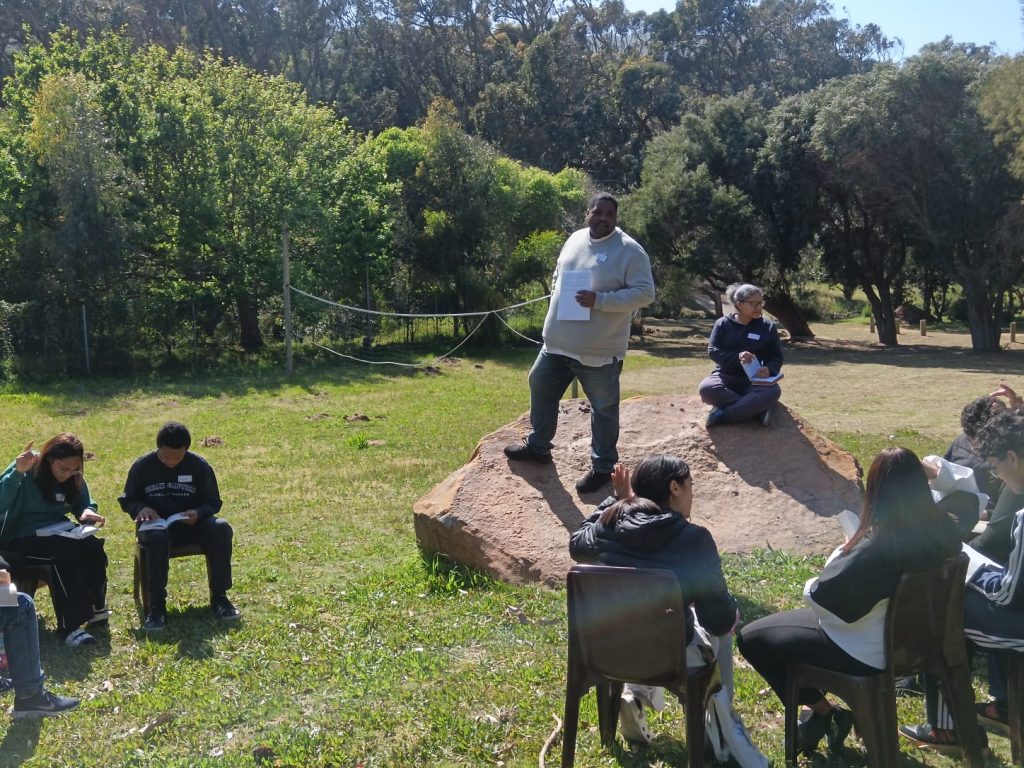
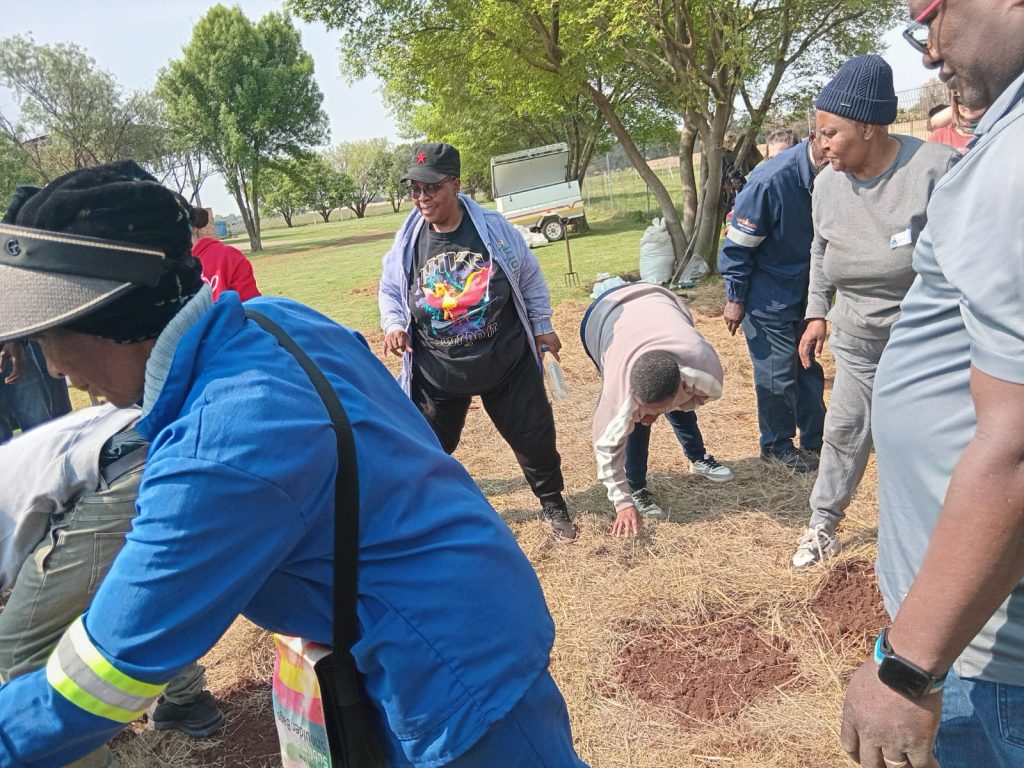
From December 1 to 4, 2025, 37 young people from across Southern Africa (Namibia, Botswana, South Africa, Lesotho, Eswatini, Mozambique, and Zimbabwe) gathered for the fourth Climate Youth Ecumenical Summit (Climate YES) boot camp at St. Peter’s Place in Rosettenville, Johannesburg, South Africa. Day one was all about understanding Climate YES’ main priorities as a Christian, the Climate Justice youth movement, led by young people. We also took some time to conduct a SWOT analysis of the organisation and set the pace with powerful icebreakers that reminded us of the value of collaboration, resource sharing, and supporting one another’s journeys. Participants also shared their expectations for the camp, grounding the space in collective purpose. On Day two, we shifted into action, reflecting on our ongoing work, strengthening existing initiatives, and mapping out clearer plans of action for impact. Ms Abongi Mpu and Mrs Belinda Crawford from Ujamaa Centre led the Contextual Bible Study workshop, focusing on Genesis 1:25-31, where we explored how Scripture calls us to care for creation. Reflecting on this text reminded us that stewardship of the earth isn’t just an environmental responsibility; it’s a spiritual mandate. The See–Judge–Act method helped us connect the biblical call to “have dominion” with today’s need to protect ecosystems, uphold sustainability, and respond to the environmental injustices affecting our communities. On Day Three we moved into Climate Justice policy where Mr Teboho Matlou from SALGA, a us a presentation on SDG 13 and how the church community can get involved he also highlighted the need for Climate YES members to always be on the ground and familiarize themselves with Local Government policies on Climate Change and environmental wellbeing as that is where the impacts of climate charge are felt the most. Mr. Mncedisi Masuku, who’s a long-standing member of Climate YES led a presentation on NDC’s and the JUST Transition, calling on members to not only attend meetings where governments speak on NDC’s and JUST Transition, but meaningfully contribute towards the formation of policies, ensuring that our communities are safe and that whatever commitment is made can is not at the expenses of our future but rather beneficial to both the environment and economic suitability of our communities. He also reminded us that Climate YES rejects any form of Climate finance relief that comes in the form of loans. Ms Boipelo led a powerful panel discussion that highlighted both the harsh realities and the resilient hope found across Southern Africa. As youth from Eswatini, Lesotho, and beyond shared their experiences, we were reminded of the severe impacts of climate change: droughts, cyclones, and creeping desertification, yet also inspired by how young Christians are responding with courage. They are protecting water sources, advocating for climate justice, and modelling sustainable living, showing that even in dark times, hope endures. One South African panellist noted that social media has become a vital tool for amplifying these efforts, urging us to use our platforms to share the cries of the earth, mobilise action, and stand with these young leaders as they build a more just and sustainable future. Having fulfilled our country’s 2026 plans and commitments, we concluded the bootcamp on day four by packing 200 Portulacaria afra plants, which were donated to the diocese as part of our efforts to reduce our carbon footprint.  The Climate YES Bootcamp 2025 aimed to equip young people with the knowledge and skills necessary to drive effective climate action. Recognising the urgent need for climate solutions, the bootcamp gathered diverse youth from various interdenominational backgrounds. The goal was to teach them how to use advocacy, interdenominational cooperation, and effective project tracking to implement climate solutions that support global Sustainable Development Goals (SDGs) and national climate pledges (NDCs). Mncedisi Masuku, who’s also an Anglican shared his testimony after his presentation  : “I am reminded of the late Bishop Ellinah Wamukoya’s words when the Diocese received the Temvelo Environmental Award: Mncedisi, you have made significant contributions to the Diocese – this message must be shared with other churches. Today, I felt a renewed sense of purpose and inspiration from her words, as her prophetic encouragement continues to yield positive outcomes.” Thank you Climate YES Southern Africa for shedding light on local climate governance and the importance of youth engagement. Feeling equipped, motivated, and ready to take action for a more sustainable and just future.”

4th Annual Climate YES Southern Africa Bootcamp Read More »