environment

Fourth Sunday in Lent 2026

“But ask the animals, and they will teach you, or the birds in the sky, and they will tell you; or speak to the earth, and it will teach you, or let the fish in the sea inform you.” — Job 12:7–8 Lent is a season of reflection, prayer, and drawing closer to God. Often we think of prayer as something that happens in church or in the quiet of our homes. Yet the book of Job reminds us that God’s voice can also be heard through the living world around us. The animals, the birds, the earth, and the seas all have something to teach us about the Creator. Spending time praying in nature can open our hearts in a unique way. When we walk along a beach, sit beneath a tree, or listen to birds at dawn, we begin to notice the beauty and complexity of God’s creation. The rhythm of waves, the growth of plants, and the movement of clouds remind us that we are part of a much larger and sacred story. In these moments of stillness, creation itself becomes a place of prayer. During Lent, taking time to pray outdoors can help us slow down and listen more deeply. Instead of rushing through the day, we can pause to observe the small wonders around us: the resilience of a plant growing through a crack in the pavement, the call of a bird, or the quiet strength of an ancient tree. These simple encounters can draw us into gratitude and humility before God. Praying in nature also reminds us of our responsibility to care for the earth. If creation teaches us about God, then protecting it becomes an act of faith. When we love and safeguard the natural world, we honour the Creator who made it. This Lent, consider stepping outside for prayer. Sit in a garden, walk in a park, or pause beside the sea. Listen to what the birds, the wind, and the earth might be saying. As Job reminds us, creation itself can become a teacher—pointing us back to the wisdom and presence of God. 🌿

Fourth Sunday in Lent 2026 Read More »

Five loaves and two fish

Here is a boy with five small barley loaves and two small fish, but how far will they go among so many?— John 6:9 In the story of the feeding of the five thousand, a young boy offers the little he has—five loaves and two fish. It does not seem like much in the face of such great need. Yet when it is offered and shared, it becomes enough for everyone. The miracle begins with a simple act of generosity. During Lent, Christians are invited to reflect on how we can share what we have with those who are in need. One practical way to do this is by looking through our kitchen cupboards and giving away food before it reaches its sell-by date. Many of us have tins, packets, and staples that we bought with good intentions but have not used. Instead of letting them go to waste, they could make a real difference to someone who is struggling. Food banks, shelters, and community organisations are always grateful for donations of non-perishable food. A few tins of beans, packets of rice, or boxes of cereal may seem small, but together they can help feed families who are facing hunger. Like the boy in the Gospel story, when we offer what we have, it can be multiplied through the power of community. Reducing food waste also helps protect the environment. When food is thrown away, all the resources used to grow, process, transport, and package it are wasted as well. Food that ends up in landfill produces methane, a powerful greenhouse gas that contributes to climate change. By sharing food rather than wasting it, we care not only for people but also for the earth. Lent is a season of generosity, simplicity, and compassion. Imagine if each of us gave just a little from what we already have. Like the loaves and fishes, small acts of sharing can become a blessing for many.

Five loaves and two fish Read More »

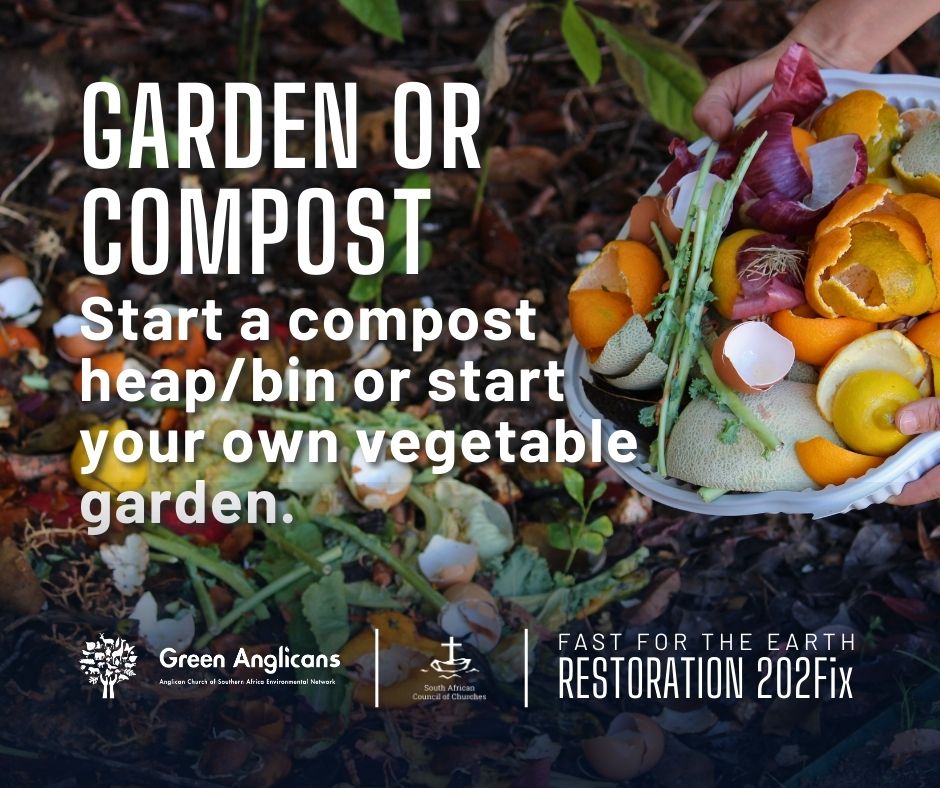
Garden or Compost

“Unless a grain of wheat falls into the earth and dies, it remains just a single grain; but if it dies, it bears much fruit.” – John 12:24 The Bible often reminds us that life follows cycles of growth, decay, and renewal. Composting beautifully reflects this pattern in nature. What we might think of as waste—vegetable peels, fruit skins, coffee grounds, and garden leaves—can actually become rich soil that nourishes new life. Instead of sending organic waste to landfill, composting allows it to return to the earth. In landfills, food waste breaks down without oxygen and produces methane, a powerful greenhouse gas that contributes to climate change. But in a compost heap or bin, these same scraps decompose naturally and turn into nutrient-rich compost that improves the soil. Compost feeds the garden. It helps the soil retain water, supports healthy microbes, and gives plants the nutrients they need to grow strong. Whether you have a large garden, a small yard, or even a few pots on a balcony, compost can help vegetables, herbs, and flowers flourish. Starting a compost system is simple. A small bin or heap can hold fruit and vegetable scraps, tea bags, eggshells, coffee grounds, dry leaves, and grass cuttings. Avoid meat, dairy, and oily foods. Over time, nature does its quiet work, transforming what was once waste into dark, fertile soil. Composting is also a spiritual reminder. Just as a seed must fall into the earth to bear fruit, the things we discard can become the source of new life. God’s creation wastes nothing. By composting, we participate in this sacred cycle. We turn leftovers into life, nourish the soil, and care for the earth that God has entrusted to us. 🌱

Garden or Compost Read More »

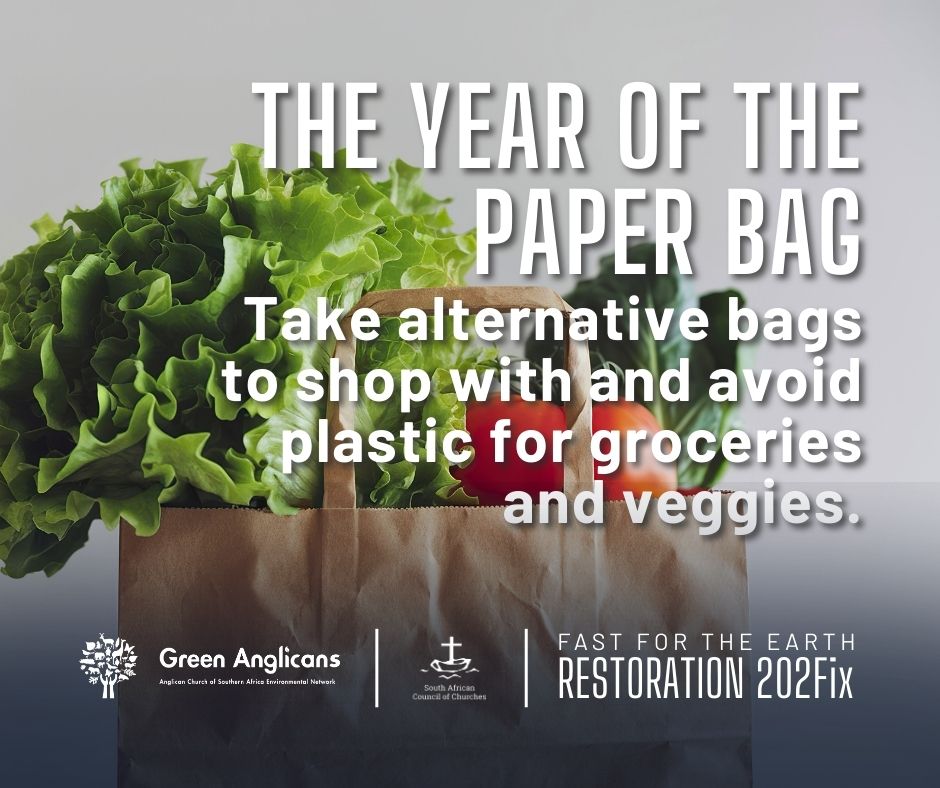
The Year of the Paper Bag

“Whoever is faithful in a very little is faithful also in much.” – Luke 16:10 Sometimes caring for the earth begins with very small choices. One of the simplest actions we can take is to bring our own reusable bag when we go shopping. It may seem like a tiny habit, but as Jesus reminds us, faithfulness in small things reflects a deeper commitment to what truly matters. Every year millions of plastic bags are used for just a few minutes and then thrown away. Many end up in landfills, rivers, and oceans where they can remain for hundreds of years. Plastic bags harm wildlife, clog drainage systems, and break down into tiny microplastics that pollute soil and water. What feels convenient in the moment can leave a long legacy of pollution. Bringing your own bag is a small act of responsibility that can make a real difference. A strong cloth or woven bag can be used hundreds of times. By keeping a reusable bag in your car, handbag, or backpack, you can easily avoid single-use plastics when buying vegetables, fruit, bread, and groceries. Reusable produce bags or small cloth bags are also helpful for loose vegetables. Instead of placing tomatoes, apples, or potatoes into thin plastic bags, we can weigh and carry them in our own containers. These simple choices reduce waste and remind us that God’s creation is precious. The verse from Luke teaches that the way we handle the small things in life reflects our character. Environmental care is not only about large policies or global agreements; it is also about everyday habits. Choosing a reusable bag is a quiet act of stewardship. Next time you head to the shop or market, pause before you leave the house. Take a reusable bag with you. In doing so, you practice faithfulness in a small thing—and help protect the beautiful earth that God has entrusted to us. 🌍🛍️

The Year of the Paper Bag Read More »

SWITCH IT OFF!

“The prudent see danger and take refuge, but the simple keep going and pay the penalty.” – Proverbs 22:3 We often think of pollution in terms of smokestacks and traffic jams, yet some of the most significant environmental impacts sit quietly in our homes, offices, and pockets. Our electronic goods — smartphones, laptops, televisions, routers, tablets, and smart appliances — carry a hidden energy cost. The environmental impact of electronics begins long before we switch them on. Manufacturing devices requires mining rare earth minerals, intensive water use, and vast amounts of electricity, often generated from fossil fuels. In fact, for many devices, a large portion of their lifetime carbon footprint comes from production rather than daily use. Every upgrade we make has an energy story behind it. Then there is the energy used while devices are operating. Globally, digital technologies account for a growing share of electricity demand. Streaming, cloud storage, data centres, and constant connectivity all require enormous amounts of power. Even when devices appear “off,” standby modes quietly consume electricity. Multiply this by billions of users, and the impact becomes significant. Finally, electronic waste presents another challenge. When devices are discarded prematurely, the embedded energy and materials are lost, and toxic components can pollute land and water. So, what can we do? First, keep devices longer. Repair rather than replace when possible. Choose durable, energy-efficient products. Second, reduce unnecessary streaming and data storage, and switch off devices completely instead of leaving them on standby. Third, recycle electronics responsibly through certified e-waste programmes. Caring for creation today includes digital discipleship. If the earth belongs to the Lord, then even our online habits matter. By using our electronics thoughtfully and extending their lifespan, we reduce carbon emissions and honour the Creator whose world we share.

SWITCH IT OFF! Read More »

Come and See Meat Free Monday

“Then Jesus said to them, ‘Come and see.’” – John 1:39 Lent invites us into a season of reflection, repentance, and renewal. One way we can participate in this spiritual journey is through conscious choices in our daily life, such as practicing Meat-Free Monday. This simple act of abstaining from meat once a week can be much more than a dietary decision—it can become a spiritual discipline. Come and see- this encourages us to try something new – perhaps you have always thought plant free food is boring – lets share ideas – get new recipes! By choosing plant-based meals, we engage in a small but powerful practice of self-denial, echoing the call to simplicity and mindfulness that Lent encourages. It is a reminder that our habits impact not only our bodies but also the world around us. Livestock farming contributes significantly to environmental degradation and climate change, and by eating less meat, we reduce our ecological footprint and act as stewards of God’s creation. Meat-Free Monday can also become a moment of gratitude. Preparing meals from grains, vegetables, and legumes invites creativity and reflection. It encourages us to consider the abundance of God’s provision beyond the typical protein-heavy diet. Sharing these meals with family, friends, or neighbors fosters community and generosity, embodying the love Christ calls us to live out daily. Lent is a season of inviting God into the ordinary rhythms of our lives. Choosing a meat-free day is a tangible way to slow down, reflect on our consumption, and align our actions with our faith. It’s a small step, but one that can ripple outward, influencing our health, our environment, and our spiritual growth. Reflection Prompt:This week, ask yourself: How can my food choices honor God, care for creation, and deepen my spiritual discipline? Consider what changes you can make, even beyond Mondays, to live more intentionally and compassionately.

Come and See Meat Free Monday Read More »