
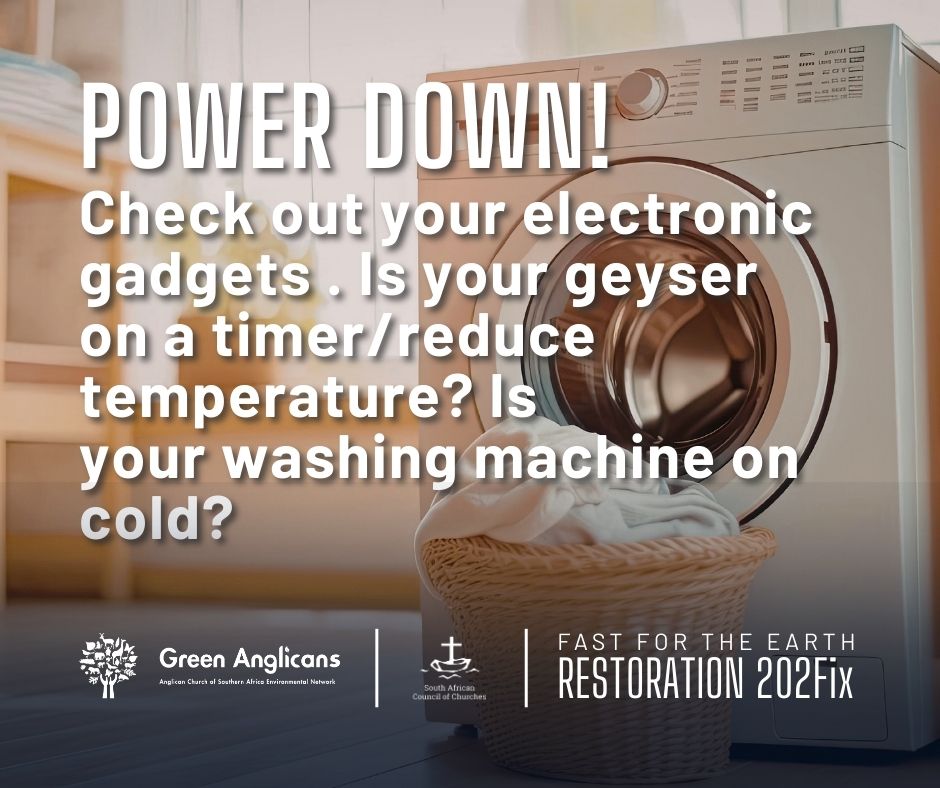
Power Down!
“You shall not waste the land where you are living.” – Numbers 35:33 Lent invites us to examine the habits we take for granted. A Carbon Fast calls us to notice the hidden energy use woven into everyday life — especially in our homes and cars. Three ordinary technologies — hot water cylinders (geysers), washing machines, and vehicle air conditioning — quietly contribute to our carbon footprint. In many South African homes, the electric geyser is one of the biggest energy consumers. Heating water accounts for a large portion of household electricity use. When geysers run constantly or lack proper insulation, they draw significant power, much of it generated from fossil fuels. A Carbon Fast could mean lowering the thermostat slightly, installing a timer, insulating the cylinder and pipes, or simply being mindful of shower length. Washing machines also have an environmental cost. The greatest energy impact often comes from heating water. Hot cycles use far more electricity than cold washes. Choosing cold water settings, washing full loads, and line-drying clothes instead of using a tumble dryer can dramatically cut emissions and save money. Even our cars contribute beyond fuel alone. Using air conditioning increases fuel consumption, which in turn increases carbon dioxide emissions. On mild days, opening windows at lower speeds or parking in the shade can reduce the need for air con. Regular vehicle maintenance also improves efficiency. A Carbon Fast is not about guilt; it is about intention. Small changes, practised consistently, reduce strain on the grid, lower emissions, and express love for neighbour — especially those most vulnerable to climate change. This Lent, let us “power down” as an act of faith. By adjusting our thermostats, washing wisely, and driving thoughtfully, we honour God’s creation and participate in its healing. Small switches can become sacred acts of stewardship.