Rachel Mash

Young Voices, Clean Streets: Bishop Emily Joins Students for Kabuku Cleanup

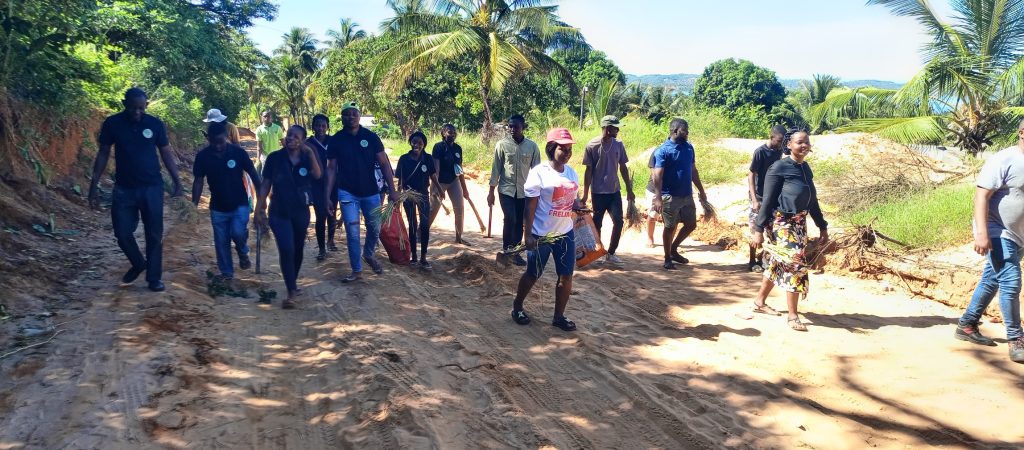
It was more than just a cleanup—it was a movement. Students in Kabuku Town rolled up their sleeves and hit the streets alongside Bishop Dr. Emily Onyango, kicking off a powerful day of climate action organised by the Centre for Anglican Women’s Leadership and Research in Africa (CAWLRA). The event, held at St Paul’s Limuru, brought together inspiring leaders including Canon Rachel Mash, Rev Dennis Nthenge, and Rev Captain Janet Kariuki from the Green Anglicans movement. Rev Dennis shared his personal challenge to “Follow Your Waste”—a campaign that took him from his own bin to Dandora dumpsite. “I saw kids playing barefoot near burning piles of plastic. Families raising children in smoke-filled air. It hit me—our waste doesn’t disappear, it just moves… often into someone else’s home.” He urged students to rethink how they manage their trash: sort it at the source, separate plastics, glass, and organic waste, and see waste not as garbage—but as opportunity. “This is more than going green,” he said. “It’s loving your unseen neighbour. It’s living the Gospel.” Canon Rachel Mash brought a hard truth from scripture: “I brought you into a fertile land, but you made my inheritance detestable” (Jeremiah 2:7). She reminded the group how plastic is now everywhere—our rivers, our food, even unborn babies. She challenged students to take action like activists and innovators: With high energy, the student team swept through the streets of Kabuku, turning faith into action and leaving a visible difference behind. Rev Dennis also shared striking photos from his Dandora visit, part of Tearfund’s environmental campaign—images that challenged everyone to do more, and do it now. 📸 Photo credits: Tearfund and St Paul’s Limuru

Young Voices, Clean Streets: Bishop Emily Joins Students for Kabuku Cleanup Read More »

Sustaining the Soul: Spiritual Resilience for Climate Action at TED countdown summit

The TED Countdown Summit took place in Nairobi from June 16–18, 2025, showcasing Africa as a pivotal hub for climate solutions. Host to over 600 participants—scientists, entrepreneurs, artists, policymaker, faith leaders  and youth from 69 countries—the summit underscored Kenya’s dramatic green energy leadership, with 90% of its grid powered renewably and 50% of that from geothermal Emphasising local resilience, Day 2 highlighted the untapped potential of informal economies, as entrepreneur Anuj Tanna urged unlocking—not fixing—the creative energy of side hustles. Agribusiness pioneer Yi Li noted that ensuring farmers a steady income is essential for climate action Day 3 featured inspiring narratives like Doreen Orishaba’s electric buses and Tasso Azevedo’s satellite-led fight against deforestation. Innovative ideas abounded—from gene-edited microbes to geothermal drilling and legal reforms to curb environmental damage Sessions delivered both big-picture strategies  and grassroots intelligence. From electric vehicles and cold-chain technology to youth empowerment—and even rewilding backyard spaces—Countdown Nairobi blended optimism with urgent climate solutions, anchored in Africa’s ingenuity. Faith leaders had their part to play. A side event was held looking at the role of faith in resilience for climate activists.  Speakers at the event included Gopal Patel, Allen Ottaro (CYNESA), Jakir Manela, Rachel Mash, and Daniel Perell. The very final speaker of the inspiring event  was Tariq Al Olaimy and his inspiring message will be up on Ted.com in the weeks to come , don’t miss it! Gopal’s speech at a previous TED talk can be found here: https://www.youtube.com/watch?v=neipUPkQZBA

Sustaining the Soul: Spiritual Resilience for Climate Action at TED countdown summit Read More »

The World Council of Churches Launches a Decade of Climate Justice Action

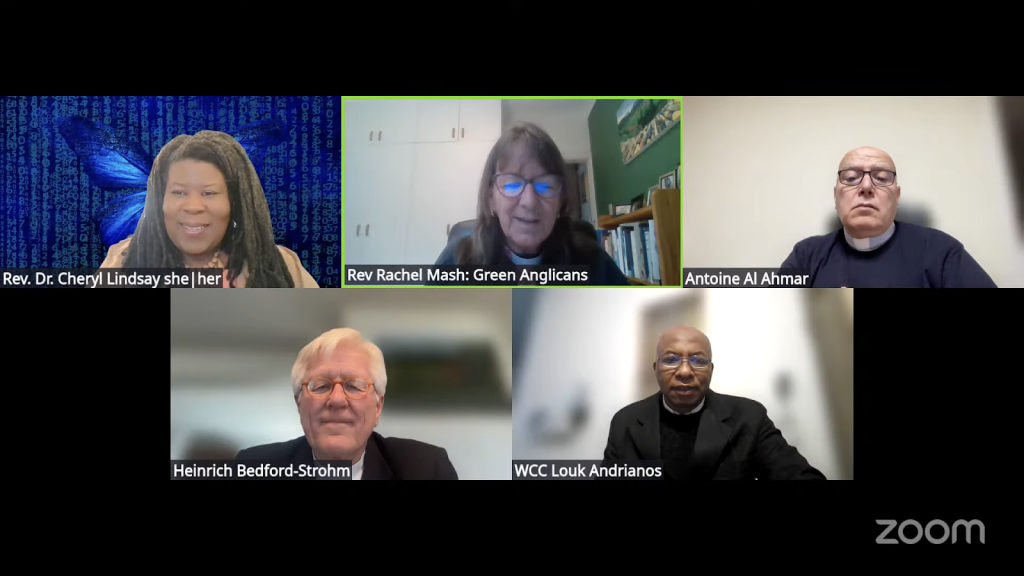
On 21 June, the World Council of Churches (WCC) officially kicked off the Ecumenical Decade of Climate Justice Action—ten years of focused commitment to climate justice, grounded in faith, community, and bold action. The launch took place during a powerful plenary session chaired by Archbishop Julio Murray, bringing together voices from across six continents. The session mixed deep theological reflections with real-world urgency as church leaders shared stories, challenges, and calls to action. Speakers included Grand Archimandrite Iakovos Krochak (Ecumenical Patriarchate), Ann Jacob (United Methodist Church USA), Rev. Dr Rachel Mash (Anglican Church of Southern Africa), Uhuru Dempers (Evangelical Lutheran Church in Namibia), and Julia Rensberg (Church of Sweden). Rev. Rachel Mash spoke about the recent devastating floods in South Africa, where over 90 lives were lost. She called climate change “the human rights issue of our time” and asked a powerful question: “How can we mobilize 2.4 billion Christians?” Her answer: by transforming the way we pray, preach, and think about faith and the planet. “As we pray, so we believe, so we live,” she said, quoting the phrase Lex Orandi, Lex Credendi, Lex Vivendi. “If we change how we pray, it can shift our beliefs—and that will drive us to act.” She proposed the idea of a global Feast Day of Creation—not just a “spiritual version of Earth Day,” but a day rooted in the heart of Christian faith. “We believe in the Creator, in Christ through whom all things were made, and in the Spirit, the giver of life,” she said. “What better way to mark 1700 years since the Council of Nicaea than by uniting East and West in celebrating creation together?” But the call wasn’t just about ideas—it was about action. Speakers urged churches to move beyond charity and tackle the root causes of climate injustice, especially the way it hits vulnerable communities the hardest. Chief Edmund Stuurman, a Khoi-San elder from South Africa, didn’t hold back: “Those who represent the Lion of Judah must roar like lions—not meow like house cats.”A challenge to faith leaders to stop playing it safe and start taking bold, prophetic steps. Rev. Dr Semisi Turagavou from the Methodist Church in Fiji gave a sobering reminder of what’s at stake. Some islands in the Pacific may disappear within 20 years. “Will you come alongside our boat before it slips beneath the waves?” he asked. The session also featured a moving moment led by youth stewards—a hands-on liturgy with soil and seed, set to a hymn sung at COP28 by Faith Sebwa. It was a symbolic and hopeful gesture: planting seeds of justice. At the end, everyone wrote down a personal prayer or commitment to the Decade of Climate Justice Action—a small step into what promises to be a transformative journey for the global church. 📺 Watch Rev. Rachel Mash’s full talk here:👉 https://youtu.be/IP_GUW8XwXQ 📸 Photos by Albin Hillert / WCC”

The World Council of Churches Launches a Decade of Climate Justice Action Read More »

PLANTING HOPE: THE COMMUNION FOREST – THREE YEARS ON AND GROWING!

It’s been three years since the Communion Forest launched at the Lambeth Conference, and now for the first time, the global steering committee has met in person—bringing energy, ideas, and shared purpose. What started as a bold vision has grown into a movement across continents: planting hope, restoring ecosystems, and building community. The Communion Forest isn’t just about planting trees. It’s about healing the earth, improving food security, and standing together in a time when many communities face division and crisis. From the beaches of Mozambique to the grasslands of Kansas, Anglicans around the world are digging deep—literally—to care for God’s creation. Stories That Inspire Here are just a few of the amazing projects taking root: Papua New Guinea – In Upper Jimi, communities are planting coffee trees not just for income, but to support child protection. A powerful link between climate resilience and social justice. Vanuatu (Melanesia) – The Franciscan Brothers are nurturing a peaceful forest oasis, demonstrating that small communities can make a big difference. Philippines – On the island of Panay, 20,000 mangroves were planted in just two hours thanks to a beautiful collaboration between churches, local government, and hundreds of volunteers! Zimbabwe – A massive 105-hectare site is being transformed with indigenous trees, bringing biodiversity back to church land. Kansas, USA – Bishop Cathleen Bascom’s prairie restoration sparked a wave of action—from one diocese to eleven—and is helping lead environmental work across the Episcopal Church. Brazil – An ecological sanctuary and healing garden now supports an HIV-positive community, showing how climate and compassion go hand in hand. El Salvador – An ecological sanctuary is also a place of prayer and spiritual creativity, blending worship with environmental care. Canada & Uganda – Through the “St. Philip’s Family Project,” churches in Ottawa and Uganda are twinning tree planting efforts—a powerful north-south partnership that brings families together across the globe. Pretoria, South Africa – A sensory healing garden is offering peace, beauty, and renewal in the heart of the city. Kenya: they planted trees with prisoners as part of the World Environment Day celebrations – mission outreach! – the church is now going to construct a small chapel for the prison! And there’s more! The Communion Forest is now part of the Restor platform—a global tool that connects restoration projects with people and data. Suddenly, your small patch of land becomes part of a global tapestry of healing. Meet the New Movers and Shakers Say hello to Rodrigo Espiuca, a human rights lawyer and priest from Brazil, who’s helping us connect more deeply with Latin America and the Lusophone world. We’re also thrilled to welcome Rob Dawes, stepping into a leadership role at the Anglican Alliance. Many will know him from his work with the Mothers’ Union. What’s Next? Over the next three years, we’re putting young people front and center. We’ll be creating focus groups to brainstorm ideas and build momentum. We also want to learn more from indigenous wisdom—especially around theology and advocacy—and reconnect with Bishops who joined us at Lambeth. And here’s the big dream: One Anglican, One Plant Inspired by the Anglican Church of Kenya, we’re encouraging every Anglican to plant something—at confirmations, church festivals, ordinations—wherever we gather in hope. Imagine: a corner of land in every diocese dedicated to the Communion Forest—a place for prayer, reflection, and shade. We’re also diving deeper into the theology of trees—from Orthodox insights to indigenous teachings, like those found in the Ethiopian Forest Churches, where the sacred and natural grow side by side. Stay Tuned! We’ll be rolling out more opportunities to get involved, share your voice, and co-create the future. Got a story to tell or a seed to plant? We want to hear from you. Let’s keep planting hope, together.

PLANTING HOPE: THE COMMUNION FOREST – THREE YEARS ON AND GROWING! Read More »

COMMUNION FOREST MEETS GREEN ANGLICANS IN KARURA FOREST 🌿

The Anglican Communion Forest steering committee had an unforgettable experience walking through Nairobi’s iconic Karura Forest with the passionate Green Anglicans Movement of Kenya. So what’s the deal with Karura Forest?Karura is more than just trees and trails — it’s a living symbol of hope. Back in the 1990s, it was under serious threat from land grabbers. But thanks to the fearless activism of the late Wangari Maathai and the Green Belt Movement, it was saved. Today, it’s over 1,000 hectares of waterfalls, caves, trails, and pure inspiration — proof that peaceful protest can make a difference. The Anglican Church of Kenya is doing its part by protecting sections of the forest, removing invasive species, and planting indigenous trees. Stories that stuck with us: We ended our day planting trees at Archbishop Sapit’s home (he’s on sabbatical), then made a quick stop at Rev. Dennis’ goat farm 🐐. Massive respect to the Green Anglicans of Kenya – you’re lighting the way for the whole continent. Let’s keep growing hope together. 🌱 #GreenAnglicans #KaruraForest #FaithInAction #OneAnglicanOneTree

COMMUNION FOREST MEETS GREEN ANGLICANS IN KARURA FOREST 🌿 Read More »

WALKING TOGETHER FOR GOD’S CREATION

Diocesan Environmental Coordinators from across South Africa, Eswatini, Namibia and Botswana gathered this week for a Provincial Conference held at Lumko in Benoni, Johannesburg. Joining us were representatives from the Provincial organisations . For the first time we were also joined by key Mission representatives from the Methodist Church as we strive to find ways to work together for God’s Creation. Day One: Climate Change disasters and resilience The Conference started with a sobering presentation by Rev Rachel Mash on the State of the Planet – the increase of heat wave days, floods, drought, fires and sea level rise will impact on all of our communities. We then broke into groups to consider how our local churches can respond better to these disasters.  This theme was then continued by a presentation by Lester Sidras from Respond, who are working in the area of disaster relief and preparedness. A beautiful opening worship was held outside led by our Liaison Bishop for the Environment, Bishop Edwin Pockpass and the Ven Mpho Mohale. Day two: working within our structures – successes and challenges The second day began with Morning prayer in God’s Creation and then in groups we shared what we are already doing, our successes and challenges.  We then looked at how we can improve implementation of the “Greened” canons. Following lunch Bishop Edwin shared experiences of the Ecumenical “Eco Bishops conference and the plans that flowed from that” One of the fruits of that conference was the Methodists joining this Conference.  The final session for the day we looked at how to influence the church through resolutions, chapter and who to have on our Diocesan team.  Bino as always was our wonderful Facilitator keeping us energized through all sessions! The day ended with worship led by the Youth Day three – working ecumenically – make the circle bigger! On the final day we were led in morning prayer by the Methodists followed by a Bible study by Lester. Our very own Lulama Ntuta (deputy chair of SACC) shared what the SACC is doing in the area of Climate change with the formation of the new Climate commission.   The three year plan focuses on waste (2025), tree growing (2026) and climate preparedness (2027) We heard then from other movements – the wonderful work of the Mothers Union Eco – champs (Mme Matito), the Climate yes (youth ecumenical Movement) the All Africa Council of Churches (Neo Mosima) and the Church Unity Commission (Rev Sikawu).  We were all encouraged to hold ecumenical events during the Season of Creation The Conference ended with a moving Ascension Day service led by Bishop Edwin and the representatives from Botswana, Eswatini and Namibia.  He commissioned the members to go forth back into the world to care for all of God’s Creation. Amen.  Makubenjalo.  

WALKING TOGETHER FOR GOD’S CREATION Read More »