Rachel Mash

The Assisi Process – Advancing Toward an Ecumenical Feast of Creation.

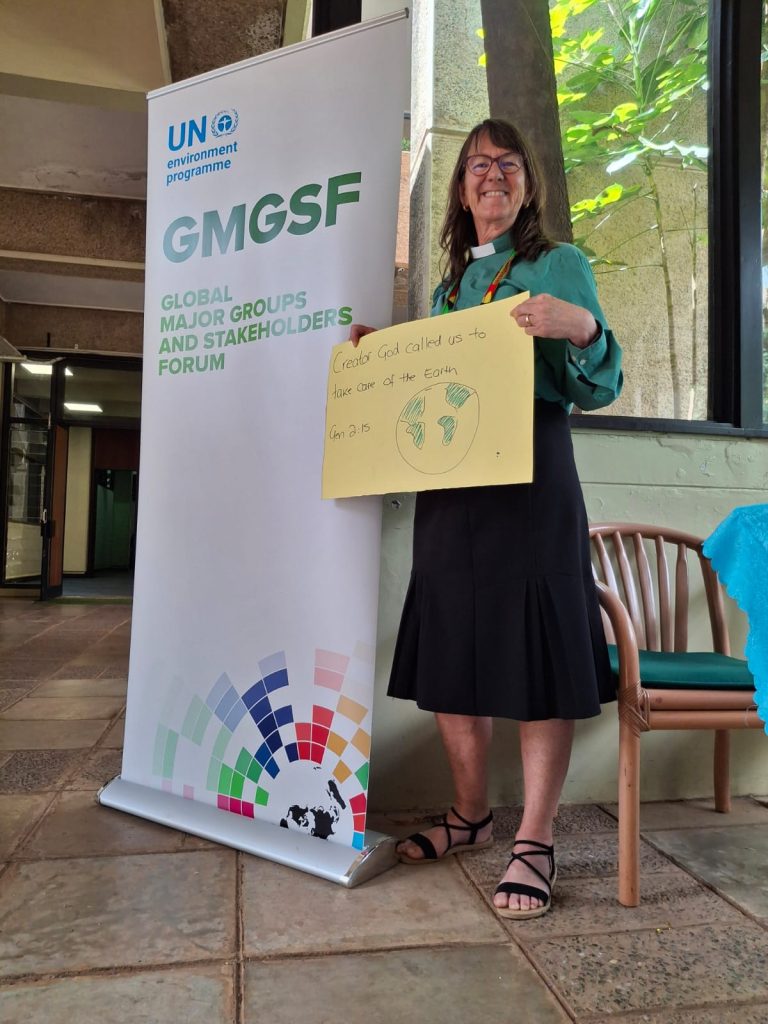
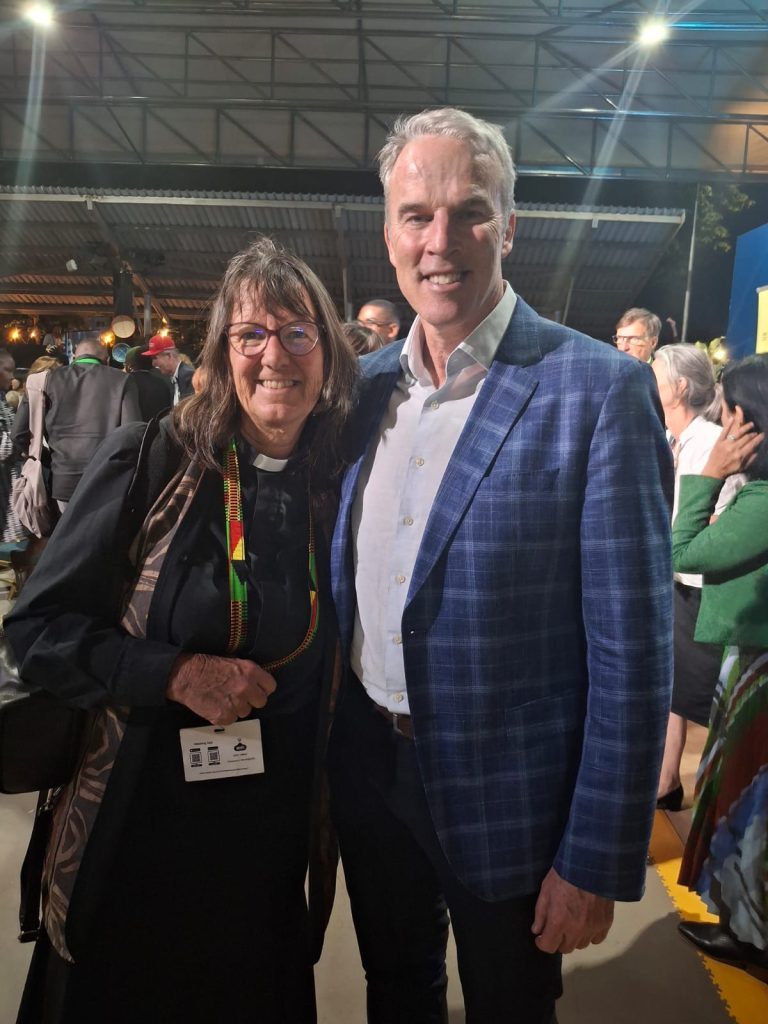
The 1st of September, known globally as the World Day of Prayer for Creation, marks the beginning of the Season of Creation. In March 2024, a major conference held in Assisi explored the vision of elevating this day into a liturgical feast or festival shared across Western Christian denominations with a common calendar. This proposal draws on the day’s deep symbolic roots and its established liturgical significance in the Eastern Orthodox Church. This week’s conference continued to build on that vision. Entitled “Creation Day & The Nicaea Centenary: Crystallizing the Ecumenical Dream of a New Liturgical Feast”, it recognized two significant anniversaries in 2025: the 1700th anniversary of the Council of Nicaea and the 800th anniversary of St. Francis’ Canticle of the Creatures. The gathering brought together leaders from churches and communions, ecumenical and liturgical bodies, theologians, ministers, and community representatives. Notably, participation expanded since the first conference, with strong representation from Eastern Churches and new voices such as the Pentecostal World Fellowship, bringing the total number of represented communions to fifteen. The Anglican Communion was well-represented, with delegates from England, Scotland, South Africa, Wales, Italy, USA, Australia, and Canada attending in person, and participants from New Zealand and Brazil joining online. The conference opened with a moment of silence in remembrance of Pope Francis, followed by an ecumenical service. Bishop Heinrich Bedford-Strohm, Chair of the World Council of Churches, offered a message in which he described the proposed feast as “a beautiful expression of the Trinitarian essence that unites us as churches,” and as a meaningful spiritual response to today’s pressing ecological challenges. Several denominational leaders shared greetings, including Bishop Anthony Poggo, who stated: “The Orthodox Churches of the Ecumenical Patriarchate have led the way in developing a theology of the environment and its liturgical expression — a gift for which all Christian communions may give thanks. The Anglican Communion has observed the Feast and Season of Creation since 2012. Now we have the opportunity to build on this foundation, helping Churches of East and West glorify the Triune God together.” The conference’s opening session, “Nicaea, the Triune Creator, and Creation Day”, featured a panel of representatives from various communions. Representing the Anglican Communion, the Rt. Rev. Anthony Ball, newly appointed Director of the Anglican Centre in Rome, reflected: “We gather in Eastertide, celebrating Christ’s resurrection and the gift of new life through Him, through whom, as the Nicene Creed affirms, ‘all things were made.’ Yet, we also gather at a time of crisis in creation. In Westminster Abbey, we regularly mark national days for Commonwealth nations. When we pray for Kiribati and Tuvalu, I am reminded of Archbishop Winston Halapua’s witness from the Diocese of Polynesia — a region that includes three of the five nations projected by the UN to be submerged within the next fifty years. In Fiji alone, hundreds of villages face relocation due to saltwater intrusion. Is this the will of ‘the Father almighty, maker of heaven and earth’? With 2.4 billion Christians worldwide, we must recover the spiritual tools to deepen our relationship with the Creator, with creation, and with one another. Prayer, inspired and guided by the Holy Spirit — ‘the giver of life’ — is essential to turning from a path of destruction toward the light and life we proclaim this Eastertide. The work done leading up to this conference, and emerging from it, marks a significant contribution to the ecumenical journey. A shared liturgical Feast would be a powerful sign of our unity and a call for the global Church to celebrate the mystery of Creation while taking action to care for our common home. The Anglican presence was strong with many Anglicans presenting in plenaries and breakout groups. • “The Signs of the Times Challenge the Liturgy – Lex orandi, lex credendi, lex vivendi” – Rev. Jacynthia Murphy (Anglican Indigenous Network & Anglican Church in Aotearoa, New Zealand and Polynesia) • “The Feast’s Title: Christological, Trinitarian, or Other?” – Rev. Christopher Irvine (International Anglican Liturgical Consultation & Mirfield Liturgical Institute) • “The Feast in Sacred Space: Church and the ‘Cathedral of Creation’” – Rev. Dr. Luiz Carlos Teixeira Coelho (State University of Rio de Janeiro & Anglican Episcopal Church of Brazil) • “The Feast’s Lectionary Readings – New Testament” – Rev. Eileen Scully (Consultation on Common Texts and Anglican Church of Canada) • “Creation Day, the Season of Creation, and Ecumenical Action” – Rev. Dr. Rachel Mash- Anglican Communion Environmental Network – Province of Southern Africa • “Creation in Scripture and Lectionary Options” – Dr. Richard Bauckham (Ridley Hall, Cambridge) Church of England • “Liturgical Prayers for the Feast – Eucharistic Texts” – Rev. Thapelo Masemola (Anglican Church of Southern Africa) • “Creation, Incarnation, Paschal Mystery – Interconnected Mysteries and Feasts” – Dr. Mark Clavier – Church of Wales • “Preaching Creation Day” – Rev. Dr. Dave Bookless (Lausanne Movement), and Rev. Dr. Margaret Bullitt-Jonas (Episcopal Church) • “Liturgical Prayers – Non-Eucharistic Texts” – Rev. Dr. Elizabeth Smith (Anglican Church of Australia & International Anglican Liturgical Consultation) • “From Dream to Bloom” – Reflections on the First Year of Proposals – Neil Vigers (Anglican Communion Office) Rev Rachel Mash (Southern Africa) was one of the co- facilitators of the Conference. Each day began and ended with ecumenical prayer services, led by different communions. A particularly moving moment came during prayer with Eastern Christian partners, as the Lord’s Prayer was sung in Aramaic — the language spoken by Jesus himself. A small working group then stayed on in Rome for two more days to draw together what had been discussed at the Conference and to work out the process going forward once the Vatican with new representatives from the dicasteries is on board. We were very blessed to be there when the white smoke rose and to rush to St Peter’s Square and be present when Pope Leo appeared on the balcony- what a historic moment! With the election of Pope Leo and his clear support for Care for

The Assisi Process – Advancing Toward an Ecumenical Feast of Creation. Read More »

Farming God’s Way: Diocese of Johannesburg Mothers Union

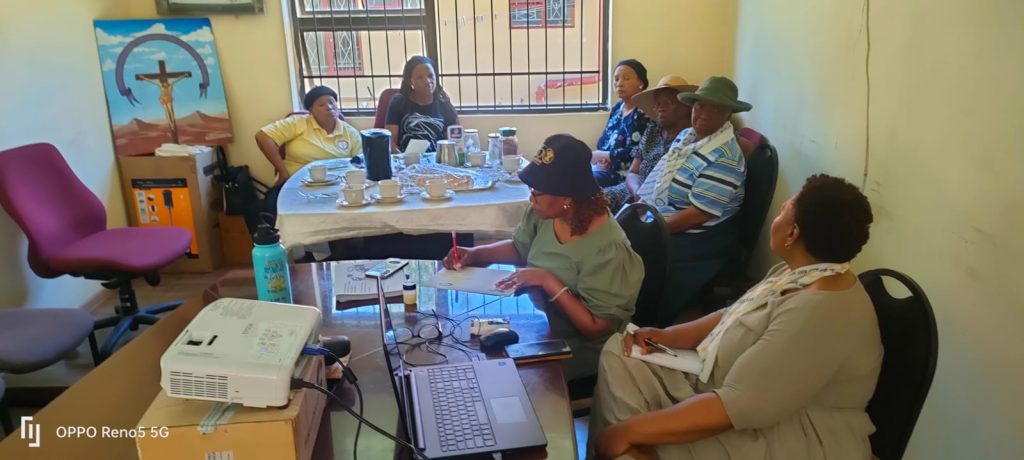
Nine Mothers Union members from six different parishes across the Diocese of Johannesburg took part in the three-day Farming God’s Way course held at Mulderdrift in Rooderpoort Johannesburg. The mothers were reminded of the profound connection between our faith and the land we cultivate. One key takeaway was the importance of prayer in all aspects of our lives. Mothers learned to first ask God to bless the soil we will be planting in, recognizing that our efforts are rooted in His creation. Participates discussed the principle of working in harmony with what God designed. For instance,  learning that turning the soil upside down disrupts the delicate balance that exists within it. The topsoil and subsoil have distinct characteristics, and disturbing them can lead to a decline in soil health and productivity. By respecting this natural order, we can have a thriving garden that yields bountiful fruits and vegetables. During the training, participants also learned different techniques like how to grow healthy produce without relying on chemical pesticides or synthetic fertilizers. Instead, we can harness God’s natural resources, such as fallen leaves, cow manure, and wood ash. These organic materials enrich the soil and promote sustainable growth, aligning with our belief in serving a God who created a perfect system of interdependence in nature and also reflecting on the importance of order in our gardening practices.  Farming God’s way is a simple yet profound approach that allows us to truly partner with God in creation. Each day brings new insights into God’s mysteries and the wonders of His creation. In conclusion, our journey into Farming God’s Way is not just about growing food; it is a spiritual practice that deepens our relationship with God and the environment. “As members of Mothers Union in Johannesburg, we are grateful for the opportunity to learn and grow together as a community, committed to nurturing the land in a way that honours our Creator; a big thank you for the opportunity to share our experiences and insights,” said the ladies who attended the course.

Farming God’s Way: Diocese of Johannesburg Mothers Union Read More »

Doing Nothing is not an Option (Faith Leaders at PCC)

The Presidential Climate Commission (PCC) is a multi-stakeholder body established to oversee South Africa’s transition to a low-carbon economy. The commission’s primary goal is to facilitate a just and equitable transition, ensuring that the country reduces its greenhouse gas emissions while promoting economic growth and social inclusion. On Thursday the 26th of February, the Presidential Climate Commission held a successful stakeholder consultation that saw a number of faith community leaders across South Africa come together, and Ms Nozwelo Radebe (United Congregational Church of SA ), Ms Tshepo Mohapi ( Methodist Church SA)  and Revd Samukuhle Khanyile ( Green Anglicans) represented  Climate YES . The PCC has developed a national Just Transition Framework which aims to support communities affected by the transition to a low carbon economy and the changes for best interest of South Africa at large. During this particular consultation, the faith leaders pointed out how climate change has affected different communities, mostly vulnerable communities. Some of these issues were collapse of maize crop in Sub Saharan Africa, which has  impacted food security. A day Zero in Gauteng of dry taps and cyclones hitting the continent. The PCC’s major mandate is to mitigate the impacts of climate change. However the PCC’s Secretary emphasized that the commission needs to work with different stakeholder to  build means of implementation. It is exciting to note that there was meaningful engagement  as the participants suggested  their views and thoughts on mitigating impacts of climate change. It was stated that for better engagement, during the process, implementors should use relevant and effective ways of communicating with affected communities. The participants suggested that communities should resort to indigenous knowledge of farming and lifestyle in general, which they believed had less impact on climate. The emphasis was that this knowledge should be passed from one generation to another.   The faith leaders also pleaded for support from the government to implement  these mitigation policies and lamented for fair land distribution  among the citizens of South Africa. The house postulated that educating the communities and including them in decision making will resulted in an empowered  societies and show a shift towards a more sustainable society. decision-making will result in an empowered societyIn conclusion the consultation agreed to support the youth who are fighting injustices of climate change as this will enable protection and preservation for future generations, thus choosing life over instruments of death.   # DoingNothingIsNotAnOption #ClimateYES #GreenAnglicans By Nozwelo  Hadebe

Doing Nothing is not an Option (Faith Leaders at PCC) Read More »

Diocese of Johannesburg Youth Opening: Give Us Faith

On Saturday, February 22, 2025, the Diocese of Johannesburg officially launched its Diocesan 2025 opening service for youth organizations at the Church of Manche Masemola in Protea Glen, Johannesburg. The day began with an opening Eucharist led by the Diocesan Youth Chaplain, Revd. Theo, followed by an inspiring message from Revd. Themba Msipha, who urged young people to be mindful of the events unfolding in both their local communities and the world at large. The theme for the service, “Give Us Faith,” was further emphasized by Bino Makhalanyane from the Green Anglicans movement. Bino challenged the youth with the question, “What do we do with the faith we receive from our Creator?” He cautioned against the pitfall of having faith without action (James 2:17-22) and reminded the congregation that one of the five marks of mission in the Anglican Communion is safeguarding the integrity of creation. This, he stressed, is a call for all of us to care for God’s creation as part of living out our faith. With climate change causing increasing destruction in communities — from long dry seasons leading to droughts to sudden heavy rains resulting in floods, as seen in Johannesburg just days before this service with all these young people, they continue to face unprecedented challenges. This generation is the first to experience the full impact of climate change, including loss, displacement, and natural disasters. It is now our responsibility to respond and act. In addition, the City of Johannesburg hosts numerous national and international climate change consultations and conferences. Yet, the voice of young people from faith communities seems to often be missing from these discussions, such as the Presidential Climate Commission and the upcoming G20 conference. The Diocese of Johannesburg has a unique opportunity to represent young people in these vital forums, which requires us to be involved with the Ministry of Green Anglicans Provincial and the Johannesburg Anglican Eco-Spiritual Initiative (JAEI) in the diocese.  Revd. Theo challenged all youth ministries in the diocese to integrate at least one environmental initiative into their 2025 programs as a concrete response to the ongoing climate crisis. The service concluded with a powerful revival session where leaders from the present organizations unpacked the theme and shared their reflections, further reinforcing the call to action.

Diocese of Johannesburg Youth Opening: Give Us Faith Read More »