News

O Movimento “Green Anglicans” de Moçambique e Angola

Green Anglicans Movement  of Mozambique and Angola  O Arcebispo de Cantuária visitou Maputo para celebrar o lançamento da Igreja Anglicana de Moçambique e Angola (IAMA) com um maravilhoso serviço de celebração É rara a ocasião em que angolanos e moçambicanos se podem encontrar fisicamente, uma vez que os custos de deslocação de um país para o outro são muito elevados. Assim, os Anglicanos Verdes aproveitaram a oportunidade para realizar um workshop com representantes que participaram do primeiro Sínodo provincial Representantes de 12 dioceses participaram do workshop O bispo Ernesto Manuel, que é o bispo de ligação ambiental da IAMA, liderou um lindo culto ao ar livre nos lembrando de ouvir a voz da criação O Rev. Aurelio Uquieo da Diocese de Inhambane partilhou as muitas e emocionantes formas como a sua Diocese está a aceitar o desafio de cuidar da criação, plantar árvores, limpar, educar jovens e crianças em idade escolar. A Rev. Filomena Teta Vigária Geral compartilhou uma comovente reflexão sobre o chamado de Deus para cuidarmos da criação< Rev Dra. Rachel Mash &nbsp;compartilhou os muitos recursos que estão disponíveis em português, desde a temporada ecumênica do tempo da Criação, até Renovar Nosso Mundo (renovar nosso mundo), livros de escola dominical (Ryan the Rhino) e manual para jovens (Care para criação), bem como outros recursos< Decidiu-se trabalhar de forma diferente, começando pela comunicação para que ideias e recursos possam ser compartilhados. O movimento Green Anglicans de IAMA está em Caminho! The Archbishop of Canterbury visited Maputo to celebrate the launch of the Anglican Church of Mozambique and Angola (IAMA) with a wonderful service of celebration It is a rare occasion when Angolans and Mozambicans can meet together physically as the cost of travelling from one country to the other are very high. So Green Anglicans took the opportunity to hold a workshop with representatives who had attended the very first provincial Synod Representatives from 12 Dioceses attended the workshop Bishop Ernesto Manuel who is the Environmental Liaison Bishop for IAMA led a beautiful outdoor worship reminding us to listen to the voice of creation Rev Aurelio Uquieo from the Diocese of Inhambane shared the many and exciting ways in which his Diocese is taking up the challenge to care for creation, planting trees, clean ups, educating youth and school children. Rev Filomena Teta Vicar General shared a moving reflection on God’s call on us to care for creation Rev Dr Rachel Mash  shared the many resources that are available in Portuguese, from the ecumenical season of Creation time, to Renovar Nosso Mundo (renew our world), Sunday school books (Ryan the Rhino) and youth manual (Care for Creation) as well as other resources A decision was made to work other, starting with communications so that ideas and resources can be shared. Green Anglicans IAMA is moving!!!

O Movimento “Green Anglicans” de Moçambique e Angola Read More »

COPOUT 27

Rev Dr Rachel Mash On almost all  levels, COP27 will go down in history as a failure   Reducing carbon emissions Wealthy nations and the over 600 fossil fuel lobbyists stopped meaningful action on  the phasing out of fossil fuels. Because this is a UN process, the decision is made by consensus not a vote. So a decision can be overruled by dissenting party Outside of the negotiating halls, the voice of impacted nations was heard from climate activists and NGOs and a growing number of faith actors. Inside the negotiations their voice is almost silenced since the  only protests allowed within the venue  were those sanctioned by the Egyptian security forces. There is  a  vast inequality in the representation of countries – attending COP is hugely expensive (Especially this one!) and poorer countries cannot afford to send large delegations. The largest number of negotiators was from the United Arab Emirates with more than 1000 delegates – go figure which way they would vote! The war in Ukraine meant that oil and gas producing nations had more influence and world leaders were reluctant to talk about reducing other sources .  The rush for gas in Africa was clearly on the table. Parties came up with the very weak wording of  “accelerating efforts towards the phase-down of unabated coal power and phase-out of inefficient fossil fuel subsidies.” Pretty much bla bla The final text  announced no new targets or commitments (NDCs) , the goal of limiting global warming to 1.5 degrees is becoming more and more impossible.  Instead new country pledges or nationally determined contributions (NDCs), were delayed for yet another year- to  COP28. Loss and damage COP27 was almost a complete wash out, but in the dying hours of the extended COP27 negotiations, they came back from the brink of absolute failure, to hear the cries of climate activists from around the world and to establish a loss and damage facility. This is significant as it recognises the moral responsibility of carbon polluting nations to those most impacted by climate change . The developed nations pushed back, not wanting to be held (potentially legally) responsible for the appalling damage being caused by climate change. Another contentious  issue is whether we count yearly emissions (where China and India score very high) or cumulative emissions, where EU and USA are the highest, as they have been producing high levels. China was keen that ‘historic emitters’ bear the highest costs and the USA tried to pull back using the excuse that China should also be a high payer. The facility has been set up but how much finance will be delivered to where it is most needed remains to be seen. COP27 has failed to addressed the key challenges of climate change. Breathe, take time to rest, refill your tanks  and then we stand up and keep on fighting.  We are not optimists, but in the words of Archbishop Tutu – we are prisoners of hope.

COPOUT 27 Read More »

Bino Makhalanyane at COP27

On the 6-13 November 2022 I had the privilege of attending my very first Conference of Parties COP27 at Sharm El-Sheikh in Egypt, under the Christian Climate Observers Programme ( CCOP). This was a very over whelming experience for me as a first timer being in a space full of thousands of people from around the globe, formally dressed up and many meeting areas, with different topics and ideologies, as I struggled to find myself however one of my fellow member of the CCOP27 group David Storer from Scotland said to me “ Never forget to represent and raise the voices of  your people while you are here” , these words kept me going as I would always think of how climate change continues to affect us back at home . This COP is said to be the “Africa COP” and indeed many Africans were in attendance and more over young African Climate Activist taking the stage and asking the important question on why the global north will hear the cry of the global south. Even though this was the African COP it felt to me like our African leaders were not in charge but kept trying the best to beg the global north to commit to resources towards climate finance and adaptation, (even when they only had an African audience in their space). Loss and damage was on  the mouths of all African activist including that of faith groups and civil society calling for those who have mostly contributed to global warming to honour the $100 billion yearly commitments towards climate vulnerable countries. I had an opportunity of attending a panel discussion led by Leah Namugerwa from Uganda with a group of young people, (this panel had two teenagers who looked under sixteen). When the panellists told their stories on how climate change has caused loss and damage in their lives and why they have decided to rise up to the call of being climate activists, one could not ignore the pain of trauma coming from their voices. You then get to ask yourself where then is human rights when kids who are suppose to be in school and allowed to be children are forced into becoming adults because of their pain caused by others. This continues to haunt me and will always be one of my take home pillars to rise and do my bit in combating climate change,  and grow our communities into resilient climate smart communities. To some people,  stories of loss and damage might just be another story told, nice speech and tune but to most of us it brings back the trauma caused by climate change in our communities. The fact that parents had to bury their kids , others were forced to migrate to other areas and be forced into cheap labour just to survive. These are true stories that people are faced with daily, here is South Africa a community in KwaZulu Natal is still living in a community centre since the July floods, kids are forced to go to school and perform at the same rate as those who are still in their homes. The trauma is real, and the faith community needs to create a platform for healing.    On the 12 of November I had the privilege of being part of faith group delegation which met up with the Deputy executive Secretary of UN framework convention on climate change Mr Ovais Sarmad, to hand over a letter of demand from the faith community to COP27, which covered Climate Finance and Adaptation, Human rights and justice amongst other things. A big thank you to the CCOP27 coordinating team, A Rocha International for allowing me to carry their badge, the local and international Green Anglicans movement and to Climate YES which I trust I represented well.

Bino Makhalanyane at COP27 Read More »

Green Anglicans in spreading in West Africa!

GREEN ANGLICANS SPREADING THE MESSAGE IN WEST AFRICA A group of Green Anglicans from different parts of Africa attended the All Africa Youth Conference in Kasoa, Ghana from the 31st October to 5th of November There were active Green Anglicans from Kenya, Ghana, South Africa, Botswana, Rwanda and Uganda  present Over 900 young people gathered at the historic event from 40 African countries. The Theme: Africa my Home, Africa my Future was meant to awaken us to the beauty of Africa and inspire us youth to be active in our own countries. Some of the themes explored are Public Accountability and Anticorruption; Climate loss and damage; Story of the slave castle; Human Trafficking; Silencing the Guns and Gender Justice to mention a few. There were some key discussions on climate justice, namely: Importance of learning about climate issues and effects in our societies How does climate finance reach societies in need and affected Investing in young people and creating green jobs and innovate forms of climate friendly activities Looked at the impact of climate loss and damage and also shared stories from different countries on this PACJA were very active with the entrance of the Climate Torch to the event, and young people from the Climate yes! Youth Ecumenical Summit also took part in the climate justice side events. Some of the key takeaways from the Congress were We committed to contributing to our continents growth and development Be part of policy making structures and hold the government to account for these policies and strategies Be agents of peace in our countries and be involved in conflict resolution and advocate for justice Campaign against GBV Sensitize the urgency to act in issues of climate justice In terms of growing the movement, there was a wonderful opportunity when the Anglicans gathered and the Green Anglicans in particular Lulama Ntuta (Chair of the Anglican Youth of the  Church of Southern  Africa )  and Michelle Nyanyiba (Green Anglicans of Africa rep for West Africa)  had an opportunity to share about the Movement and there was a lot of interest! Ghana – is planning to launch next year and is doing the ground work now to educate and empower members to know about issues of the in environment.  Other countries such as Nigeria were interested in  implementing GA in their countries and need more information sessions and resources. Lulama Ntuta

Green Anglicans in spreading in West Africa! Read More »

Future Farmers project

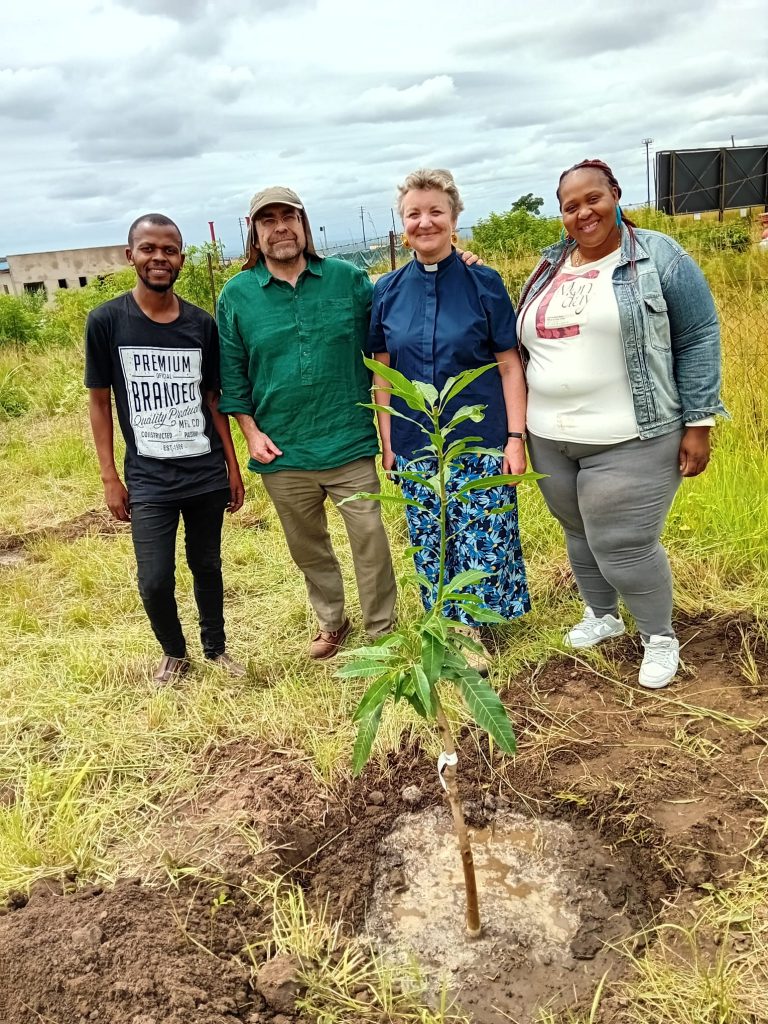
All Saints and St Marks have partnered with the Grade R learners at Bellair School with their future farmers gardening project All Saints, celebrating 130 years of ministry planted a lemon tree at the school and another one at church as part of the Communion Forest Mrs Nina Moolman & Mrs Pinkie Nkomonde share about the project: The Little Farmers used their little fingers to grow carrots from seed. They first prepared the soil and then planted. The following week the brinjals were planted from seedling stage and they are growing. They have started flowering and bearing fruit. The following week they planted butternut pumpkins from seed. A lot of compost was used from the compost they started in the beginning of the Little Farmer project. Initially the first heap of compost had been created and now the second one was again created.  The little farmers used their hand to add inputs into the compost with the assistance of the garden coordinating team to layer the soil with dry material, green material, water, soil, manure and covering it up. Initially the first heap of compost had been created and now the second one was again created.  The little farmers used their hand to add inputs into the compost with the assistance of the garden coordinating team to layer the soil with dry material, green material, water, soil, manure and covering it up. They then planted new kale and heart shaped cabbage seeds for generation in the incubation tubs. After 3 weeks the seedlings had grown to size to be transplanted to the soil and they were moved by the little farmers to the ground. The little farmers used their compost they had prepared the previous period. The new season of spring is on and a lot is happening. Egg size brinjals have grown. Little butternuts have flowered There is an ongoing task to water the garden daily but it is met with a challenge of no rain. The season is expected to have rain, but it is not happening. This is a big problem from getting the good yield. The insects pests have also started to affect the plants. The little farmers have learnt a lot. They are so excited and enthusiastic when they see everything growing that they have planted. To assist the plants a banana leaf compost bucket is kept watering the plants to give more nutrients when they show a yellowing color. They appreciate and feel blessed for having the project with Pinkie, Mike and all who are helping in the garden. Compiled by ;Mrs Nina Moolman & Mrs Pinkie Nkomonde #communionforest  

Future Farmers project Read More »